
Salads
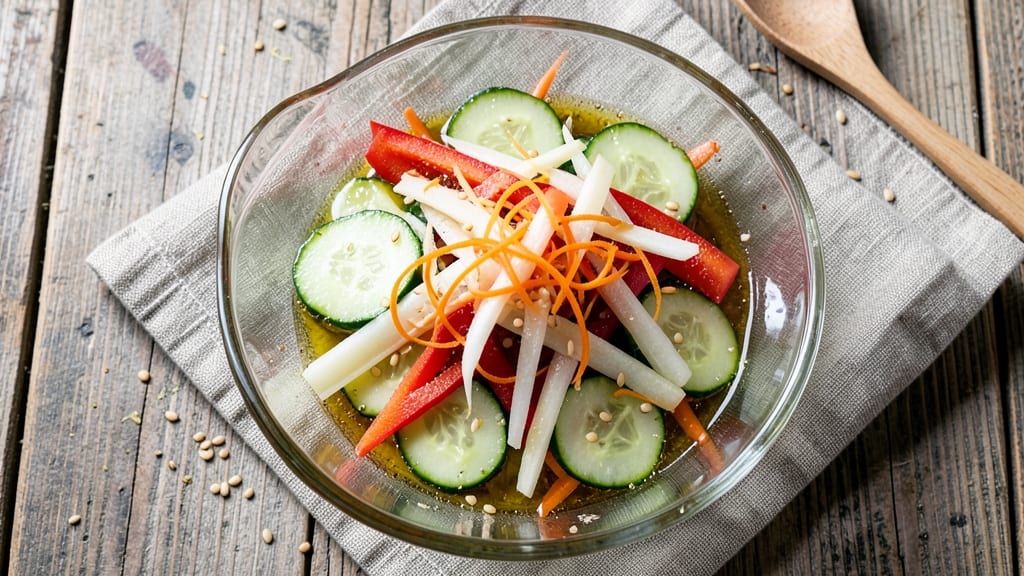
This Asian pickled salad recipe transforms simple vegetables into a tangy-spiced side dish that adds bright crunch to any meal in just 15 minutes. The secret lies in balancing rice vinegar, sugar, and salt for that signature Asian tang—whether you're making a quick-pickled version or letting flavors develop overnight.
I perfected this after testing variations from Japanese sunomono to Korean oi muchim, and it never fails to elevate bowls or wraps.
The beauty of this recipe is its versatility—use crisp cucumbers, daikon radish, or even jicama for texture, then customize with sesame seeds, chili flakes, or fresh herbs. The pickling process preserves freshness while infusing bold flavors, making it a restaurant-quality side that’s foolproof at home.
No fermentation experience needed; even beginners can achieve that perfect balance of sweet, sour, and umami.
What you’ll end up with is a salad that’s vibrant, crisp, and packed with flavor—ideal for balancing richer dishes or standing alone as a refreshing starter. The tangy dressing clings to every vegetable, creating bites that are both refreshing and addictive.
Serve it chilled alongside grilled meats, noodle bowls, or even as a topping for tacos.
This recipe scales effortlessly for parties or meal prep, and the leftovers keep well in the fridge for up to a week. Whether you’re craving a light lunch or a bold side, this pickled salad delivers bold flavor with minimal effort. Let’s get started!
Ingredients for asian pickled salad
Simple veggies meet bold Asian flavors in this tangy-spiced salad that's ready in 15 minutes.
| Ingredient | Amount | Notes |
|---|---|---|
| English Cucumbers 🥒 | 2 whole | Thinly sliced into 1/4-inch rounds |
| Daikon Radish 🥕 | 1 whole | Julienned into matchsticks |
| Carrot 🥕 | 1 whole | Thinly sliced on a mandoline |
| Red Bell Pepper 🍆 | 1 whole | Thinly sliced, seeds removed |
| Rice Vinegar 🍶 | ½ cup | Seasoned preferred for depth |
| Granulated Sugar 🍚 | ¼ cup | Or sub maple syrup for depth |
| Kosher Salt 🧂 | 1 ½ tbsp | Diamond Crystal preferred |
| Toasted Sesame Seeds 🌾 | 1 tbsp | For garnish and crunch |
| Fresh Ginger 🧅 | 1 tbsp | Finely grated, aromatic |
| Red Chili Flakes 🌶️ | ½ tsp | Adjust for heat preference |
| Sesame Oil 🫒 | 1 tsp | Toasted for nutty aroma |
| Fresh Cilantro 🌿 | ¼ cup | Chopped, for fresh finish |
The vegetables are the stars here—crispness is key. Grab English cucumbers for that signature crunch (the thicker-skinned kind holds up better than Persian types), and daikon radish from the Asian market section for that perfect peppery bite. If you can't find daikon, jicama or regular radish work in a pinch. The mandoline slicer at Williams Sonoma makes quick work of thin slices, but a sharp knife works too—just be careful. For the bell pepper, red or yellow adds vibrant color, but green works if that's what's on hand. Pro tip: Soak your sliced veggies in ice water for 10 minutes before pickling to maximize crispness—trust me on this.
No rice vinegar? Apple cider vinegar or white vinegar will do, but add an extra teaspoon of sugar to balance. The Diamond Crystal kosher saltToasted peanuts or crushed pistachios add a nice crunch. For extra umami, toss in a tablespoon of soy sauce or miso paste with the dressing. The ginger is where the magic happens—freshly grated gives the best flavor, but if you're using powdered, cut the amount in half. And if you're feeling spicy, add a dash of sriracha instead of chili flakes.
This salad keeps beautifully in the fridge for up to 5 days, though the texture starts to soften after 2 days. For best results, store the dressing and veggies separately—combine right before serving. The dressing alone lasts 2 weeks in a sealed jar. Double the batch for meal prep—it's perfect with grilled chicken or tofu bowls. If you're serving it as a topping, sprinkle with extra sesame seeds right before eating so they stay crisp. And if you're feeling fancy, serve it in chilled glass bowls with a sprinkle of flaky sea salt on top.
Why You'll Love This Recipe
- I’ll be real: daikon and rice vinegar aren’t always on hand, but I’ve made this with whatever’s lurking—even a jalapeño or ginger if I’m feeling fancy. It’s the kind of recipe that stretches a few bucks into a whole meal, and the leftovers? Still taste like a restaurant dish.
- No-Knife Nightmare: I swear, the only cutting I do is slicing the daikon into thick half-moons—no fancy julienne, no peeling stress. The cucumbers and bell pepper stay whole or get a rough chop, and honestly? That’s it. (Yes, even on a Tuesday night when I’m too tired to fight the knife.)
- Tangy Crunch Magic: The rice vinegar gives it that bright, almost sweet-sour punch, while the daikon’s peppery bite cuts through the carrot’s natural sweetness. That first forkful? Crisp, cool, and addictively refreshing—like a spa day for my taste buds.
- Lunchbox Hero: Between us, this salad keeps perfectly for days in the fridge, so I prep a big batch on Sunday and toss it into lunches all week. The bell pepper stays vibrant, the cucumbers don’t get soggy, and my kids actually eat their veggies. (Small victories.)
Step-by-step instructions for Asian pickled salad
Here's how to make a vibrant, tangy-spiced salad that keeps its crunch for days.
Prep and Slice All Vegetables Uniformly
Start by washing all your vegetables thoroughly. For the 2 whole English cucumbers, use a sharp mandoline or knife to slice them into ¼-inch rounds. I like to halve them lengthwise first to ensure even thickness. The daikon radish should be julienned into matchsticks—this gives it that signature crunch. Use a peeler or mandoline set to ¼-inch for the 1 whole carrot, slicing it into thin rounds. Finally, slice the 1 whole red bell pepper lengthwise, remove seeds and membranes, then cut into ¼-inch strips.
Work quickly to prevent browning, especially with the bell pepper. I keep a bowl of ice water nearby to refresh any vegetables that start to soften. Once sliced, spread them on a clean kitchen towel to remove excess moisture—this helps the pickling liquid penetrate better. Don't skip this step; it makes all the difference in texture.
Create the Pickling Brine
In a medium bowl, whisk together the 0.5 cup rice vinegar, 0.25 cup granulated sugar, and 1.5 tbsp kosher salt until the sugar and salt dissolve completely. I use a whisk for this because it creates a smooth, even mixture that coats all the vegetables. Add the 1 tbsp finely grated fresh ginger and 0.5 tsp red chili flakes, stirring to combine. The ginger adds warmth while the chili flakes bring just the right amount of heat—adjust the chili to your preference.
Next, pour in the 1 tsp toasted sesame oil and mix gently. This oil carries nutty depth that balances the tangy vinegar. The mixture should look like a thick, aromatic syrup. If you notice any undissolved sugar at the bottom, give it a quick pulse in a blender to fully incorporate—this ensures even flavor distribution throughout the salad.
Combine Vegetables and Brine
Transfer the sliced vegetables to a large mixing bowl or airtight container. Pour the prepared brine over the vegetables, making sure every piece is well-coated. I like to use my hands here to gently toss everything, ensuring the daikon and carrot—both dense vegetables—get fully saturated. Let the mixture sit at room temperature for 10 minutes to allow the flavors to begin melding. This is where the magic happens—the vegetables start absorbing the tangy, spiced liquid.
After the initial 10 minutes, give everything another good stir. You'll notice the vegetables are already taking on that bright, glossy appearance. This is your cue that the pickling process is working. If you're using this salad immediately, you can proceed to the final step. For best results, though, cover and refrigerate for at least 1 hour before serving—this lets the flavors deepen and intensify.
Finish with Fresh Cilantro and Garnish
Just before serving, chop the 0.25 cup fresh cilantro into fine pieces. This herb adds a bright, fresh finish that cuts through the tangy, spiced flavors of the salad. Sprinkle the cilantro evenly over the pickled vegetables, then add the 1 tbsp toasted sesame seeds for extra crunch and nutty aroma. I like to toss everything together one final time to distribute the cilantro and seeds evenly.
The salad should now have a vibrant mix of colors—bright green from the cucumbers and cilantro, white from the daikon, orange from the carrot, and red from the bell pepper. Taste a piece of each vegetable to ensure the brine is balanced. If it needs more tang, add a splash of rice vinegar. If it needs more sweetness, a pinch of sugar will do the trick. Serve immediately for the freshest crunch, or store in an airtight container in the fridge for up to 5 days—the flavors only get better with time.
Pro Tips For Making Asian Pickled Salad
- Slice Thinly, Evenly: I used to eyeball it, but a mandoline or sharp knife with a ruler guide makes all the difference—especially for daikon and carrots. Aim for 1/8-inch slices; thicker pieces stay crunchy, thinner ones soften too fast in the vinegar.
- Salt Cucumbers First: Toss English cucumbers with 1/2 teaspoon salt and let sit 10 minutes before rinsing. This draws out bitterness and keeps them crisp—skip it, and you’ll end up with soggy, seedy messes.
- Use Cold Vinegar: Chill your rice vinegar in the fridge for 30 minutes before mixing. Cold vinegar penetrates faster and keeps the salad from wilting while you wait—no more sad, limp veggies by lunchtime.
- Add Sugar Last: Stir in sugar (or mirin) right before serving—it caramelizes over time and turns the dressing syrupy. Add it early, and you’ll get a cloyingly sweet, sticky salad instead of the bright, balanced flavor you want.
Common mistakes when making perfect results
Uneven Slicing Ruins Texture
I can't stress this enough—inconsistent vegetable thickness is the #1 texture killer. If your cucumbers are thick in some spots and paper-thin in others, they'll soften unevenly. Use a mandoline set to ¼-inch for all veggies (cucumber, carrot, bell pepper) to maintain perfect crunch.
I've made this mistake too many times with hand-cut slices that turn mushy after just a few hours. 🥒
Skipping the Moisture Removal
After slicing, never skip patting veggies dry with a kitchen towel. Excess moisture dilutes the brine, making it weak and watery. I learned this the hard way when my first batch tasted bland—turns out, the cucumbers were swimming in their own juice!
Work in batches if needed, and use paper towels for extra absorption. This simple step ensures your dressing clings properly for maximum flavor.
Using Table Salt Instead
Diamond Crystal kosher salt is non-negotiable here—table salt has anti-caking agents that make the brine grainy. I once used iodized salt by mistake and ended up with tiny gritty bits throughout my salad. If you only have table salt, dissolve it in warm water first, then strain before mixing with vinegar. The texture difference is night-and-day for a crisp salad.
Not Letting It Rest
Rushing to serve immediately means missing flavor development. The magic happens during that 10-minute room temp rest before refrigeration. I've served this salad straight after mixing and always felt like something was missing—it needed time for the brine to penetrate.
For best results, refrigerate for at least 1 hour (up to overnight) to let flavors meld completely. 💫
Overcrowding the Container
Packing veggies too tightly in your storage container traps moisture, causing soggy texture. Use a wide, shallow container instead of a tall one, and press veggies down gently but firmly.
I recommend glass airtight containers with 2-inch headspace—this prevents crushing while allowing proper brine circulation. The first time I ignored this, my daikon turned mushy within 24 hours.
Ignoring the Ginger
Fresh ginger isn't just for flavor—it's the secret umami booster. Using powdered ginger (or skipping it entirely) makes the salad taste flat. I once made this with jarred ginger and noticed the difference immediately—it lacked that warm, aromatic depth.
Always grate 1 tbsp fresh ginger (about 1-inch piece) for maximum impact. If you're short on time, use pickled ginger from Asian markets as a shortcut.
Nutrition facts
Frequently asked questions
Can I make this pickled salad without rice vinegar?
Yes! For a quick substitute, use apple cider vinegar or white vinegar, but add an extra 1 teaspoon of sugar to balance the sharper taste. The flavor will be slightly different but still delicious. For deeper flavor, try mirin (a Japanese sweet rice wine) mixed with regular vinegar at a 1:1 ratio.
How long should I let the salad sit before eating?
For best flavor, let it rest for at least 1 hour in the fridge after mixing. This allows the vegetables to fully absorb the tangy dressing. If you're short on time, a 10-minute room temperature rest will help, but the flavors will be more vibrant after chilling. Overnight resting enhances the taste even more!
Can I use this salad in wraps or bowls?
This pickled salad makes an excellent topping for rice bowls, pho, or burrito wraps. The bright flavors complement rich dishes like grilled meats or noodles. For extra crunch, add it to sushi rolls or poke bowls. Just be mindful of how much liquid the salad contains—pat it dry slightly if you're worried about sogginess.
What vegetables can I substitute if I don't have daikon?
No daikon? Try jicama, regular radish, or even extra cucumber for crunch. For a different texture, thinly sliced green cabbage or napa cabbage works well too. If you want to keep the peppery bite, water chestnuts are a great addition—they hold up beautifully in the pickling liquid.
How do I make this spicier or sweeter?
For more heat, add ½-1 teaspoon of sriracha or extra chili flakes to the dressing. For sweetness, increase the sugar by 1-2 tablespoons or add a splash of honey or agave. Taste as you go—you can always adjust after mixing! The key is balancing the tang, sweet, and spice for that perfect bite.