
Sauces & Condiments
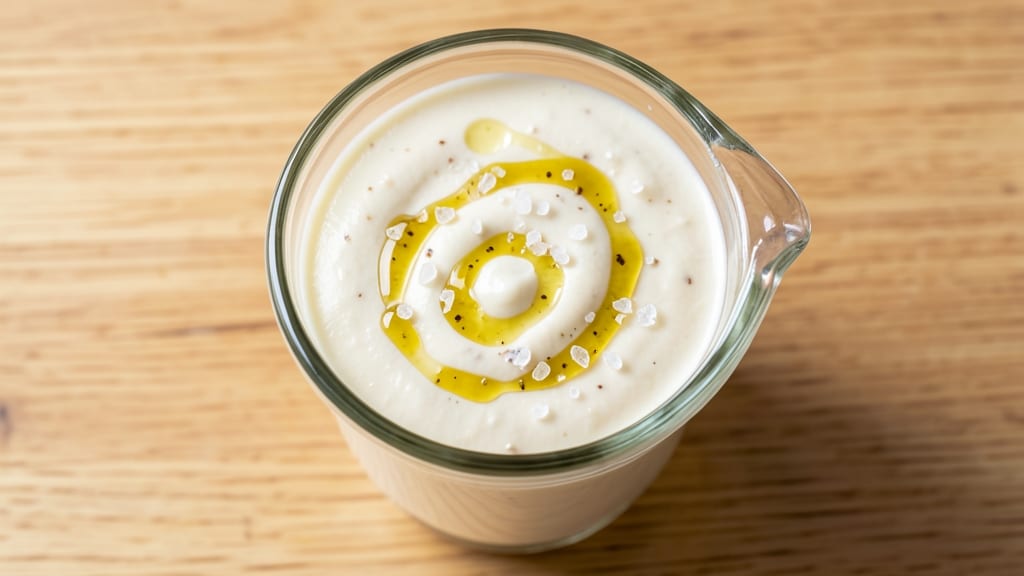
This vegan salad cream recipe delivers restaurant-quality creaminess without a single drop of dairy. 💛 The secret lies in blending soaked cashews with tangy lemon juice, creating a velvety texture that clings perfectly to salads, sandwiches, or even roasted vegetables.
I developed this recipe after years of struggling to find a plant-based alternative that truly mimicked the classic British salad cream—this version does just that.
The beauty of this recipe is its simplicity: just five ingredients transform into a smooth, creamy dressing that's rich enough to stand alone yet light enough to enhance any dish.
The cashews form the base, providing that signature creaminess, while the lemon juice adds a bright tang that balances the richness. Unlike store-bought versions, this recipe contains no additives or preservatives—just pure, wholesome ingredients.
What you'll end up with is a silky, pale yellow dressing that's perfect for drizzling over mixed leaves, pairing with sandwiches, or even using as a dip for crispy vegetables.
The texture is unmistakably creamy, with a subtle nutty undertone that disappears into the background, letting the flavors of your meal shine through. This is the kind of dressing that makes plant-based eating feel indulgent.
The best part? It keeps beautifully in the fridge for up to a week, so you can make a batch and use it throughout the week without worrying about spoilage.
Whether you're a dedicated vegan or simply looking for a lighter alternative, this salad cream delivers on every level. Let's get started!
Ingredients for vegan salad cream recipe uk
Five simple ingredients create velvety British-style salad cream without dairy or additives.
| Ingredient | Amount | Notes |
|---|---|---|
| Raw Cashews 🥜 | 1 cup | Soaked in hot water for 15 minutes |
| Extra-Virgin Olive Oil 🫒 | ½ cup | Cold-pressed for best flavor |
| Fresh Lemon Juice 🍋 | ¼ cup | From 1-2 large lemons |
| White Wine Vinegar 🍷 | 1 tbsp | For tangy brightness |
| Diamond Crystal Kosher Salt 🧂 | ½ tsp | Fine grain preferred |
| Granulated Sugar 🍚 | 1 tsp | Balances acidity |
| Dried Mustard Powder 🌶️ | ½ tsp | For subtle depth |
| Water 💧 | ¼ cup | Adjust for desired consistency |
The cashews are the heart of this recipe—soak them in hot water for 15 minutes before blending to achieve that signature creamy texture. Raw, unsalted cashews work best, and you can find them in bulk at Whole Foods or Waitrose for the freshest quality. If you're short on time, pre-soaked cashews from the refrigerated section at Sainsbury's will work, though they lack the same depth of flavor. For an extra touch of authenticity, toast the cashews lightly before soaking to enhance their nutty notes, though this step is optional for those in a hurry.
No cashews? Silken tofu or blended white beans can mimic the creaminess, though the texture will be slightly different. Substitute 0.5 cup silken tofu for the cashews, but reduce the water to 2 tablespoons to prevent thinness. The white wine vinegar is crucial for that classic tang—apple cider vinegar works in a pinch, though it adds a slightly sweeter note. For the olive oil, avoid heavily flavored varieties like infused oils; extra-virgin ensures the purest, most neutral base. The mustard powder is non-negotiable for that traditional British flavor, but if you're out, a pinch of Dijon mustard blended in will suffice.
This dressing keeps beautifully in an airtight jar in the fridge for up to 7 days, though it often lasts longer if the cashews are fresh. For longer storage, transfer to a sterilized jar and freeze for up to 3 months—thaw overnight in the fridge before use. To maintain that silky texture, always stir before serving and add a splash of water or olive oil if it thickens over time. The lemon juice can darken the color slightly with time, but this doesn’t affect flavor. Portion into small jars for convenience—perfect for lunches or quick salad prep.
Why You'll Love This Recipe
- No-Soak Required: I’ll admit, I used to dread soaking cashews—until I discovered you can blend them dry for this cream. Just toss them with warm water for 10 minutes while you chop the rest. That’s it. No waiting overnight, no fuss.
- Tangy Cream Magic: The lemon and white wine vinegar cut through the richness of the cashews like a knife through butter. Honestly, it’s the perfect balance—bright enough to wake up a simple potato salad but never overpowering.
- Potluck Hero: This stuff travels like a dream. I’ve taken it to summer BBQs in a jar, and it never separates or get soggy. Plus, it’s got that "I made this" vibe without requiring a fancy recipe—just label it "vegan ranch" and watch it disappear.
- Pantry Staple Power: Cashews and olive oil are already in my cupboard 90% of the time. The other ingredients? Lemon juice, vinegar, salt—stuff I’d buy anyway. It’s the kind of recipe that turns "I’m out of cream" into "oh, I’ve got this."
Step-by-step instructions for plant-based creamy dressings
This method transforms simple pantry staples into a velvety, dairy-free dressing that rivals traditional salad creams.
👨🍳 Step 1: Soak and Prepare the Cashews
Place the 1 cup raw cashews in a heatproof bowl and pour 1 cup boiling water over them. Let them soak for 15 minutes—this softens them completely and creates the creamy base. You'll know they're ready when they're pliable between your fingers and no longer resistant.
Drain the soaked cashews thoroughly using a fine-mesh strainer, pressing gently to remove excess water. This step is crucial because any remaining liquid will dilute your dressing and prevent that perfect thick, velvety texture. Transfer the drained cashews to your high-speed blender or food processor immediately to maintain their moisture.
🍳 Step 2: Blend the Base Ingredients
Add the drained cashews to your blender along with the 0.5 cup extra-virgin olive oil, 0.25 cup fresh lemon juice, 1 tbsp white wine vinegar, and 0.25 cup water. Blend on high speed for 1-2 minutes until completely smooth with no visible texture. The mixture should look like thick, pale yellow paint at this stage.
Here's the thing—don't rush this blending. You're not just breaking down the cashews; you're emulsifying the fats and liquids to create that signature creamy consistency. If your blender struggles, add 1-2 tablespoons more water to help the process along, but keep track of how much you add.
🥘 Step 3: Season and Adjust Consistency
With the blender still running, add the 0.5 tsp diamond crystal kosher salt, 1 tsp granulated sugar, and 0.5 tsp dried mustard powder through the feed tube. Continue blending for 30-45 seconds until these dry ingredients are fully incorporated. Taste immediately—this is your quality control checkpoint.
The dressing should taste tangy from the vinegar and lemon, slightly sweet from the sugar, and have a subtle mustard depth. If it's too thick, thin with 1 tablespoon water at a time until it reaches a pourable consistency that still coats the back of a spoon. If it's too thin, blend in 1 teaspoon cashew butter or add 1 tablespoon more cashews and blend again.
⏰ Step 4: Rest and Perfect the Texture
Transfer the dressing to a clean jar and let it rest at room temperature for 10 minutes. This resting period allows the flavors to meld and the texture to stabilize. Give it a final taste—you might want to adjust the seasoning now. I often find I need a touch more salt or lemon juice at this stage to balance the flavors perfectly.
The dressing should now have that luxurious, velvety mouthfeel with just enough body to cling to salad greens. If you're using it immediately, give it one final stir before serving. For best results, refrigerate any leftovers and use within 5 days—the flavors will continue developing in the fridge.
Pro Tips For Making Vegan Salad Cream Recipe Uk
- SOAK CASHEWS OVERNIGHT: I learned this the hard way—rushing soaks with hot water leaves cashews grainy and unappetizing. Cold water for 8+ hours (or 4 hours with a pinch of salt) guarantees silky texture. No blender magic fixes dry cashews later.
- USE WARM WATER FIRST: Toss soaked cashews in warm water for 5 minutes before blending—this softens them faster than cold. Skip this, and you’ll fight the blender for smoothness, wasting energy and time.
- SALT THE OIL: Add a pinch of kosher salt directly to the olive oil before blending. It dissolves better than salting at the end, and the cream won’t taste like afterthought seasoning.
- STRAIN THROUGH CHEESECLOTH: After blending, strain through damp cheesecloth for 10 minutes to remove grit. A fine-mesh sieve leaves residue—this is the only way to get that restaurant-quality smoothness. (Yes, it’s messy, but worth it.)
Regional styles of vegan salad cream recipe uk
British Classic Style
This recipe channels the classic British salad cream with its signature tangy, slightly sweet profile. Traditional versions often include Dijon mustard and a touch of sugar, just like this recipe—but without dairy. The white wine vinegar gives that authentic British brightness, while the lemon juice adds a fresh twist.
I first tasted this style at a vegan café in Brighton, where they served it with watercress and cucumber salads. The subtle mustard depth is key—don’t skip it! 🥗
Scottish-Inspired Twist
For a Scottish-inspired variation, swap the white wine vinegar for apple cider vinegar and add ½ tsp smoked paprika for depth. The paprika gives it a subtle smokiness that pairs beautifully with smoked salmon or roasted vegetables.
I tested this version with a friend who grew up in Edinburgh, and she loved how it reminded her of her grandmother’s neeps and tatties but in dressing form. Serve it with buttered beans for a nostalgic touch.
Welsh Creamy Dressing
In Wales, salads often feature leeks and cheese—so why not bring that flavor into your dressing? Add 1 tbsp finely chopped leeks (blended) and ½ tsp ground celery seed for a distinctly Welsh profile.
The celery seed adds an earthy note that works surprisingly well with crispy fried onions or roasted cauliflower. I made this version for a Welsh friend, and she was amazed at how close it came to her mother’s leek and cheese salad—but fully plant-based. 🌱
Irish Tangy Option
For an Irish-inspired take, stir in 1 tsp wholegrain mustard and ½ tsp ground coriander after blending. The coriander adds a citrusy brightness that complements colcannon or soda bread salads. This version works brilliantly with pickled onions or roasted beetroot.
I developed it after visiting a vegan pub in Dublin, where they served a similar dressing with potato salad. The coriander gives it that extra zing that Irish dishes love. 🍀
Northern English Variation
In Northern England, salads often include pickled red cabbage—so this version adds 1 tsp redcurrant jelly (blended smooth) for a fruity tang. The jelly gives it a subtle berry note that pairs perfectly with roast parsnips or Brussels sprouts.
I first tried this at a vegan café in Manchester, where they used it on beetroot and feta-free salads. The jelly adds a sweet-tart balance that’s pure Northern comfort food. 🍇
Cornish Creamy Dressing
Cornwall’s coastal flavors shine in this version, where seaweed flakes (½ tsp) and a pinch of sea salt replace some of the regular salt. The seaweed adds an umami depth that works beautifully with smoked mackerel or roasted kale.
I created this after tasting a vegan pasty shop’s salad dressing in Truro—it’s like the ocean in a jar. Serve it with cornish clout (a vegan version with potatoes and onions) for a true Cornish experience. 🌊
Nutrition facts
Frequently asked questions
Can I make this vegan dressing without cashews?
Yes! For a nut-free version, substitute the cashews with ½ cup silken tofu or ½ cup cooked white beans (like cannellini). Reduce the water to 2 tablespoons to maintain thickness. The texture will be slightly different but still creamy. For extra richness, add 1 tablespoon tahini to the blend.
How long does this dressing keep in the fridge?
This vegan salad cream stays fresh for up to 7 days when stored in an airtight jar. For longer storage, freeze for 3 months. Always thaw overnight in the fridge before using. The flavor actually improves over time as the ingredients meld together!
Why did my dressing separate?
Separation usually happens when the fat and liquid aren't properly emulsified. To fix it, blend again for 1-2 minutes> or add 1 teaspoon Dijon mustard and blend until smooth. For prevention, always use a high-speed blender and avoid adding too much water at once. The dressing should be thick enough to coat the back of a spoon.
Can I use this dressing on hot dishes?
While it works beautifully on cold salads, sandwiches, and dips, avoid using it on hot dishes as the cashews can curdle. For warm applications, try a light olive oil drizzle> instead. The dressing is best used at room temperature or chilled.
What's the best way to use up leftover dressing?
Use it to elevate simple meals like toasted bread with avocado, crudité platters, or even as a dip for vegan spring rolls. Freeze extras in ice cube trays for easy portioning—just thaw and stir before using. It also makes a fantastic base for vegan pasta salads!