
Salads
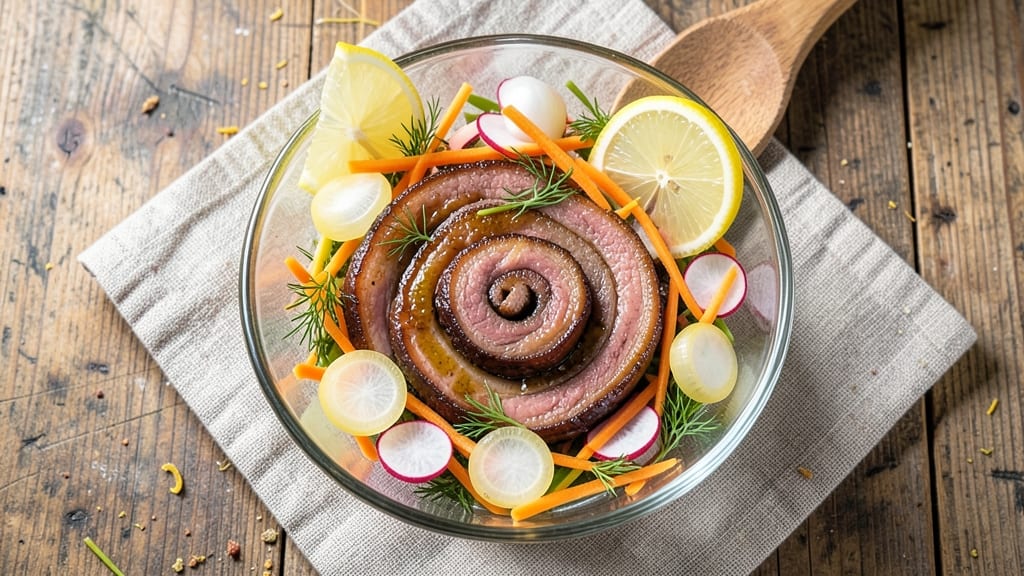
This beef tongue salad recipe transforms a humble ingredient into a luxurious dish with silky, melt-in-your-mouth texture and bold, smoky flavor. The process begins with slow-cooking the tongue to tender perfection, then peeling and slicing it into delicate strips—each bite delivers a satisfying crunch and velvety richness.
What makes this recipe stand out is the balance of textures: crispy roasted vegetables, fresh herbs, and a tangy dressing that cuts through the richness while enhancing its natural depth.
The key to success lies in proper preparation—simmering the tongue until fork-tender (about 2 hours) and peeling it carefully to reveal its pristine, translucent surface. Once sliced, the beef tongue absorbs the dressing beautifully, creating a harmonious blend of flavors.
This isn’t just a salad; it’s a showstopping centerpiece that elevates any meal, whether served at a dinner party or as a sophisticated weeknight dinner.
Assembling the salad is where the magic happens. Toss the silky beef tongue with crisp roasted vegetables, fresh arugula, and toasted nuts for contrast. A bright vinaigrette ties everything together, ensuring each ingredient shines. The result? A visually stunning, restaurant-worthy dish that’s surprisingly simple to make at home.
Perfect for those who appreciate unexpected textures and deep flavors, this beef tongue salad proves that gourmet dining doesn’t require complicated techniques—just patience and attention to detail. Let’s get started on creating a dish that will impress even the most discerning palates.
Ingredients for beef tongue salad
Silky beef tongue transforms into a luxurious salad with these carefully selected ingredients.
| Ingredient | Amount | Notes |
|---|---|---|
| Beef Tongue 🥩 | 2 lbs | Whole, fresh, skin-on preferred |
| Yellow Onions 🧅 | 2 whole | Yellow or red, sliced for simmering |
| Carrots 🥕 | 4 medium | Whole, peeled and sliced for roasting |
| Garlic Cloves 🧄 | 6 cloves | Peeled, smashed for simmering |
| Bay Leaves 🌿 | 2 whole | Fresh or dried, for simmering |
| Black Peppercorns 🌶️ | 1 tbsp | Whole, lightly crushed |
| Apple Cider Vinegar 🍏 | ½ cup | For simmering and dressing |
| Arugula 🌿 | 6 cups | Fresh, packed, for serving |
| Red Bell Pepper 🍆 | 1 whole | Roasted, sliced for serving |
| Extra-Virgin Olive Oil 🫒 | ¾ cup | For roasting and dressing |
| Walnuts 🥜 | ½ cup | Toasted, roughly chopped |
| Dijon Mustard 🍯 | 1 tbsp | For dressing, high-quality |
| Honey 🍯 | 2 tbsp | For dressing, local preferred |
| Salt 🧂 | 1 ½ tsp | Diamond Crystal preferred |
| Fresh Thyme Leaves 🌿 | ¼ cup | Chopped, for garnish |
The beef tongue is the centerpiece—look for fresh, skin-on cuts from a trusted butcher or specialty market. Costco or Whole Foods typically carry high-quality options, but local butchers often provide the freshest. The skin adds texture and flavor, so don't peel it until after cooking. For the roasted vegetables, organic carrots and red bell peppers from the grocery store's produce section work well, but farmers' market finds are even better. The arugula should be vibrant and crisp—avoid wilted leaves, which indicate age. Walnuts add crunch, and Trader Joe's or Costco offer the best prices for bulk purchases.
No fresh thyme? Dried thyme at one-third the amount works in a pinch, though fresh provides better flavor. Substitute red bell pepper with yellow or orange for variety, or swap walnuts for pecans or almonds if preferred. For the dressing, if you lack Dijon mustard, whole-grain mustard provides a similar tang. The honey can be replaced with maple syrup for a vegan option. When roasting vegetables, char them slightly for deeper flavor—don’t overcook or they’ll turn mushy. The beef tongue should simmer until fork-tender, roughly 2 hours, ensuring a tender bite every time.
Store cooked beef tongue in the fridge for up to 4 days, covered with broth to retain moisture. Roasted vegetables keep for 3 days in an airtight container, while arugula stays fresh for 5 days if wrapped in a damp towel. The dressing can be made ahead and stored for 1 week in the refrigerator. For a restaurant-worthy presentation, slice the tongue thinly against the grain, arrange on a platter with roasted vegetables, and garnish with fresh thyme and walnuts. This salad tastes even better the next day as flavors meld together—make extra for leftovers.
Why You'll Love This Recipe
- One-Pot Magic: I swear by this recipe because it’s all in one pot—simmer the tongue with onions, carrots, and garlic until it’s fork-tender, then shred it right in the broth. No chopping, no fuss, just hands-off cooking while you do whatever else needs doing.
- Umami Bomb: The beef tongue here? It’s ridiculously rich—deep, savory, and melts in your mouth when cooked just right. That bay leaf and slow simmer with onions? It turns this into something you’ll crave, not just eat.
- Meal Prep MVP: Between us, this is my go-to for lunches all week. The shredded tongue keeps well in the fridge, and I just toss it with whatever greens or grains I’m in the mood for—no reheating required, just grab-and-go perfection.
- Budget Powerhouse: Honestly, beef tongue is one of those underrated proteins that stretches meals without breaking the bank. A single cut feeds a family, and the leftovers? Even better the next day. I’ve made this for potlucks, game days, and lazy Sundays—it’s always a hit.
Step-by-step instructions for beef tongue salad
Transform tender beef tongue into a luxurious salad with smoky depth and vibrant crunch.
Simmer the Beef Tongue Until Fork-Tender
Place the 2 lbs beef tongue in a large stockpot and cover completely with cold water. Add the 2 whole yellow onions (sliced), 4 medium carrots (peeled and sliced), 6 cloves garlic (peeled and smashed), 2 whole bay leaves, 1 tbsp lightly crushed black peppercorns, and 1.5 tsp salt. Bring to a boil over high heat, then immediately reduce to a gentle simmer.
Partially cover the pot and simmer for 3-4 hours until the tongue is fork-tender. I check for doneness by piercing the thickest part with a fork—it should slide in easily with no resistance. Skim any foam that rises to the surface during the first hour to keep the broth clear. The tongue will continue cooking as it rests, so don't overcook it.
Prepare the Roasted Vegetables and Toasted Walnuts
While the tongue simmers, preheat your oven to 400°F. Toss the 1 whole red bell pepper (cut into strips) with 1 tbsp of the 0.75 cup extra-virgin olive oil, 0.5 tsp salt, and a pinch of black peppercorns. Roast on a baking sheet for 20-25 minutes until tender and slightly charred, stirring once halfway through.
In a dry skillet over medium heat, toast the 0.5 cup walnuts for 3-4 minutes until fragrant and golden. Watch them closely—they burn quickly. Let cool slightly before chopping roughly for serving. The nutty aroma will deepen as they cool, adding complexity to your salad.
Create the Honey-Mustard Vinaigrette
In a small bowl, whisk together the 0.5 cup apple cider vinegar, 1 tbsp Dijon mustard, 2 tbsp honey, and the remaining 0.625 cup extra-virgin olive oil. Season with an additional 0.5 tsp salt and freshly cracked black pepper. The dressing should emulsify into a smooth, glossy consistency—if it breaks, whisk in 1 tsp water to help bind it.
Taste and adjust the balance: more honey for sweetness, more vinegar for acidity, or more mustard for tang. I like to let it sit for 5 minutes before using so the flavors meld. The perfect dressing should coat the back of a spoon without being cloying.
Assemble the Salad with Perfect Texture Contrast
Once the beef tongue has rested for 30 minutes at room temperature, carefully peel away any remaining skin. Using two forks, shred the meat into thin, silky strips—this texture is what makes the salad special. Arrange the shredded tongue on a large platter.
Add the roasted red bell pepper strips, the 6 cups packed arugula, and the toasted walnuts. Drizzle generously with the honey-mustard vinaigrette, reserving about 2 tbsp for serving on the side. Garnish with the 0.25 cup chopped fresh thyme leaves, pressing them lightly into the salad so they adhere.
Serve Immediately for Optimal Flavor and Texture
Divide the salad among 4 plates, drizzling with any remaining vinaigrette. The beef tongue should be warm but not hot, allowing the smoky flavors to shine without overpowering the fresh greens. Each bite should deliver the contrast of silky tongue, crisp walnuts, and slightly charred peppers.
Serve immediately while the tongue remains tender. The salad keeps well for 2 hours at room temperature, but the texture of the tongue will firm up slightly as it cools. For best results, assemble just before serving to maintain that restaurant-quality presentation.
Pro Tips For Making Beef Tongue Salad
- SCORE THE TONGUE FIRST: Don’t skip the scoring—use a sharp knife to make deep crosshatch marks (about ½-inch apart) on both sides before cooking. I learned this the hard way: unscored tongue stays tough no matter how long you simmer. The cuts let flavor and moisture penetrate, and the texture becomes fork-tender.
- PEEL CARROTS HALFWAY: Leave the bottom 1-inch of each carrot unpeeled before slicing—this keeps them from turning to mush in the simmering liquid. I used to peel them fully and ended up with sad, waterlogged rounds. Trust me, the slight earthiness from the root end makes a real difference.
- DON’T BOIL THE ONIONS DRY: Start the onions in cold water with the bay leaves and garlic, then bring to a gentle simmer—never a rolling boil. After 15 minutes, the water should still cover them by ½-inch. I’ve seen people rush this and end up with bitter, caramelized onions instead of sweet, tender slices for the salad.
- REST THE TONGUE WRAPPED: After cooking, wrap the tongue in a clean towel and let it rest for 20 minutes before slicing. This traps heat and keeps it from drying out when you shred it. I used to skip this and ended up with a stringy, uneven texture—now I treat it like a roast, not an afterthought.
Best sauces and condiments for this dish
Classic Honey-Mustard
The honey-mustard vinaigrette in this recipe is the star—its balance of sweet, tangy, and savory perfectly complements the rich beef tongue. The Dijon mustard provides depth while the honey adds a touch of sweetness that rounds out the smoky flavors.
For an extra boost, I like to add 1 tsp of whole-grain mustard to the dressing for added texture. This classic combo is foolproof and elevates every bite. 🍯
Smoky Chipotle Aioli
For a smoky twist, blend 3 tbsp of chipotle in adobo sauce with the honey-mustard dressing for a bold, spicy kick. This version pairs beautifully with the rich beef tongue, adding layers of heat and depth.
I recommend using 1 tsp of smoked paprika in the dressing for extra smokiness. Serve this version with a side of cool cucumber slices to balance the heat. 🌶️
Creamy Garlic Yogurt
A creamy garlic yogurt dressing adds a refreshing contrast to the hearty beef tongue. Mix ½ cup plain Greek yogurt with 1 tbsp lemon juice, 1 minced garlic clove, 1 tbsp chopped fresh dill, and a pinch of salt.
This lighter dressing works especially well if you prefer a less rich salad. It’s also a great option for those who enjoy a tangy, cooling element. 🥄
Balsamic Reduction
For a sophisticated touch, drizzle the salad with a homemade balsamic reduction. Simmer ½ cup balsamic vinegar in a small saucepan until it reduces to 2 tbsp, then cool before using.
The deep, caramelized flavors of the reduction add complexity to the dish. I love pairing this with the honey-mustard dressing for a layered flavor experience. 🍷
Spicy Sriracha-Lime
If you love heat, a spicy sriracha-lime dressing is a game-changer. Combine 2 tbsp sriracha, 2 tbsp lime juice, 2 tbsp olive oil, and 1 tsp honey for a zesty, fiery dressing.
This version cuts through the richness of the beef tongue while adding a bright, citrusy finish. It’s perfect for those who enjoy a little kick with their salad. 🌶️✨
Herbed Olive Oil
A simple herbed olive oil dressing is ideal for those who prefer a lighter touch. Whisk together ½ cup extra-virgin olive oil, 1 tbsp lemon juice, 1 tbsp chopped fresh parsley, 1 tsp chopped fresh thyme, and a pinch of salt.
This dressing highlights the natural flavors of the beef tongue and vegetables without overpowering them. It’s a great option for a more delicate flavor profile. 🌿
Nutrition facts
Frequently asked questions
How do I know when beef tongue is fully cooked?
Use the fork test: pierce the thickest part—it should slide in easily with no resistance after 3-4 hours of simmering. The tongue will continue tenderizing while resting, so avoid overcooking.
Can I use pre-cooked beef tongue for this salad?
Yes, but fresh is ideal for best texture. If using pre-cooked, simmer it in fresh broth with aromatics for 1 hour to rehydrate and infuse flavor. The peeling process will be easier after proper cooking.
What's the best way to store leftovers?
Store cooked tongue in its broth in an airtight container for 4 days in the fridge. Reheat gently in the broth to prevent drying. Roasted veggies keep 3 days separately, while arugula lasts 5 days wrapped in a damp towel.
How can I make this salad more budget-friendly?
Use cheaper cuts of beef tongue (ask your butcher for deals) and substitute walnuts with toasted sunflower seeds. Swap arugula for mixed greens and use store-brand olive oil. The flavor remains excellent with these adjustments!
Why does my beef tongue turn out rubbery?
Overcooking is the most common cause. Simmer at a gentle boil—never a rolling boil—and check doneness at 3 hours. Also ensure you're using enough water to fully submerge the tongue. The resting period helps too!