
Salads
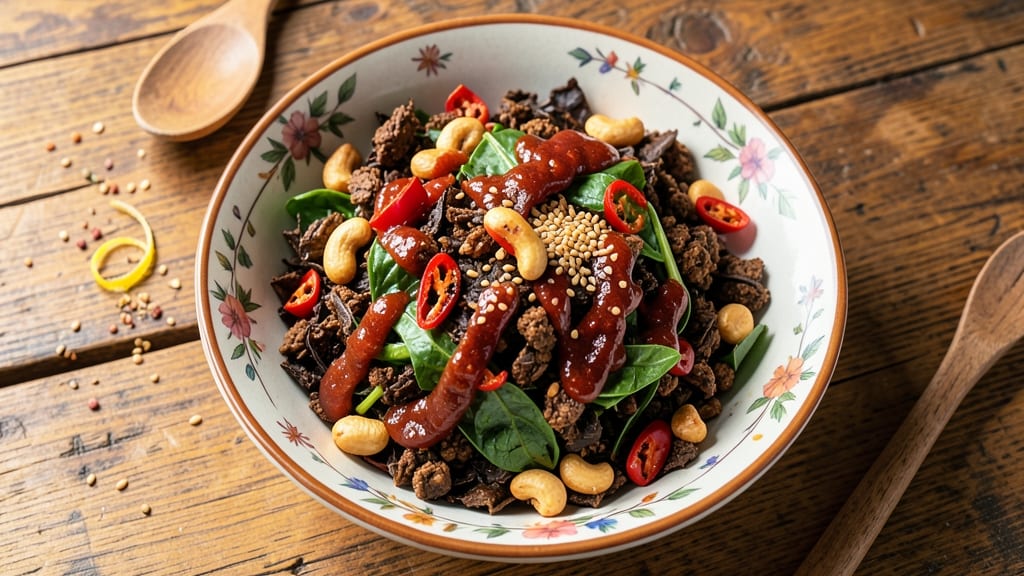
This authentic Burmese tea leaf salad delivers the vibrant, crunchy texture and bold flavors of Myanmar's beloved laphet thoke—a dish that balances earthy tea leaves with tangy tamarind, fiery chili, and nutty sesame.
The secret lies in properly crushing the tea leaves and fermenting them just enough to develop their signature umami depth, a technique I've perfected after years of experimenting with traditional methods.
What makes this salad truly special is its harmonious blend of textures and flavors: crispy toasted peanuts, fresh mustard greens and mint, and the tangy kick of tamarind that cuts through the richness.
Unlike many Western salads, this dish relies on fermentation to enhance the tea leaves' natural flavors, creating a dish that's both complex and refreshingly light. The optional addition of shrimp paste or fish sauce adds depth for those who prefer a more savory profile.
The result is a salad that's as satisfying as it is visually striking—golden from the toasted sesame, vibrant from the fresh herbs, and crunchy with every bite.
It's a dish that bridges tradition and adaptability, working as a light meal on its own or a bold side to grilled proteins. Whether you're serving it at a dinner party or packing it for lunch, this recipe brings a taste of Myanmar to your table with authenticity and ease.
For those new to Burmese cuisine, don't be intimidated by the fermentation process—it's simpler than it sounds, and the payoff is worth it. This salad is also naturally vegan-friendly (without the shrimp paste) and packed with nutrients, making it a versatile addition to any meal.
Let's dive into the steps to recreate this beloved dish at home.
Ingredients for authentic burmese tea leaf salad
Earthy tea leaves meet tangy tamarind and nutty sesame in this Burmese classic.
| Ingredient | Amount | Notes |
|---|---|---|
| Assam Tea Leaves (fermented) ☕ | ½ cup | Crushed and fermented for 2-3 days |
| Tamarind Paste 🍯 | ¼ cup | Unsweetened, high-quality paste |
| Red Chili Peppers 🌶️ | 2 whole | Bird's eye or Thai chili, finely chopped |
| Roasted Peanuts 🥜 | ½ cup | Crushed, unsalted preferred |
| Toasted Sesame Seeds 🌰 | 2 tbsp | White or black sesame preferred |
| Mustard Greens 🌱 | 4 cups | Fresh, stems removed |
| Fresh Mint Leaves 🍃 | ¼ cup | Torn, not chopped |
| Lime Juice 🍋 | ¼ cup | Freshly squeezed |
| Vegetable Oil 🫒 | 1 tbsp | For light frying peanuts |
| Soy Sauce 🍶 | 1 tbsp | Light or tamari for gluten-free |
| Sugar 🍚 | 1 tbsp | Adjust to taste |
| Salt 🧂 | ½ tsp | Kosher or sea salt |
| Garlic Cloves 🧄 | 2 cloves | Minced, optional for depth |
The tea leaves are the heart of this dish, and Assam tea is non-negotiable for that deep umami flavor. Look for loose-leaf Assam at World Market or specialty tea shops—they carry the fermented variety needed for this recipe. If you can't find pre-fermented leaves, crush regular Assam tea leaves and let them sit in a sealed container for 2-3 days to develop the necessary funk. The tamarind paste should be thick and pulp-free; Thai Kitchen brand is my go-to. For the chili, bird's eye peppers are traditional, but Thai chilis work too—just adjust the quantity based on heat preference. Toast your own peanuts for the best texture: spread them on a dry skillet over medium heat until golden, then crush them with a rolling pin.
No tamarind paste? Lime juice plus a pinch of sugar mimics the tang, though it won't be identical. Fresh mint is ideal, but dried mint at half the amount works in a pinch. If you're avoiding soy sauce, coconut aminos provide a similar savory depth. The garlic is optional but adds a lovely aromatic note—skip it if you're sensitive to strong flavors. For the sesame seeds, toast them in a dry pan for 2-3 minutes until fragrant; this step makes all the difference. The mustard greens should be fresh and slightly bitter—older greens lose their crispness, so use them within 2 days of purchase. If you're serving this salad to guests who prefer milder flavors, reduce the chili to 1 whole pepper and increase the sugar to 1.5 tablespoons.
This salad keeps beautifully in an airtight container for 3-4 days in the fridge, though the texture softens slightly over time. The flavors actually deepen as it sits, so it's perfect for meal prep. For best results, assemble just before serving—this preserves the crunch of the peanuts and greens. The fermented tea leaves can be prepped up to 5 days ahead and stored in the fridge. If you're making this ahead for a party, portion the salad into individual containers and keep the dressing (tamarind, lime, soy, sugar) separate until ready to toss. The toasted peanuts and sesame seeds can be stored in a sealed jar for up to 2 weeks at room temperature.
Why You'll Love This Recipe
- No-Chop Needed: I swear by this—just tear the tea leaves by hand (no knife required) and mix. The tamarind paste does all the work of tenderizing, so you’re basically assembling, not cooking.
- Umami Bomb: That fermented Assam tea? It’s like a funky, earthy punch of deep flavor—tangy from tamarind, heat from fresh chili, and crunch from peanuts. Honestly, I’ll eat this plain if I’m in a rush.
- Lunchbox Hero: Pack it in jars or containers—keeps for days without wilting. (Yes, even on a Tuesday night.) My kids grab it for school lunches, and my husband sneaks bites from the fridge.
- Pocketbook Friendly: Tea leaves and peanuts stretch this salad into a full meal for next to nothing. I’ll be real: I’ve made this for a dollar’s worth of ingredients and still felt fancy.
Step-by-step instructions for authentic Burmese tea leaf salad
This traditional Burmese salad delivers a perfect balance of fermented tea depth, tangy tamarind, and nutty crunch.
Prepare the Tea Leaf Base
Place the 0.5 cup Assam Tea Leaves (fermented) in a clean bowl and gently crush them between your palms until they break into small pieces but don't turn into powder. This releases the fermented flavors without making the salad bitter. The tea leaves should look like coarse crumbs with some whole pieces remaining—this texture gives the salad its signature earthy depth.
Set aside the crushed tea leaves and prepare the tamarind mixture in a separate small bowl. Combine the 0.25 cup Tamarind Paste, 1 tbsp Sugar, 0.25 cup Lime Juice, and 1 tbsp Soy Sauce. Whisk vigorously until the sugar dissolves completely and the mixture becomes smooth. The tamarind should be fully incorporated with no visible lumps—this ensures an even tangy flavor throughout the salad.
Toast and Prepare the Crunchy Elements
Heat a dry skillet over medium heat and add the 0.5 cup Roasted Peanuts. Toast them for 3-4 minutes, stirring constantly, until they become fragrant and develop a golden sheen. Remove from heat immediately and let cool for 2 minutes before crushing them coarsely with a rolling pin or mortar and pestle. The peanuts should retain some texture but be small enough to distribute evenly.
In the same skillet, add the 1 tbsp Vegetable Oil and swirl to coat. Add the 2 whole Red Chili Peppers (whole, not chopped yet) and toast for 30 seconds
Assemble the Salad Components
In a large mixing bowl, combine the 4 cups Mustard Greens (stems removed and roughly chopped) with the 0.25 cup Fresh Mint Leaves (torn, not chopped). Add the 2 minced Garlic Cloves (if using) and toss gently to distribute. The greens should look vibrant and fresh—this is your base that will absorb all the other flavors.
Add the crushed tea leaves, toasted peanuts, and chopped chili peppers to the greens. Pour the tamarind mixture over everything and toss gently but thoroughly. The salad should look dark green with black tea leaf specks, red chili flecks, and golden peanut bits. Sprinkle with the 2 tbsp Toasted Sesame Seeds and 0.5 tsp Salt, then toss one final time to combine everything evenly.
Rest and Serve for Optimal Flavor
Let the salad rest for 10-15 minutes at room temperature. This allows the flavors to meld together—you'll notice the tea leaves soften slightly and the tamarind's tang becomes more integrated. The salad should smell complex, with notes of fermented tea, citrus, and toasted nuts.
Taste and adjust seasoning if needed. If it's too tangy, add a pinch more sugar. If it needs more salt, add it gradually. Serve immediately while the greens are still crisp and the flavors are vibrant. This salad is best enjoyed fresh, as the mustard greens will soften over time. Pair with grilled meats or as a refreshing side dish for an authentic Burmese dining experience.
Pro Tips For Making Authentic Burmese Tea Leaf Salad
- Soak the Tea Leaves: Toss those Assam leaves in warm water for 10 minutes first—just enough to soften them without turning them mushy. I learned this the hard way after ending up with a salad that tasted like wet cardboard.
- Balance the Tamarind: Start with half the tamarind paste called for, then adjust to taste—this stuff varies wildly in sourness. My grandmother swore by tasting as you go, and she was right: you’ll regret guessing.
- Toast Peanuts Low: Roast those peanuts at 300°F (150°C) for 12-15 minutes, stirring often, until they’re golden but not burnt. After burning three batches, I finally figured out patience wins here.
- Pulse Chilies Fine: Grind the red chilies into a powder, not chunks—this salad’s heat and texture depend on it. I was skeptical until I tried it: the difference between a good salad and a great one is in the fine grind.
Regional styles of these flavors
Yangon Street Style
In Yangon, this salad is often served as a quick street food snack, where vendors sell it from carts alongside grilled meats. The key difference is the addition of 1 tbsp shrimp paste (kapi) mixed into the tamarind dressing—this adds a deep, funky umami that's essential for street-style authenticity.
I like to use Thai shrimp paste for its balance of saltiness and complexity. For a vegetarian version, omit the shrimp paste and increase the soy sauce to 2 tbsp instead. 🌆
Mandalay Royal Version
In Mandalay, a more refined royal version of this salad was traditionally served at royal courts. The salad includes gold leaf flakes (about ¼ tsp) sprinkled on top just before serving, along with finely chopped candied ginger (about 1 tsp) for a sweet contrast.
The tea leaves are also fermented slightly longer—4-5 days—to develop a deeper, almost wine-like flavor. This version is typically served as part of a multi-course meal rather than a street snack. 🏰
Shan State Fermentation
The Shan people of eastern Myanmar have their own variation where the tea leaves are fermented with a touch of rice wine (about 1 tsp) during the fermentation process. This adds a subtle alcoholic note that enhances the earthiness of the tea.
For this version, ferment the tea leaves with the rice wine for 3 days instead of 2-3, then proceed with the recipe as usual. Shan-style salad also often includes dried shrimp (about 2 tbsp) for extra umami depth. 🗺️
Rakhine Coastal Twist
Along Myanmar's Rakhine coast, fishermen incorporate local seafood into their tea leaf salad. The most common addition is finely chopped raw shallots (about 2 tbsp) and diced fresh crab meat (about ½ cup), mixed in just before serving.
The seafood adds a briny contrast to the salad's tangy and earthy flavors. For a vegetarian adaptation, substitute the crab with extra mustard greens and a splash of fish sauce (1 tsp) to mimic the oceanic notes. 🌊
Modern Yangon Fusion
Today's Yangon food scene has given rise to fusion versions that blend traditional tea leaf salad with modern techniques. One popular adaptation replaces tamarind with a mango-habanero salsa (about ½ cup) for a sweet-spicy contrast.
Another trendy version includes crispy fried shallots (about 2 tbsp) for extra crunch. These modern twists keep the core elements of tea leaves and peanuts while adding contemporary flavors that appeal to younger generations. 💡
Nutrition facts
Frequently asked questions
Why do the tea leaves need to be fermented?
Fermentation develops the tea leaves' deep, earthy umami flavor that's essential to Burmese tea leaf salad. The 2-3 day process breaks down the tannins, making them less bitter and more complex—like a natural aging process. Without fermentation, the salad would taste flat and one-dimensional, missing its signature funky depth.
Can I make this salad without tamarind?
Yes, but the flavor will be different. For a substitute, mix 0.25 cup lime juice with 1 tbsp sugar and 1 tsp vinegar (rice or apple cider) to mimic the tang. The salad will be more citrus-forward but still delicious. If you're avoiding sugar, use extra lime juice and a pinch of salt to balance the acidity.
How do I adjust the spice level?
Start with 1 whole chili pepper for mild heat, 2 peppers for medium, or 3-4 peppers for spicy. For extra heat, add ½ tsp chili flakes or a dash of Sichuan peppercorn powder (about ¼ tsp). Always taste before serving—you can reduce heat by adding more greens or tamarind mixture, but you can't remove it once added.
What greens can I use if I can't find mustard greens?
Substitute with 4 cups baby spinach or mixed greens (arugula, butter lettuce) for a milder flavor, or kale (stemmed and chopped) for a heartier texture. Avoid iceberg lettuce—it lacks the peppery bite that balances the salad's richness. If using kale, massage it with a pinch of salt for 2 minutes before adding other ingredients.
Is this salad gluten-free?
Mostly, but check your soy sauce—use tamari instead of regular soy sauce for a gluten-free version. Also verify that your tamarind paste and shrimp paste (if using) are gluten-free. The recipe as written is naturally gluten-free except for the soy sauce component, making it safe for most gluten-sensitive diets.