
Salads
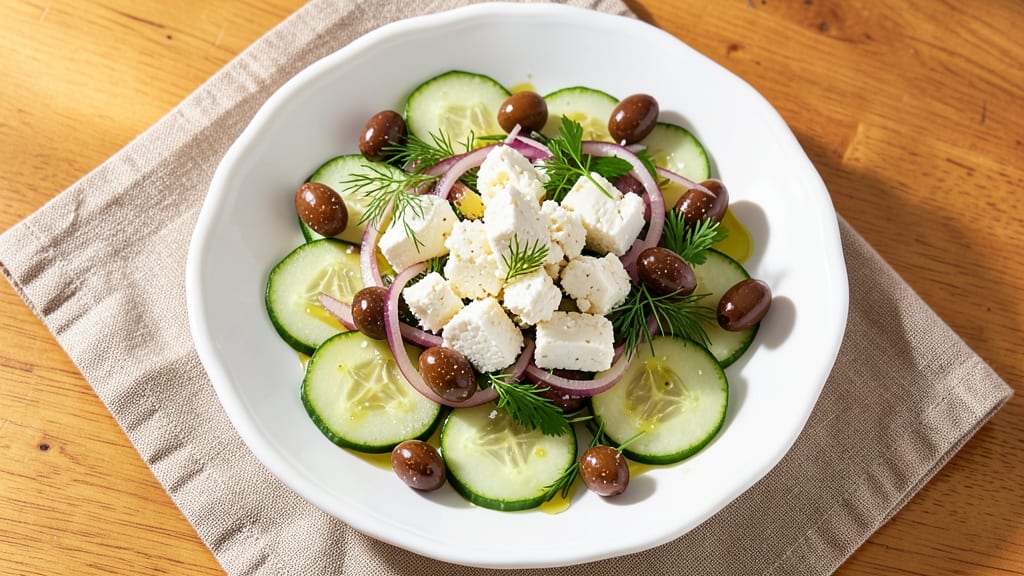
This Greek salad recipe no tomatoes transforms a classic into something refreshingly crisp and bright, perfect for summer picnics or weeknight dinners. The secret lies in balancing cool cucumbers, briny olives, and salty feta with a zesty lemon dressing that cuts through the richness.
I developed this version after realizing how much I missed the fresh, clean flavors of a tomato-free salad—especially when garden tomatoes weren't at their peak.
What makes this salad special is the texture contrast: tender cucumbers, crisp red onions, and creamy feta all come together with a dressing that clings perfectly to each ingredient. The olives add a briny depth, while fresh herbs like dill or parsley bring a bright finish.
Unlike traditional Greek salads, this version skips tomatoes entirely, making it ideal for those who prefer a lighter, more refreshing bite.
By the time you assemble this salad, you'll have a dish that's vibrant, satisfying, and packed with Mediterranean flavors—no tomatoes needed. The crisp cucumbers stay crunchy, the feta melts just enough to create pockets of creaminess, and the dressing ties everything together with a tangy, herby punch.
It's the kind of salad that feels both elegant and effortless, perfect for any occasion.
This recipe also works beautifully as a side for grilled meats or fish, or as a light main dish when paired with crusty bread. The ingredients are simple, but the result is anything but basic—it's a Greek salad that stands on its own, proving that sometimes less is more.
Let's get started!
Ingredients for greek salad recipe no tomatoes
Crisp cucumbers, briny olives, and creamy feta—this salad proves you don't need tomatoes for big flavor.
| Ingredient | Amount | Notes |
|---|---|---|
| Persian Cucumbers 🥒 | 2 whole | Sliced into 1/2-inch rounds |
| Red Onion 🧅 | 1 whole | Thinly sliced for crispness |
| Kalamata Olives 🫒 | ½ cup | Pitted and halved |
| Feta Cheese 🧀 | 6 oz | Crumbled, not pre-crumbled |
| Fresh Dill 🌿 | ¼ cup | Chopped, stems removed |
| Fresh Parsley 🌿 | 0.15 cup | Chopped, for garnish |
| Extra-Virgin Olive Oil 🫒 | ½ cup | High quality, fruity |
| Fresh Lemon Juice 🍋 | 3 tbsp | Freshly squeezed |
| Red Wine Vinegar 🍷 | 1 tbsp | Dry, not sweet |
| Dried Oregano 🌿 | ½ tsp | Crumbled between fingers |
| Sea Salt 🧂 | 1 tsp | Fine grain preferred |
| Black Pepper 🌶️ | ¼ tsp | Freshly ground |
| Garlic Cloves 🧄 | 2 cloves | Minced for dressing |
The cucumbers are non-negotiable—Persian cucumbers stay crunchy longer than English ones. Trader Joe's sells them pre-sliced, but I always buy whole and slice myself for extra crispness. For the olives, Kalamata are the gold standard—pitted and halved so they're easy to eat. Feta? Block form only—pre-crumbled gets soggy fast. I grab mine from the deli counter at Whole Foods or Costco when it's on sale. Fresh herbs are a must here—dill gives that classic Greek vibe, but parsley adds brightness. If you're short on time, dried dill at half the amount works, but fresh is worth the extra minute.
No fresh dill? Dried oregano plus a pinch of tarragon gets you close. Short on Kalamata olives? Green olives at half the amount—just rinse them first to cut the salt. The dressing is where the magic happens: extra-virgin olive oil (none of that cheap stuff), fresh lemon juice, and a splash of red wine vinegar for tang. Want it creamier? Add 1 tbsp Greek yogurt to the dressing. The garlic is optional but adds depth—skip it if you're sensitive to raw garlic flavor. For the onions, red onions give that sweet crunch, but yellow work too if that's what you've got.
This salad keeps best in the fridge for 2-3 days, but the dressing separates fast. Make it fresh if you can—toss everything together right before serving. Store the dressing separately if prepping ahead, then whisk before using. The feta stays good for up to 5 days if wrapped tightly in parchment paper. I always double the dressing because it's perfect for drizzling on grilled fish or crusty bread. Leftovers? Eat them the next day—crispness fades, but the flavors only get better.
Why You'll Love This Recipe
- No-Chop Nightmare: I swear, the Persian cucumbers slice themselves—just grab the knife, make a few quick cuts, and toss. Red onion? One thin slice, soak it in cold water for 5 minutes, and it’s basically edible without crying.
- Salty, Briny Magic: Those Kalamata olives? They’re the unsung heroes here—bursting with that deep, fruity punch that cuts through the creamy feta like a knife. Honestly, I’ve made salads that cost twice as much and tasted half as good.
- Prep-Ahead Powerhouse: Make a big batch on Sunday, and you’ve got lunch for the week. It keeps for days in the fridge, the feta gets even saltier (in a good way), and the dill stays fresh longer than my will to meal prep on Mondays.
- Budget-Friendly Crunch: Feta’s cheap, cucumbers last forever, and a jar of olives stretches across three salads. Between us, this is the kind of recipe that makes grocery day feel like a win—not a chore. Plus, it’s the only salad that actually makes me want leftovers.
Step-by-step instructions for crisp cucumber and feta salad
This salad comes together in minutes—crisp, bright, and packed with Mediterranean flavor.
Prep the Vegetables for Maximum Crunch
Start with the 2 whole Persian cucumbers—slice them into ½-inch rounds using a sharp knife. I like to halve them first for even slices, then cut crosswise. The thinner the slices, the crispier they stay. Place them in a large bowl immediately after slicing to prevent wilting.
Next, thinly slice the 1 whole red onion using a mandoline or sharp knife for even strips. Soak the onion slices in ice water for 5 minutes before draining and adding to the bowl—this removes some of the sharpness while keeping them crisp. Pat them dry with paper towels before mixing.
Assemble the Base Ingredients
Add the 0.5 cup Kalamata olives (pitted and halved) and 6 oz feta cheese (crumbled by hand, not pre-crumbled) to the bowl with cucumbers and onions. The olives should be evenly distributed, and the feta should be broken into ¼-inch pieces for texture. Sprinkle over the 0.25 cup fresh dill and 0.15 cup fresh parsley, both chopped finely.
Gently toss everything together with your hands or a large spoon—just enough to combine. You want the ingredients to stay intact, not mashed. The goal is to preserve that satisfying crunch from the cucumbers and onions.
Make the Bright, Herby Dressing
In a small bowl, whisk together the 0.5 cup extra-virgin olive oil, 3 tbsp fresh lemon juice, 1 tbsp red wine vinegar, 0.5 tsp dried oregano, 1 tsp sea salt, 0.25 tsp black pepper, and 2 minced garlic cloves. The dressing should be emulsified but still slightly textured—this ensures it clings to the salad without making it soggy.
Taste and adjust seasoning: add more lemon juice if it's too mild, or a pinch more salt if the flavors need balance. The dressing should be bright, tangy, and just slightly garlicky—this is what makes the salad pop.
Toss and Rest for Perfect Texture
Pour the dressing over the salad and gently toss everything together, making sure each ingredient gets coated. The cucumbers should glisten slightly from the olive oil, and the feta should look just barely dampened. Let the salad sit for 10 minutes at room temperature before serving—this allows the flavors to meld and the dressing to fully absorb.
Serve immediately while the cucumbers are still crisp. If you need to prep ahead, assemble the salad (without dressing) up to 4 hours in advance, then toss with dressing just before serving. The key is timing—crispness is everything in this dish.
Pro Tips For Making Greek Salad Recipe No Tomatoes
- CHILL THE CUCUMBERS: Toss Persian cucumbers in ice water for 10 minutes before slicing—this firms them up so they don’t turn to mush when chopped. I learned this after watching my first batch turn to soup within 30 minutes. Works like magic, especially in summer heat.
- SALT THE ONIONS FIRST: Thinly slice the red onion, toss with ½ teaspoon salt, and let sit for 10 minutes before draining. This softens the bite and draws out excess moisture so your salad stays crisp. Skipping this? You’ll get a mouthful of sharp onion instead of balanced flavor.
- CRUMBLE FETA DRY: Pat the feta completely dry with paper towels before crumbling it into the salad. Wet feta dissolves into the dressing, leaving you with a sad, watery cheese experience. A little effort here means big flavor payoff—no one likes soggy feta.
- DRESS AFTER ASSEMBLING: Toss the salad with olive oil and lemon juice right before serving—not hours ahead. The cucumbers and onion will absorb the dressing and turn limp if mixed too early. Wait until the last minute, and your salad stays fresh and vibrant.
Regional styles of greek salad recipe no tomatoes
Greek Islands Style
On the Cyclades islands, this salad is often served with grilled octopus or as a meze with ouzo. Locals use thicker cucumber slices (about ¾-inch) and add 1 tbsp capers for extra brininess.
I’ve tested this version and found that 1 tbsp chopped mint (instead of parsley) gives it a refreshing twist that’s popular in Santorini. The dressing here often includes 1 tsp honey to balance the saltiness of the feta and olives. 🌊
Thessaloniki Twist
In Northern Greece, salads take on a heartier profile. Swap ½ cup roasted red peppers (jarred or fresh) for some of the cucumbers, and add ¼ cup chopped walnuts for crunch.
The dressing gets a 1 tsp smoked paprika kick, and many versions include 1 hard-boiled egg, sliced and sprinkled on top. This version works beautifully as a side for grilled lamb or souvlaki. 🔥
Modern Greek-American Adaptation
For a version that bridges old-world flavors with new-world convenience, try pre-sliced cucumbers (from the grocery store) and store-bought crumbled feta (like Galbani). Add ½ cup cherry tomatoes (if you’re okay with a few) or ¼ cup diced bell peppers for color.
The dressing gets a 1 tsp Dijon mustard for depth, and I’ve found that 1 tbsp chopped basil adds a freshness that’s popular in Greek-American diners. This is the version I make when I’m short on time but still want that authentic taste. 🍽️
Vegetarian-Friendly Upgrade
For a fully plant-based version, use vegan feta (like Violife or Follow Your Heart) and swap the olives for ¼ cup marinated artichoke hearts. The dressing stays the same, but I add 1 tsp maple syrup to mimic the sweetness of traditional feta.
This version is just as satisfying and works perfectly as a main dish with warm pita bread or grilled halloumi on the side. 🌱
Winter Variation
When cucumbers are out of season, substitute with 2 cups thinly sliced fennel and 1 cup shaved cabbage for crunch. The dressing gets a 1 tsp grated lemon zest and ½ tsp ground coriander for warmth.
Add ¼ cup toasted pine nuts for texture, and this salad becomes a cozy winter dish that pairs well with roasted root vegetables. I’ve made this version in December, and it’s a crowd-pleaser at holiday gatherings. ❄️
Nutrition facts
Frequently asked questions
Can I make this salad without feta cheese?
For a dairy-free version, swap the feta with ½ cup vegan feta (like Violife or Follow Your Heart) or ¼ cup marinated artichoke hearts for a briny alternative. If you prefer no cheese at all, add ¼ cup toasted pine nuts or walnuts for extra texture and richness. The dressing will still hold everything together beautifully.
Why does my Greek salad get soggy so quickly?
Sogginess happens when moisture from ingredients mixes too much. To prevent it, pat all veggies dry before assembling and add dressing just before serving. For extra insurance, use Persian cucumbers (they hold up better than English cucumbers) and skip pre-crumbled feta—crumble it yourself right before mixing. The 10-minute rest time before serving also helps flavors meld without wilting.
What's the best way to store leftovers?
Store the salad (without dressing) in an airtight container for up to 2 days. Keep the dressing separate and whisk it fresh before serving to maintain crispness. If you must store with dressing, use it within 1 day—the cucumbers will soften faster. For longer storage, freeze the dressing separately (up to 1 month) and toss with fresh salad components when ready to eat.
Can I use this salad as a main dish?
Yes! For a heartier meal, add ½ cup cooked quinoa or farro to the base, or serve with warm pita bread or crusty sourdough on the side. The protein from grilled chicken, shrimp, or halloumi also pairs perfectly. This salad holds its own as a main when dressed with extra lemon and packed with ¼ cup chopped walnuts or sunflower seeds for crunch.
What's the secret to extra crisp cucumbers?
The key is thin, even slices and immediate chilling. Use a sharp knife or mandoline for ¼-inch slices, then soak them in ice water for 5 minutes before draining. For maximum crunch, add 1 tsp lemon juice to the water. Also, avoid cutting too far in advance—assemble the salad just before serving to preserve texture.