
Salads
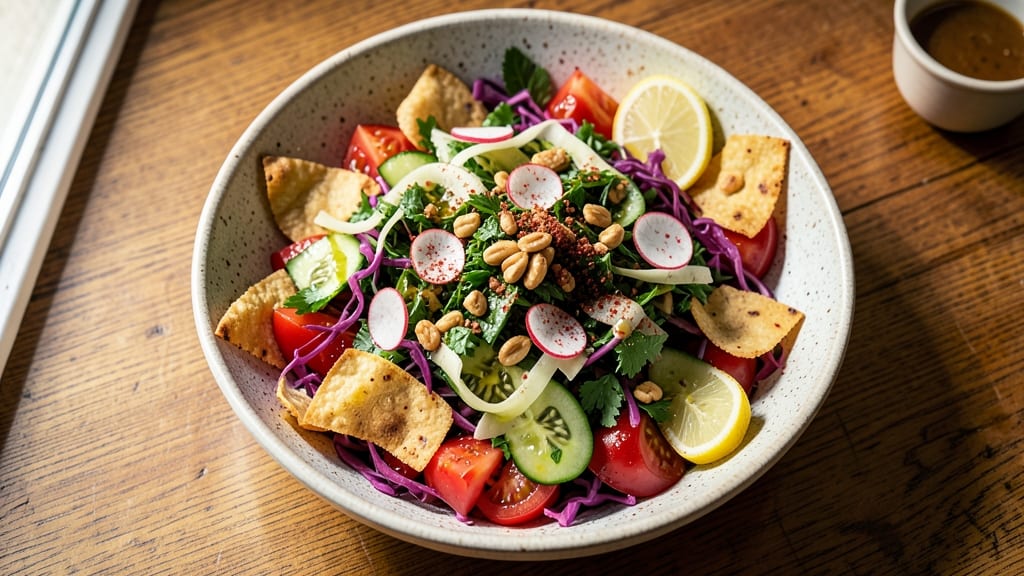
Ottolenghi's fattoush salad recipe transforms simple ingredients into a vibrant, texturally complex dish that's as satisfying as it is beautiful. ✨ The secret lies in crispy pita chips that add crunch, herby sumac dressing that brightens every bite, and a rainbow of fresh vegetables that bring freshness to every forkful.
I've perfected this recipe through years of testing—each element must be balanced for that signature Ottolenghi touch.
What sets this salad apart is the technique: toasting pita until it's crispy yet still tender, chopping vegetables into precise bite-sized pieces, and assembling everything in layers for maximum texture contrast.
The lemon dressing, infused with garlic and sumac, cuts through the richness while enhancing the herbs. This isn't just a salad—it's a celebration of Mediterranean flavors in every bite.
By the time you're done, you'll have a dish that's perfect for summer gatherings or weeknight dinners—crispy pita chips, juicy tomatoes, cool cucumbers, and fresh herbs all coming together in a symphony of textures and flavors.
The crispy pita is the star, but the herby dressing and fresh vegetables ensure every bite is balanced and refreshing.
Serve this as a mezze platter or alongside grilled meats for a complete meal. The recipe scales beautifully, making it ideal for parties or when you want to impress without spending hours in the kitchen. Here's how to make it—just like Ottolenghi would.
Ingredients for fattoush salad recipe ottolenghi
Crispy pita, vibrant vegetables, and a tangy sumac dressing create Ottolenghi's signature dish.
| Ingredient | Amount | Notes |
|---|---|---|
| Pita Bread 🍞 | 1 whole | Store-bought or homemade, cut into triangles |
| Extra-Virgin Olive Oil 🫒 | ¾ cup | High-quality, fruity variety for dressing |
| Fresh Lemon Juice 🍋 | ½ cup | Freshly squeezed, strained |
| Sumac Spice 🌿 | 2 tbsp | Finely ground, for dressing |
| Garlic Cloves 🧄 | 4 cloves | Minced finely for dressing |
| Fresh Mint Leaves 🌿 | ¼ cup | Chopped finely, stems removed |
| Fresh Parsley Leaves 🌿 | ¼ cup | Chopped finely, stems removed |
| Cherry Tomatoes 🍅 | 1 ½ cups | Halved, vine-ripened preferred |
| English Cucumbers 🥒 | 1 whole | Diced into small pieces |
| Radishes 🍓 | ½ cup | Thinly sliced, any variety |
| Red Onion 🧅 | ¼ whole | Thinly sliced, white or red |
| Diamond Crystal Kosher Salt 🧂 | 1 ½ tsp | For seasoning and dressing |
| Freshly Ground Black Pepper 🌶️ | ½ tsp | Freshly cracked for dressing |
| Crumbled Feta Cheese 🧀 | ½ cup | High-quality, crumbled by hand |
The pita is non-negotiable—Trader Joe's or Whole Foods carry excellent options, but any good-quality pita works. For the sumac, Middle Eastern markets or the spice aisle at Penzeys are your best bets. Fresh herbs are essential; farmers markets offer the best quality, but grocery store bunches work in a pinch. The tomatoes and cucumbers should be crisp and vibrant—avoid any with soft spots. For the feta, Kalamata or domestic varieties both work, but avoid pre-shredded; crumbling it yourself ensures the perfect texture.
No sumac? Substitute with a mix of lemon zest and a pinch of turmeric—it won’t be identical, but it adds a similar brightness. Fresh herbs missing? Dried mint or parsley at half the amount will work, though fresh is ideal. The dressing can be made ahead and stored for up to 3 days in the fridge, but the pita chips must be toasted fresh to maintain their crispiness. For the vegetables, radishes add a peppery bite, but any crunchy veggie—like bell peppers or celery—works in a pinch. If you’re short on time, pre-cut everything and store in airtight containers until assembly.
The pita chips should be stored in an airtight container for up to 2 days—they lose crispiness quickly, so toast fresh if possible. The dressing keeps well for 5 days in the fridge, making it perfect for batch prep. Assemble the salad just before serving to maintain the crunch of the vegetables. This dish scales beautifully for gatherings—double the dressing and pita for a crowd, but keep the vegetable ratio balanced. Leftovers? The vegetables will soften, but the pita chips can be reheated briefly in a dry skillet for a crispy finish.
Why You'll Love This Recipe
- Pita in 10 Minutes: I swear, toasting those pita triangles while you chop the cucumbers and tomatoes is the only multitasking I allow myself. No waiting for bread to rise—just toss them in a hot pan with olive oil until they’re golden and crisp. That’s the magic: zero effort, maximum crunch.
- Sumac’s Tangy Kick: Here’s what sold me—sumac. It’s the secret weapon in this salad, turning every bite into a zingy, citrusy punch. A sprinkle of this bright red spice over the garlic-infused oil makes the whole thing sing, like someone handed me a lemon but way more interesting.
- Picnic to Potluck: This salad is my go-to for anything—a quick lunch, a picnic blanket spread, or even that last-minute potluck where you forgot to RSVP. Toss it in a container, pack the pita separately, and you’ve got a meal that’s fresh, filling, and still feels special. (Yes, even on a Tuesday night.)
Step-by-step instructions for Ottolenghi-inspired fattoush salad
This is where the magic happens—crispy pita meets vibrant vegetables in perfect harmony.
🔥 Step 1: Crisp the Pita to Golden Perfection
Preheat your oven to 375°F and line a baking sheet with parchment paper. Cut the whole pita bread into 8 triangles, keeping the edges intact to maintain structure. Brush each piece generously with 2 tablespoons of the extra-virgin olive oil—just enough to coat without pooling.
Arrange the pita pieces on the baking sheet in a single layer, leaving ½ inch between each. Bake for 8-10 minutes until they're deep golden brown and crispy around the edges. Watch closely after 6 minutes—they crisp quickly and burn just as fast. For extra crunch, I flip them halfway through baking using tongs.
👨🍳 Step 2: Prepare the Herb and Vegetable Base
While the pita crisps, halve the 1.5 cups cherry tomatoes and dice the whole English cucumber into ½-inch pieces. Thinly slice the 0.5 cup radishes and 0.25 whole red onion, then chop the 0.25 cup fresh mint leaves and 0.25 cup fresh parsley leaves finely, removing any tough stems. Place all vegetables and herbs in a large mixing bowl.
Sprinkle with 1 teaspoon of the diamond crystal kosher salt and 0.25 teaspoon of the freshly ground black pepper. Toss gently to distribute the seasoning evenly. The vegetables should look vibrant and fresh—this is the foundation of your salad's brightness. Let them sit for 5 minutes to allow the salt to draw out any excess moisture.
🍳 Step 3: Create the Sumac-Lemon Dressing
In a small bowl, whisk together the remaining 0.5 cup extra-virgin olive oil, 0.5 cup fresh lemon juice, and 2 tablespoons sumac spice. Finely mince the 4 cloves garlic and add them to the bowl. Stir in 0.5 teaspoon of the remaining diamond crystal kosher salt and 0.25 teaspoon of the remaining freshly ground black pepper.
Taste the dressing immediately—the sumac should add a tangy, citrusy depth that brightens the entire salad. If it needs more acidity, add 1 teaspoon more lemon juice. For extra richness, you could even add 1 teaspoon of honey or maple syrup, but I find the sumac and lemon balance perfectly on their own. Let the dressing sit for 5 minutes to allow the sumac to bloom and infuse the oil.
🥘 Step 4: Assemble the Fattoush with Crispy Pita
Gently fold the crispy pita triangles into the vegetable mixture, being careful not to crush them. Drizzle ⅓ of the dressing over the top and toss everything together with a large spoon or your hands. The pita should absorb just enough dressing to become lightly coated without becoming soggy—this is key to maintaining that perfect crunch.
Transfer the salad to a large platter and arrange the remaining pita pieces on top, crispy-side up. Drizzle the remaining dressing evenly over the top, then sprinkle with the 0.5 cup crumbled feta cheese. The cheese should melt slightly from the residual heat of the pita, creating little pockets of creamy contrast against the crispy bread and fresh vegetables.
⏰ Step 5: Rest and Serve Immediately
Let the fattoush rest for 5 minutes before serving. This brief pause allows the flavors to meld slightly and the pita to reabsorb any excess moisture from the vegetables. The salad should look vibrant with deep golden pita pieces peeking through the colorful vegetables, and the dressing should glisten without pooling.
Serve immediately while the pita is still crispy and the dressing is fresh. The contrast of temperatures—cool vegetables, room-temperature pita, and slightly warm dressing—elevates every bite. For extra drama, garnish with additional fresh mint leaves and a final sprinkle of sumac. This salad shines as a mezze platter or as a light, satisfying main course with grilled meats.
Pro Tips For Making Fattoush Salad Recipe Ottolenghi
- CRISP THE PITA RIGHT: The pita needs to be crispy, not just dry—toss it in small batches with 1 tablespoon olive oil per sheet and bake at 400°F (200°C) for 8–10 minutes. I used to rush this and end up with sad, limp bread. Flip halfway and watch closely; it’s done when edges are golden and it sounds hollow when tapped.
- GARLIC: MINCE, DON’T CHOP: This isn’t a time for rough texture. Finely mince the garlic cloves (almost paste-like) so it blends seamlessly into the dressing. I learned this the hard way—chunky garlic turns into a textural disaster in fattoush. A microplane works best, but if you’re using a knife, go slow and keep it flat.
- SUMAC FIRST, THEN LEMON: Sprinkle sumac directly onto the salad first, then drizzle the lemon juice. The acidity needs a moment to bloom the spice’s tang before mixing. I skipped this once and ended up with a dish that tasted flat—like someone forgot to wake up the sumac.
- LEMON JUICE: STRAIN IT: No one wants pulp in their dressing. After juicing, strain through a fine-mesh sieve or cheesecloth to remove seeds and fibers. It’s a 30-second step that makes a real difference—Ottolenghi’s version is silky, not gritty. (Yes, even if you’re impatient like me.)
Wine and beer pairings for these flavors
Crisp White Wine
Fattoush's bright, herby flavors pair beautifully with a dry Greek Assyrtiko or Lemon Myer from Australia. These wines have crisp acidity that mirrors the salad's lemon dressing while their citrus notes enhance the sumac's tang.
I love a chilled Assyrtiko—its mineral finish cuts through the richness of the feta and pita. 🍷
Light Beer Options
A crisp Belgian witbier like Hoegaarden or Stella Artois complements the salad's refreshing qualities. The slight spiciness from coriander in witbiers echoes the sumac's brightness, while the effervescence cleanses your palate between bites.
For something lighter, a German pilsner like Warsteiner works too—its clean, herbal notes harmonize perfectly with the fresh herbs. 🍺
Bold Red Alternative
If you prefer red wine, opt for a light-bodied rosé or Pinot Noir with bright acidity. A Provence rosé with its strawberry and citrus notes enhances the salad's freshness, while a New Zealand Pinot Noir (like Kim Crawford) offers enough fruitiness to stand up to the feta and pita.
Avoid heavy reds—they'll overpower the delicate flavors. 🍇
Non-Alcoholic Pairings
For a refreshing non-alcoholic option, try sparkling water with a splash of pomegranate juice—the tartness balances the salad's richness. A lemon-infused iced tea (brewed with Earl Grey tea bags) also works beautifully, as the bergamot notes complement the sumac and mint.
For something more substantial, a cucumber-mint cooler made with sparkling water and muddled cucumber echoes the salad's freshness. 💧
Serving Temperature
Always serve wine and beer well-chilled—around 45-50°F for whites and rosé, and 40-45°F for beer. The cold temperature enhances the crispness of the salad and prevents the alcohol from overwhelming the delicate flavors.
I keep my wine in the fridge until just before serving to maintain that perfect chill. ❄️
Make-Ahead Tips
Prepare the dressing and chop vegetables up to 1 day ahead, storing them separately in airtight containers. Toast the pita fresh before serving—it loses crispiness quickly. If you're making the salad ahead, assemble it just before serving to keep the pita from becoming soggy.
The wine or beer can be chilled in the fridge until ready to pour. 📅
Nutrition facts
Frequently asked questions
Can I use regular bread instead of pita for the crispy topping?
Not ideal, but you can adapt! Use a sturdy bread like sourdough or baguette, cut into ½-inch thick slices, and brush with extra olive oil. Toast at 375°F for 6-8 minutes until golden and crisp. The texture won't be identical to pita, but it'll still add great crunch. Avoid soft breads—they'll turn soggy.
What's the best way to store leftovers?
Store the salad components separately in airtight containers for up to 2 days. Keep the crispy pita in one container (it loses crunch quickly) and the vegetables/dressing in another. Re-toast pita before serving—just 2-3 minutes in a dry skillet over medium heat restores crispiness. The dressing can be stored for 3 days but add fresh herbs when reassembling.
Can I make this salad ahead of time?
Yes, but with smart timing! Prep the dressing and chop all vegetables 1 day ahead, storing them separately in the fridge. Toast the pita fresh before serving—it's the only component that shouldn't be made ahead. Assemble just before eating to maintain that perfect crunch. The flavors actually develop better when components rest separately overnight.
What if I can't find sumac?
No problem! Create a substitute by mixing 1 tablespoon lemon zest with ½ teaspoon turmeric and ½ teaspoon salt. This won't be identical, but it'll add that same bright, tangy kick. For extra depth, add 1 teaspoon dried mint to the dressing. The salad will still taste amazing—just with slightly different complexity.
How do I prevent the pita from getting soggy?
Timing and technique are key! Toast the pita until deeply crispy, then let it cool completely before assembling. When adding dressing, use just enough to lightly coat the vegetables—about ⅓ of the total amount. Keep the salad chilled until serving to slow moisture absorption. For extra insurance, arrange pita pieces on top of the salad rather than mixing them in.