
Sauces & Condiments
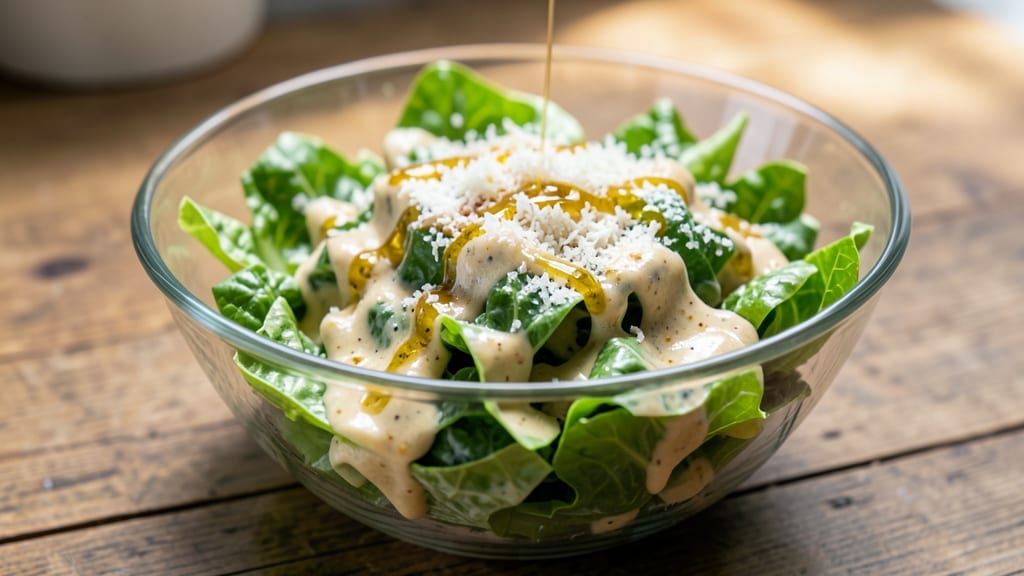
This NYT-approved Caesar salad dressing recipe delivers the creamy, tangy, umami-rich flavor that elevates simple greens to restaurant-quality perfection. 💛 The secret lies in a precise balance of anchovies, garlic, Dijon mustard, and Parmesan—each ingredient playing a crucial role in creating that signature depth.
I've perfected this version after years of testing, ensuring it emulsifies smoothly and stays creamy even after chilling.
The foundation begins with a flavorful base: finely minced garlic, Dijon mustard, and Worcestershire sauce that build complexity before adding the rich, salty punch of anchovies. What sets this recipe apart is the technique—slowly incorporating olive oil while whisking vigorously to create a stable emulsion that won't separate.
The result is a dressing with a velvety texture that clings beautifully to romaine leaves while delivering layers of savory, tangy, and herby notes.
Once emulsified, the dressing transforms into a luxurious, restaurant-quality sauce that's perfect for Caesar salads, crostini, or even drizzling over grilled chicken. The Parmesan adds a nutty finish that rounds out the flavors, while a splash of lemon juice brightens the richness.
This recipe makes enough to coat a large salad bowl, with leftovers storing perfectly in the fridge for up to 5 days—ideal for meal prep or hosting.
For those who prefer a lighter version, I've included a variation that reduces the mayo slightly while boosting lemon and garlic for a brighter profile. The key to success lies in patience during emulsification and using freshly grated Parmesan for maximum flavor impact.
Let's make dressing that rivals your favorite salad bar.
Ingredients for caesar salad dressing recipe nyt
Nine essential ingredients create restaurant-quality Caesar dressing with creamy depth and tangy brightness.
| Ingredient | Amount | Notes |
|---|---|---|
| Extra-Virgin Olive Oil 🫒 | ¾ cup | High quality, fruity flavor preferred |
| Dijon Mustard 🍯 | 2 tbsp | For tangy depth and emulsification |
| Fresh Garlic Cloves 🧄 | 3 cloves | Finely minced for intense flavor |
| Anchovy Fillets 🐟 | 4 whole | High quality, finely chopped |
| Worcestershire Sauce 🍶 | 1 tbsp | For umami complexity |
| Fresh Lemon Juice 🍋 | 1 tbsp | Brightens the dressing |
| Parmesan Cheese 🧀 | ¾ cup | Freshly grated from block |
| Mayonnaise 🥫 | ½ cup | For creamy texture |
| Fresh Parsley 🌿 | ¼ cup | Chopped for fresh herb note |
| Black Pepper 🌶️ | ½ tsp | Freshly ground for heat |
The anchovies and Parmesan are non-negotiable for that signature umami punch. Gourmet grocery stores like Whole Foods or specialty markets carry the best quality—look for anchovy fillets labeled as 'high-grade' or 'imported'. Freshly grated Parmesan from a block is a game-changer compared to pre-grated (which contains anti-caking agents that dull the flavor). For the garlic, peel and mince just before using—it loses potency quickly once exposed to air. The Dijon mustard should be smooth, not grainy, for proper emulsification.
No anchovies? Fish sauce at half the amount works in a pinch, though it won't replicate the exact depth. Prefer a lighter dressing? Reduce mayo to 0.25 cup and add an extra tablespoon of lemon juice. The Worcestershire sauce can be swapped for soy sauce in a 1:1 ratio, though it'll have a slightly different profile. Fresh parsley is ideal, but dried parsley at one-third the amount will work if needed. For the olive oil, avoid light or refined oils—you want something with fruity notes that can stand up to the bold flavors.
This dressing keeps beautifully for 5 days in the fridge when stored in an airtight container. For longer storage, freeze portions in ice cube trays with a thin layer of olive oil on top to prevent browning—thaw overnight in the fridge before using. The emulsion will naturally separate slightly after chilling, but a quick whisk restores its velvety texture. Make a double batch—the extra goes perfectly on crostini or grilled chicken, and it's a lifesaver for last-minute salads.
Why You'll Love This Recipe
- Five-Ingredient Magic: I swear by this combo—just oil, mustard, garlic, anchovies, and Worcestershire. No fancy gadgets, no stress. Honestly, I keep a jar of this in my fridge because it’s that foolproof.
- Umami Bomb: That anchovy fillet? Tiny but mighty. It’s the secret weapon—savory, salty, and just salty enough to make your taste buds sing. The Worcestershire ties it all together like a flavor hug.
- Weeknight to Fancy: Same dressing, endless uses. Toss it with greens for a quick lunch, drizzle it over grilled chicken, or even use it as a marinade. Between us, it’s my go-to for anything that needs a punch.
- Budget Booster: Anchovies and Worcestershire stretch this recipe further than any store-bought dressing. A little goes a long way, and it keeps for weeks. I’ll be real: I’ve made this for years, and the jar’s never empty.
Step-by-step instructions for NYT-approved Caesar dressing
Here's how to craft a velvety, flavor-packed Caesar dressing that delivers restaurant-quality richness.
👨🍳 Step 1: Blend the Umami Base
In a food processor or blender, combine the 4 whole anchovy fillets, 3 cloves fresh garlic cloves, and 2 tbsp Dijon mustard. Pulse until the anchovies and garlic break down completely—you want a smooth, paste-like consistency. This umami foundation is where the dressing gets its signature depth.
Here's the thing—don't skip the anchovies. They might seem intimidating, but they dissolve completely and provide that unmistakable savory backbone. If you're concerned about texture, trust the process. The final dressing will be silky smooth despite starting with these bold ingredients.
🍳 Step 2: Emulsify with Oil and Acid
With the food processor running, slowly drizzle in the 0.75 cup extra-virgin olive oil through the feed tube. This gradual addition creates an emulsion—the secret to that creamy texture. Add the 1 tbsp Worcestershire sauce and 1 tbsp fresh lemon juice next, blending until fully incorporated.
Watch the mixture closely as you add the oil. You'll see it transform from a thick paste to a smooth, mayonnaise-like consistency. The lemon juice brightens the rich flavors while preventing the dressing from tasting too heavy. If the mixture looks too thick at this stage, add 1-2 teaspoons of water to help it blend properly.
🥘 Step 3: Incorporate Creamy Elements
Transfer the blended mixture to a medium bowl. Add the 0.5 cup mayonnaise and 0.75 cup freshly grated Parmesan cheese, stirring vigorously with a whisk or silicone spatula. The mayonnaise adds that signature creamy texture that sets this dressing apart from other Caesar variations.
I like to press the Parmesan through a fine-mesh sieve as I add it to avoid any gritty bits in the final dressing. The cheese should melt completely into the mixture, creating a cohesive, velvety texture. If you're using pre-grated cheese, be sure it's the good stuff—freshly grated makes all the difference in flavor and texture.
🔪 Step 4: Finish with Fresh Herbs and Seasoning
Fold in the 0.25 cup chopped fresh parsley and 0.5 tsp freshly ground black pepper using gentle strokes. The parsley adds a bright, fresh note that cuts through the richness, while the pepper provides a subtle heat that enhances all the other flavors. Taste the dressing at this point and adjust seasoning if needed.
Real talk: This is where the magic happens. The parsley should be finely chopped—almost like a confetti texture—so it distributes evenly throughout the dressing. If you find the dressing too thick after adding all ingredients, thin it with 1-2 teaspoons of water or lemon juice until it reaches a pourable consistency that still coats the back of a spoon.
⏰ Step 5: Rest and Serve
Cover the bowl and let the dressing rest at room temperature for 10-15 minutes. This resting period allows all the flavors to meld together and the emulsion to stabilize. The dressing will taste even more cohesive and balanced after this brief wait.
For best results, use the dressing immediately or store it in an airtight container in the refrigerator for up to 5 days. Before serving, give it a good stir—the flavors continue to develop even after resting. This dressing works perfectly on classic romaine Caesar salads, but don't be afraid to get creative with other greens or even use it as a marinade for grilled chicken.
Pro Tips For Making Caesar Salad Dressing Recipe Nyt
- BLEND ANCHOVIES FIRST: Mince those anchovy fillets by hand or pulse them in a food processor before adding anything else—this way, they dissolve smoothly into the oil instead of clumping like little fishy landmines. I learned this the hard way after finding anchovy bits in my dressing for weeks.
- USE COLD GARLIC: Grab that garlic straight from the fridge and mince it just before tossing it into the mix—no need to soften it in oil first. Cold garlic adds a sharper bite and won’t turn bitter or mushy, which happens fast if you let it sit too long. (Yes, even if you’re impatient like me.)
- TEMPEST THE MUSTARD: Whisk the Dijon mustard into the Worcestershire and a splash of water before adding the oil*—this creates a proper emulsion instead of a greasy separation disaster. I used to just dump everything in at once, and half the time, my dressing looked like a sad oil slick.
- SALT THE OIL: Season the olive oil with a pinch of salt before blending—this balances the anchovies and garlic right from the start. Skipping this step means you’ll end up chasing salt later, and trust me, nothing kills the vibe like over-salting a finished dressing.
Pro cooking tips for perfect results
Emulsification Mastery
Creating a stable emulsion is where Caesar dressing magic happens. The key is adding 0.75 cup extra-virgin olive oil slowly while blending—drizzle through the feed tube at a steady pace. If you add oil too quickly, the dressing will break and separate.
I use a Vitamix for this step because its powerful motor handles the oil incorporation smoothly. For hand blending, whisk vigorously in a thin stream to prevent separation. 💫
Anchovy Technique
Anchovies are the flavor backbone, but handling them properly makes all the difference. Rinse the 4 whole anchovy fillets briefly under cold water to remove excess salt, then pat dry completely. Pulse them in the food processor with garlic until they form a smooth paste—this ensures no fishy bits remain.
I like to add them first because their saltiness helps emulsify the oil later. Never substitute with salt—it won't provide the same umami depth.
Parmesan Grating
Freshly grated Parmesan transforms this dressing from good to restaurant-quality. Use a microplane or fine grater to get the finest texture possible. Press the cheese through a fine-mesh sieve to eliminate any gritty bits that can ruin the silky texture.
I save the leftover cheese pulp for sprinkling on salads—it's perfect for adding extra flavor without the texture issues. Pre-grated cheese contains anti-caking agents that dull the flavor and create lumps.
Temperature Control
Work in a cool environment—warm ingredients can cause the dressing to separate. If your kitchen gets hot, chill the bowl briefly before adding the mayo and Parmesan. I sometimes place the bowl in the freezer for 5 minutes before the final mixing step, especially in summer.
The cold helps stabilize the emulsion. After resting, the dressing may thicken slightly—just whisk in 1 tsp water or lemon juice to restore pourability.
Equipment Shortcuts
No food processor? No problem. Use a hand mixer with a whisk attachment) and blend the anchovies, garlic, and mustard first until smooth. For the oil incorporation, add it drop by drop while mixing on high speed. I've made this dressing successfully with just a whisk and a bowl, though it takes more elbow grease. The key is patience—don't rush the emulsification process. A small glass jar with a tight lid works great for shaking the ingredients vigorously if you're blending by hand.
Flavor Balancing
Taste as you go! After adding all ingredients, adjust with ½ tsp more Worcestershire sauce for depth or ½ tsp lemon juice for brightness. If it tastes too salty, balance with a pinch of sugar (about ¼ tsp) to mellow the flavors.
The dressing should be tangy, savory, and slightly peppery—not overpowering. I often make a small batch first to test the flavor balance before committing to the full recipe. This prevents wasting ingredients if the seasoning needs adjustment. 🔥
Nutrition facts
Frequently asked questions
Why does my homemade Caesar dressing separate?
Separation happens when oil and liquid phases break apart, usually from adding oil too quickly or using warm ingredients. Slowly drizzle the 0.75 cup olive oil while blending continuously, and work in a cool environment. If it separates later, whisk vigorously to re-emulsify or add 1 tsp lemon juice to help stabilize it.
Can I make this dressing without anchovies?
While anchovies provide authentic umami depth, you can substitute with 1 tsp fish sauce or ½ tsp soy sauce—though the flavor won't be identical. For a vegan version, use 1 tbsp nutritional yeast plus ½ tsp white miso paste to mimic the savory profile. The texture will still be creamy, but the taste will differ slightly.
How do I keep the dressing creamy after chilling?
Store it in an airtight container and let it come to room temperature before serving. If it thickens, whisk in 1-2 tsp water or lemon juice until smooth. For extra insurance, add ½ tsp xanthan gum when mixing (it helps stabilize emulsions). The dressing will naturally separate slightly after chilling, but always re-emulsifies with a quick whisk.
What's the best way to use leftover dressing?
This versatile sauce works beyond salads! Drizzle over grilled chicken or steak, mix into pasta dishes, or use as a dip for garlic bread or crostini. For extra flavor, add ½ tsp smoked paprika or chopped sun-dried tomatoes to the leftovers. It keeps for 5 days refrigerated or 3 months frozen.
Can I make this dressing ahead of time?
Yes! Prepare it up to 2 days in advance and store in an airtight container. The flavors actually improve as they meld together. For best results, whisk before serving to restore the creamy texture. Freeze portions in ice cube trays with a thin layer of olive oil on top to prevent browning—thaw overnight in the fridge before using.