
Salads
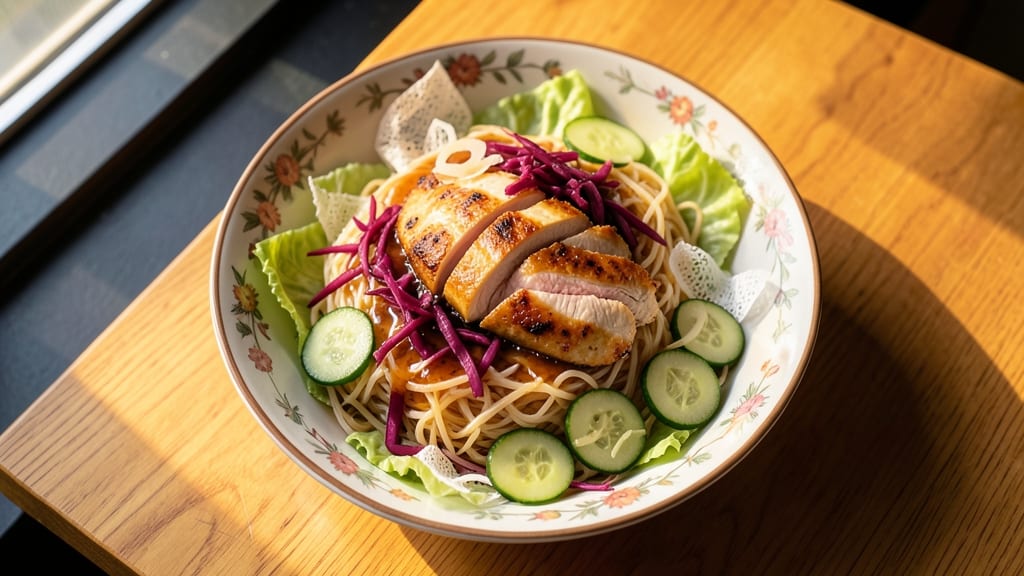
This Burmese noodle salad recipe delivers the perfect balance of tangy, spicy, and herbal flavors that make every bite unforgettable. The secret lies in tea-steeped soy sauce and bright lime juice, creating a dressing that transforms simple ingredients into a vibrant, restaurant-quality dish.
I've perfected this recipe over years of experimenting with Burmese street food favorites, and it never fails to impress.
The foundation is delicate rice noodles, tender protein (chicken, shrimp, or tofu), and crisp vegetables like cucumber and tomato. Fresh herbs—mint, cilantro, and Thai basil—add layers of aromatic complexity, while chili and tamarind bring the signature Burmese heat and tang.
What makes this dish truly special is how the flavors meld together when tossed with the dressing, creating a perfect harmony of sweet, sour, and spicy.
By the time you finish assembling this salad, you'll have a dish that's as beautiful as it is delicious—bright green from fresh herbs, vibrant red from chili, and golden-brown from perfectly cooked protein.
The tea-infused dressing adds depth that elevates every component, making this more than just a salad but a complete, satisfying meal. It's the kind of dish that transports you to the bustling streets of Yangon with every bite.
Perfect for weeknight dinners or as a refreshing appetizer, this Burmese noodle salad comes together in just 30 minutes with minimal prep. The best part? It tastes even better the next day, making it ideal for meal prep. Let's get started on creating this flavor-packed masterpiece.
Ingredients for burmese noodle salad
These vibrant ingredients create a Burmese noodle salad bursting with tea-infused soy and lime zing.
| Ingredient | Amount | Notes |
|---|---|---|
| Rice Noodles 🍜 | 8 oz | Flat, medium-width variety |
| Chicken Breast 🍗 | 1 lb | Boneless, skinless, thinly sliced |
| Lime Juice 🍋 | ½ cup | Freshly squeezed, seedless |
| Soy Sauce 🍶 | ½ cup | Light or all-purpose |
| Black Tea Bags ☕ | 2 whole | Strong brew, like Assam |
| Tamarind Paste 🍈 | 1 tbsp | Thick, unsweetened |
| Bird's Eye Chilies 🌶️ | 3 whole | Stemmed, finely chopped |
| Fresh Cilantro 🌿 | ½ cup | Stems included, chopped |
| Fresh Thai Basil 🌿 | ¼ cup | Stems removed, chopped |
| Fresh Mint Leaves 🌿 | ¼ cup | Chopped, loosely packed |
| English Cucumber 🥒 | 1 whole | Thinly sliced, seeds removed |
| Cherry Tomatoes 🍅 | ½ lb | Halved, seeds removed |
| Sesame Oil 🫒 | 1 tbsp | Toasted, for finishing |
| Toasted Sesame Seeds 🌾 | 1 tbsp | For garnish |
| Diamond Crystal Kosher Salt 🧂 | ½ tsp | For seasoning |
The tea-steeped soy sauce is non-negotiable for that signature depth. Assam tea bags work best—steep them in the soy sauce for 10 minutes, then strain. If you can't find Assam, Earl Grey is a decent backup. For the rice noodles, medium-width flat noodles are traditional, but any rice noodle will work. Thai Kitchen or Lotus Foods carry them in the Asian aisle. The bird's eye chilies? Handle with care—those tiny things pack serious heat. If you can't find them, substitute Thai chilies or even finely chopped jalapeños, but use half the amount.
Fresh herbs are where this salad sings, so don't skimp. Thai basil (the one with anise flavor) is a must—it's different from regular basil and worth hunting down at a Thai or Asian market. If you can only find Italian basil, use it but add a pinch of anise extract for authenticity. The tamarind paste can be tricky to find—look for it in the international aisle or online. No tamarind? A mix of lime juice and brown sugar (1 tbsp each) works in a pinch. The cucumber and tomatoes should be crisp—English cucumbers are ideal, but Persian cucumbers work too. Just make sure to remove the seeds for the best texture.
This salad keeps beautifully for 2 days in the fridge, but the flavors actually deepen overnight. Store the dressing separately if you're prepping ahead—toss it with the noodles just before serving. For extra crunch, keep the cucumber and tomatoes separate until the last minute. The sesame oil and seeds are for finishing—toast the seeds in a dry pan for 30 seconds before sprinkling on top. That little step makes all the difference. If you're meal prepping, portion the dressing into small containers so you can easily toss with fresh ingredients later.
Why You'll Love This Recipe
- No Boil Needed: I just toss the rice noodles in warm water for 5 minutes—no pot, no mess. The tea bags steep in the same bowl while I slice the chicken, and suddenly, dinner’s ready. Honestly, I’ve made this while waiting for takeout to arrive.
- Tea-Infused Magic: That black tea isn’t just for drinking—it deepens the soy sauce into something rich and earthy, like a secret umami boost. The lime cuts through it all, leaving you with a salad that’s tangy, savory, and weirdly addictive. (Yes, even on a Tuesday night.)
- Lunchbox Hero: This keeps perfectly for days, whether packed in a jar or a bento box. My son’s school lunches get more excited about it than his birthday cake—mostly because it’s cold, fresh, and doesn’t involve peanut butter. (Okay, fine, sometimes it does.)
- Budget Flex: Chicken breast stretches far here, and the noodles? A dollar at the Asian market. I’ve even swapped in tofu or leftover rotisserie chicken, and no one bats an eye. It’s the kind of recipe that makes grocery night feel like a win.
Step-by-step instructions for Burmese noodle salad
Transform simple ingredients into a vibrant, tea-infused noodle salad bursting with bright flavors.
Prepare the Tea-Steeped Dressing
Bring 1 cup of water to a boil in a small saucepan. Remove from heat and add the 2 whole black tea bags, letting them steep for 5 minutes until the water develops a rich amber color. This tea infusion forms the aromatic base of our dressing.
While the tea cools slightly, whisk together the 0.5 cup soy sauce, 0.5 cup lime juice, and 1 tbsp tamarind paste in a bowl. Once the tea reaches room temperature, strain it through a fine-mesh sieve into the same bowl, discarding the tea bags. The dressing should have a complex balance of salty, tangy, and slightly sweet notes—this is the soul of our dish.
Add 0.5 tsp diamond crystal kosher salt and taste. Adjust the lime or tamarind slightly if needed—this dressing should be bold but not overpowering. Set aside while you prepare the remaining components.
Cook and Slice the Chicken
Heat 1 tbsp sesame oil in a large skillet over medium-high heat. Add the 1 lb chicken breast, sliced thinly against the grain, and cook for 3-4 minutes per side until the chicken is just cooked through and still slightly tender. Overcooking will make it rubbery.
Remove the chicken from the pan and let it cool for 5 minutes before slicing it into thin strips against the grain. This ensures each bite has maximum tenderness. The chicken should be fully opaque with no pink remaining—it will continue cooking slightly when mixed with the cold salad.
Assemble the Fresh Vegetable Mix
Thinly slice the 1 whole English cucumber lengthwise, then cut into ½-inch thick half-moons, removing the seeds. Halve the 0.5 lb cherry tomatoes and remove the seeds. Chop the 3 whole bird's eye chilies finely—wear gloves if you're sensitive to heat.
In a large bowl, combine the cucumber, cherry tomatoes, and chilies. Add the 0.5 cup fresh cilantro, 0.25 cup fresh Thai basil, and 0.25 cup fresh mint leaves, tossing gently to distribute the herbs evenly. The vegetables should look vibrant and fresh—this is your salad's crisp, refreshing foundation.
Cook and Prepare the Rice Noodles
Bring a pot of water to a rolling boil and add the 8 oz rice noodles. Cook for 3-4 minutes until the noodles are tender but still slightly firm—they'll finish cooking in the dressing. Drain immediately and rinse under cold water to stop the cooking process and prevent sticking.
Drain well and add the cooked noodles to the vegetable mix. Pour the tea-infused dressing over the noodles and toss gently but thoroughly. The noodles should be evenly coated, absorbing the dressing while maintaining their individual shapes. If the salad seems too dry, add 1-2 tablespoons of water to loosen it slightly.
Combine and Garnish for Serving
Add the sliced chicken strips to the noodle mixture and toss one final time to combine everything evenly. The chicken should be distributed throughout without overpowering the fresh vegetables. Taste and adjust seasoning—you might need a touch more lime or salt to balance all the components.
Transfer the salad to serving bowls and garnish each portion with 1 tbsp toasted sesame seeds. The seeds add a nutty crunch that contrasts beautifully with the soft noodles and fresh herbs. Serve immediately while the noodles are still warm and the flavors are at their peak intensity.
Pro Tips For Making Burmese Noodle Salad
- Boil Noodles Twice: First boil them until just tender (about 2 minutes), then drain and rinse under cold water to stop cooking. Toss with a tiny bit of oil, then boil again for 30 seconds—this prevents mushiness and keeps them al dente. I learned this after serving a bowl where the noodles turned to paste, and trust me, you don’t want that.
- Slice Chicken Thin: Cut the chicken breast into paper-thin strips—no thicker than ¼ inch—so it cooks fast and absorbs the tea-soy-lime dressing. Use a sharp knife and work against the grain if you’re feeling fancy, but even rough slices will work if you marinate them for 10 minutes first. Thick strips stay chewy, and nobody wants that in a salad.
- Steep Tea Properly: Use 2 tea bags per cup of hot water, steep for 5 minutes, then remove them. The longer it steeps, the richer the umami, but don’t overdo it—bitterness ruins the balance. Strain the tea into your dressing mix, then let it cool before adding lime juice, or you’ll end up with a sad, diluted sauce.
- Toss Noodles Last: Cook the chicken and dress it first, then add the noodles right before serving. The heat from the chicken warms the dressing and noodles together, making everything cohesive. I used to mix everything at once, and the noodles always ended up soggy and flavorless—now they’re perfectly dressed every time.
Dietary considerations for burmese noodle salad
Vegetarian Adaptations
Skip the chicken entirely and use 12 oz firm tofu pressed for 30 minutes to replace the protein. Cut the tofu into thin strips and pan-fry in 1 tbsp sesame oil over medium heat for 4-5 minutes per side until golden.
For extra flavor, marinate the tofu in 2 tbsp soy sauce and 1 tbsp lime juice for 15 minutes before cooking. 🌱
Gluten-Free Options
Replace the soy sauce with ½ cup gluten-free tamari or coconut aminos for a safe alternative. Check that your tamarind paste is also certified gluten-free, as some brands process in shared facilities.
For extra umami depth, add 1 tbsp fish sauce (ensure it's gluten-free) or ½ tsp msg powder to the dressing. The rice noodles are naturally gluten-free, but verify the package label.
Spice Sensitivity
For milder heat, reduce the bird's eye chilies to just 1-2 whole chilies or substitute with ½ tsp mild chili flakes. Remove the seeds and membranes before chopping to minimize capsaicin.
If you prefer no heat at all, omit the chilies entirely and add an extra ½ tsp tamarind paste for tangy depth. The tea-steeped dressing already provides enough complexity without the spice.
Nut-Free Version
Omit the sesame oil and sesame seeds entirely to avoid nuts. Instead, finish the salad with 1 tbsp toasted sunflower seeds for crunch, or use ½ tsp extra toasted chili flakes for heat.
For the dressing, use avocado oil instead of sesame oil when cooking the chicken or tofu. This keeps the dish nut-free while maintaining all the other vibrant flavors.
Low-Carb Swap
Replace the rice noodles with 8 oz shirataki noodles (konjac-based) or zucchini noodles for a lower-carb option. If using zucchini, spiralize 2 medium zucchinis and sauté in 1 tbsp sesame oil for 2 minutes before adding to the salad.
The texture will be slightly different but still delicious. Just reduce the dressing slightly since zucchini noodles absorb less liquid.
Nutrition facts
Frequently asked questions
Can I use regular noodles instead of rice noodles?
While rice noodles are traditional, you can substitute with egg noodles or udon for a chewier texture. For best results, cook them 1 minute less than package instructions since they'll finish in the dressing. Avoid wheat-based noodles if making a gluten-free version—they'll change the dish's authentic character.
How do I make this salad spicier? Add 1 extra bird's eye chili (or ½ tsp chili flakes) to the dressing and increase the tamarind paste to 1.5 tbsp to balance the heat. For maximum kick, serve with extra chili oil on the side.
What's the best way to store leftovers?
Store the salad in an airtight container for up to 2 days in the fridge. Keep the dressing separate until ready to eat—tossing it in just before serving preserves the fresh crunch. For extra freshness, store the cucumber and tomatoes separately and add them when reassembling.
Can I make this salad ahead of time?
Yes! Prepare all components separately and store them in the fridge for up to 24 hours. Cook the noodles and chicken, cool completely, then refrigerate. When ready to serve, simply toss everything with the dressing and garnish. The flavors actually deepen overnight, making it perfect for meal prep.
What herbs can I substitute if I don't have Thai basil?
Use Italian basil or regular basil as a substitute, but add ¼ tsp anise extract or 1 crushed cardamom pod to mimic Thai basil's anise flavor. For a simpler swap, use ½ cup extra mint and ½ cup cilantro combined—this keeps the fresh, bright character of the dish.