
Salads
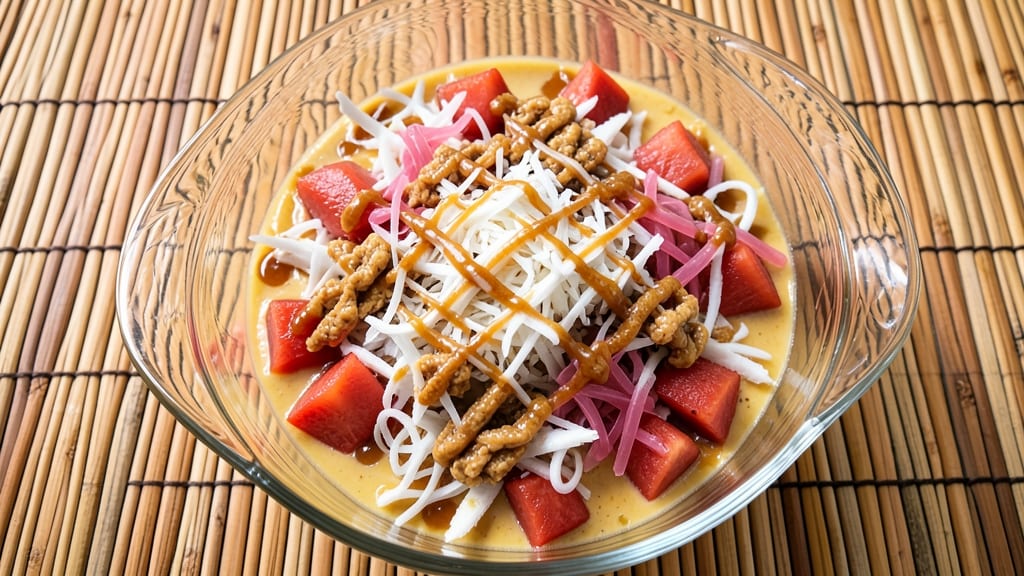
This buko salad recipe for 1 kilo delivers the perfect balance of creamy coconut, chewy nata de coco, and tropical fruit in every bite. The secret lies in properly soaking young coconut and layering ingredients for maximum texture contrast.
I've perfected this version to serve a crowd while keeping the traditional Filipino flavors intact.
What makes this recipe special is the authentic latik (coconut curds) that adds a subtle caramelized depth, while the leche flan provides that signature creamy sweetness. The key technique is soaking the coconut for at least 4 hours to soften it just right—never too mushy, never too firm.
This ensures each spoonful has that perfect tender-crisp texture that makes buko salad irresistible.
By the time you're done, you'll have a vibrant, refreshing dessert that's creamy, crunchy, and bursting with tropical flavors. The chilling process allows all the flavors to meld beautifully, creating that signature buko salad experience that's both nostalgic and satisfying.
Whether you're serving it at a family gathering or enjoying it as a solo treat, this recipe delivers every time.
For those looking to modernize, I'll share variations like vegan leche flan or adding fresh mango for extra brightness. The beauty of this recipe is its flexibility—traditional or updated, it always hits the mark. Let's get started on creating this tropical masterpiece!
Ingredients for buko salad recipe for 1 kilo
Pantry staples meet tropical freshness in this crowd-pleasing buko salad for 1 kilo.
| Ingredient | Amount | Notes |
|---|---|---|
| Young Coconut Meat 🥥 | 14 oz | Freshly shaved or grated |
| Nata De Coco 🧇 | 14 oz | Pre-packaged in water |
| Latik (Coconut Curds) 🥥 | 1 cup | Homemade or store-bought |
| Leche Flan Mix 🍮 | 14 oz | Boxed mix for 10 servings |
| Gulaman (Kanten) 🍡 | 7 oz | Pre-packaged strands |
| Condensed Milk 🥛 | 1 can (14 oz) | Sweetened condensed |
| Sugar 🍚 | 1 cup | Granulated, white |
| Fresh Pineapple 🍍 | 1 cup | Diced, small pieces |
| Fresh Jackfruit 🍈 | 1 cup | Diced, young variety |
| Vanilla Extract 🌿 | 1 tsp | Pure vanilla flavor |
| Salt 🧂 | ¼ tsp | Fine sea salt |
| Lime Juice 🍋 | 2 tbsp | Freshly squeezed |
| Gelatin Powder 🍬 | 1 tbsp | Unflavored, for setting |
| Water 💧 | ½ cup | Room temperature |
The young coconut is the heart of this dish—freshly shaved from a young green coconut is ideal, but pre-packaged shaved coconut works in a pinch. Look for bright white, firm strands when buying nata de coco, as it should hold its shape after draining. For latik, homemade is best (simmer coconut milk until it thickens), but store-bought versions labeled 'latik' from Asian markets will do. The leche flan mix should be the boxed kind for 10 servings—check the label for gelatin content if you're avoiding it. Gulaman strands should be clear and pliable, not brittle or yellowed.
No fresh young coconut? Substitute with 1 cup diced firm tofu for texture, though it won't have the same flavor. Running short on nata de coco? Extra gulaman strands can stretch the recipe, but reduce to 5 oz. For a vegan leche flan, replace the mix with 1 can coconut milk + 1/4 cup agar powder and follow flan instructions. Pineapple and jackfruit can be swapped for 1 cup diced papaya or mango. The lime juice is essential—bottled lime juice works, but fresh adds that bright zing. If you're making this ahead, prepare the flan and fruit mixtures separately and layer them just before serving to keep everything crisp.
The coconut and nata de coco should be drained and rinsed before mixing to remove excess water. Store any prepped ingredients in airtight containers in the fridge for up to 3 days. The assembled salad keeps for 4-5 days in the fridge, though the texture may soften slightly after 3 days. For longer storage, freeze the layered mixture (without the gelatin) for up to 3 months. To serve, simply assemble fresh layers in a bowl and let sit for 10 minutes before scooping—this helps the flavors meld beautifully. The flan mixture can be made a day ahead and stored covered in the fridge.
Why You'll Love This Recipe
- No-Chop Necessary: I swear by this—just shred the young coconut meat (or buy it pre-shredded) and toss it in. The nata de coco and gulaman come pre-cut, so you’re basically assembling a salad. Even my lazy Sundays end with this on the table.
- Creamy-Crunchy Magic: That leche flan mix? It’s the secret weapon—thick, sweet, and just the right amount of tang. Pair it with the tender latik and you’ve got a texture party: soft, chewy, crisp all at once. (Yes, even my picky nephew asks for seconds.)
- Party in a Bowl: This feeds a crowd without the stress. Double the batch for gatherings—it’s the kind of dish that disappears fast, and no one will guess how little effort it took. Honestly, I’ve served it at birthdays, potlucks, and even as a "I’m too tired to cook" dinner. Works every time.
- Leftovers? Better Leftovers: Make a kilo, and you’ll still have half left for lunch. The flavors actually improve overnight—the coconut soaks up the sweetness, and the gulaman stays perfectly chewy. Pack it in jars for work or school; it’s the ultimate no-fuss snack that tastes like a treat.
Step-by-step instructions for tropical buko salad assembly
Here's how to layer this creamy, crunchy dessert with perfect texture every time.
Prepare the Coconut Base Layer
In a large mixing bowl, combine the 14 oz young coconut meat (shaved or grated), 1 cup latik (coconut curds), and 1 cup fresh jackfruit. Gently fold these ingredients together using a silicone spatula—you want to preserve the texture of each component while integrating them. Set this mixture aside for now; we'll build our layers around it.
In a separate medium bowl, whisk together the 1 can (14 oz) condensed milk, 1 cup sugar, and 1 tsp vanilla extract until the sugar dissolves completely. This sweetened milk mixture forms the creamy foundation of your buko salad. The condensed milk's natural thickness helps bind all the ingredients together later, so don't skip this step.
Combine the Fruit and Gelatin Mixture
Add the 1 cup fresh pineapple (diced) and 7 oz gulaman (kanten) strands to the coconut base mixture. Gently stir to distribute the fruit evenly while keeping the kanten strands intact. In a small saucepan, sprinkle 1 tbsp gelatin powder over the 0.5 cup water and let it bloom for 5 minutes—this means the powder will absorb the water and begin to thicken without cooking.
Heat the bloomed gelatin mixture over low heat for 3-5 minutes, stirring constantly until it becomes completely transparent and smooth. Remove from heat immediately to prevent overcooking, which can make the gelatin rubbery. Let it cool to room temperature before adding it to your salad base.
Assemble the Layers with Nata De Coco
Drain the 14 oz nata de coco (pre-packaged in water) thoroughly by placing it in a fine-mesh strainer and pressing gently with a spatula to remove excess liquid. This step is crucial—too much moisture will dilute your salad's texture. Transfer the drained nata de coco to a clean mixing bowl and set aside.
In your large mixing bowl with the coconut base, gently fold in the cooled gelatin mixture until fully combined. The gelatin will create a light, creamy consistency that holds everything together. Now carefully add the drained nata de coco and the 1 cup leche flan mix (which you'll want to break into small, pea-sized pieces for even distribution). Fold everything together just until the nata de coco is evenly dispersed—overmixing can break the delicate strands.
Season and Chill for Perfect Texture
Stir in the 2 tbsp lime juice and 0.25 tsp salt to balance the sweetness and enhance all the flavors. The lime juice adds a bright, citrusy contrast that cuts through the richness of the coconut and condensed milk. Taste the mixture at this stage—you should have a harmonious blend of sweet, creamy, and slightly tangy flavors.
Transfer the entire buko salad mixture to a 9x13-inch baking dish or equivalent serving container. Smooth the top with a spatula for an even surface. Cover with plastic wrap and refrigerate for at least 4 hours, preferably overnight. This chilling time allows all the flavors to meld together while the gelatin sets properly, creating that signature creamy yet slightly jiggly texture we all love.
Serve with Crisp Presentation
Before serving, run a knife around the edges of the dish to loosen the salad. Invert onto a large platter or serving tray for a dramatic presentation. Use a sharp knife to cut into neat squares or diamond shapes—this makes it easier for guests to serve themselves while maintaining the salad's integrity.
The perfect buko salad should have a creamy, almost custard-like texture with distinct pockets of coconut meat, kanten strands, and nata de coco that provide satisfying crunch. Serve immediately after chilling to enjoy the ideal balance of temperatures—cool yet refreshing. Garnish with additional lime wedges if desired, but remember that the true beauty lies in its simplicity and the perfect harmony of textures.
Pro Tips For Making Buko Salad Recipe For 1 Kilo
- GRATE COCONUT DRY: Skip the soggy mess—pat the young coconut meat thoroughly with paper towels before grating. I learned this the hard way when my first batch turned into a watery pulp. The less moisture in the grating, the better the texture holds.
- SOAK GULAMAN 15 MINS: Don’t eyeball it—soak gulaman (kanten) in cold water for exactly 15 minutes. Any longer and it’ll turn to mush; any shorter and it stays chewy. Pro tip: Use twice the water volume of the kanten cubes.
- CHILL LATIK FIRST: Take latik (coconut curds) out of the fridge 10 minutes before mixing. Cold latik clumps like glue, and no one wants a lumpy buko salad. Room temperature makes it blend smoother—trust me, your spoon will thank you.
- MIX LECHE FLAVOR LAST: Add leche flan mix after everything else is combined. Stirring it in early makes the gelatin set too soon, and you’ll end up with a chunky, uneven texture. Wait until the last minute, then fold it in gently.
Regional styles of this dish
Filipino Classic Style
In the Philippines, buko salad is often made with just the essentials: young coconut, nata de coco, and leche flan. This traditional version relies on homemade latik for that caramelized coconut flavor, and it's typically served in individual bowls rather than one large platter.
The key is balancing sweetness—Filipino families often adjust sugar to taste, adding ½ cup extra if they prefer it sweeter. Look for San Miguel brand leche flan mix in Asian grocery stores for that authentic taste. 🥥
Regional Tagalog Twist
The Tagalog version from Manila often includes sago pearls (tapioca pearls) for extra chewiness, replacing some of the gulaman strands. I like to use 1 cup sago pearls cooked according to package instructions, then mixed with the coconut base.
This variation also sometimes adds 1 tablespoon toasted sesame seeds for a nutty crunch. The Tagalog style is slightly less sweet, relying more on the natural sweetness of the coconut and fruit. 🌶️
Visayan Variation
In the Visayas region, buko salad often incorporates fresh young coconut water—about ½ cup—into the leche flan mixture for extra moisture and a refreshing twist. This version also commonly includes 1 cup diced ripe papaya instead of jackfruit, giving it a tropical fruit medley.
The Visayan style sometimes uses less gelatin (just ½ tbsp instead of 1 tbsp) for a lighter, more jiggly texture. 💫
Modern Fusion Adaptation
For a contemporary take, try adding 1 cup diced mango and ½ cup crushed macadamia nuts for a gourmet touch. Some chefs also incorporate 1 teaspoon pandan extract into the leche flan mixture for an aromatic depth.
This fusion version pairs beautifully with lightly toasted coconut flakes on top for added texture. It's perfect for serving at tropical-themed parties or as a dessert course for upscale Filipino feasts. ✨
Minimalist Version
If you prefer simplicity, this stripped-down version uses just young coconut, nata de coco, leche flan, and condensed milk. Skip the gelatin entirely and rely on the natural thickness of the leche flan mix.
For extra creaminess, blend ½ cup coconut milk into the leche flan mixture before adding it to the salad. This version is quicker to prepare but still delivers that signature buko salad experience with fewer ingredients. 💪
Vegan Adaptation
For a plant-based version, replace the leche flan mix with 1 can coconut milk and ¼ cup agar powder (follow package instructions for setting). Use vegan condensed milk (available in health food stores) and ensure your gelatin substitute is plant-based.
The key is adjusting the sweetness—add extra sugar to compensate for the lack of condensed milk's natural sweetness. This version works beautifully with fresh tropical fruit for vibrant color and flavor. 🌱
Nutrition facts
Frequently asked questions
Can I use frozen young coconut instead of fresh?
While fresh young coconut is ideal, you can use frozen young coconut—just thaw it completely first. Drain any excess liquid and pat dry before adding to your salad. The texture will be slightly softer, so you might want to reduce the gelatin by ½ teaspoon to compensate. For best results, soak the thawed coconut in cold water for 30 minutes before mixing.
How do I make my buko salad less sweet?
Reduce the sugar by ¼ cup and increase the lime juice to 3 tablespoons for a tangier balance. You can also add ½ cup extra young coconut meat to dilute the sweetness naturally. For a more savory twist, sprinkle in ½ teaspoon toasted sesame seeds or a pinch of salt to enhance the tropical flavors.
Why is my buko salad too watery?
Excess moisture usually comes from not draining the nata de coco or young coconut properly. Always press both ingredients thoroughly in a strainer before mixing. If the salad is already made, let it chill uncovered in the fridge for 1-2 hours to evaporate excess liquid. For prevention, reduce the gelatin by ½ teaspoon next time to avoid over-thickening.
Can I make buko salad without gelatin?
Yes! For a gelatin-free version, blend ½ cup coconut milk with the leche flan mix to add creaminess. Use 1 extra tablespoon agar powder (for vegans) or 1 cup extra leche flan mix to help set the texture. Chill for 6+ hours since it won't set as quickly. The result will be lighter but still hold its shape when served.
What's the best way to store leftover buko salad?
Store in an airtight container in the fridge for up to 5 days. For longer storage, freeze the mixture (without gelatin) for 3 months. To serve frozen salad, thaw overnight in the fridge, then stir in fresh nata de coco and fruit just before eating. The texture will be softer after freezing, so add extra gelatin if reheating.