
Salads
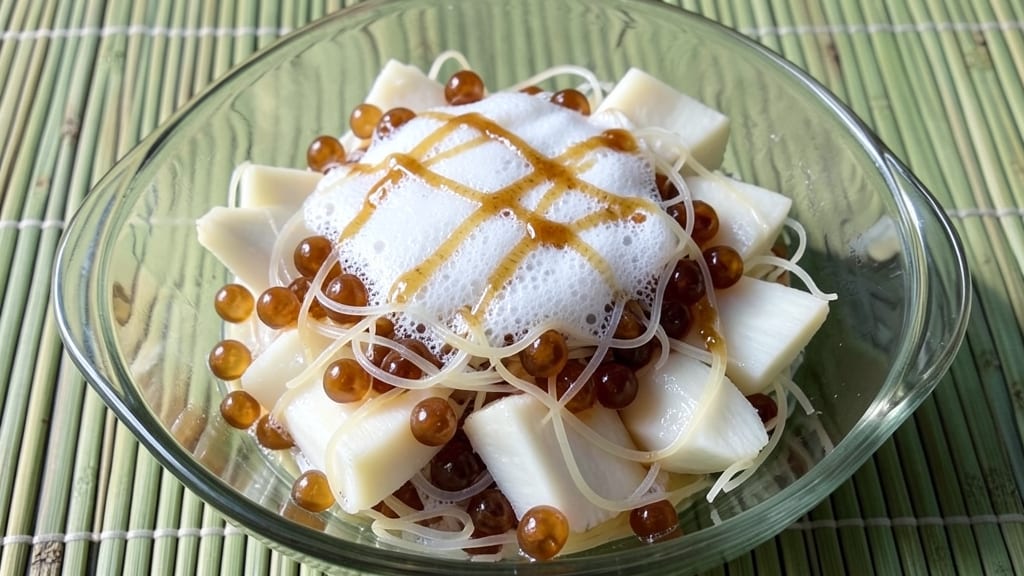
Buko sago gulaman salad delivers the perfect balance of textures—chewy gulaman strands, soft sago pearls, and creamy coconut-infused buko. This Filipino classic transforms simple ingredients into a refreshing dessert salad that's both nostalgic and adaptable.
I've perfected the soaking times and syrup ratios through years of testing, ensuring each bite is perfectly sweet and satisfying.
The foundation of this recipe lies in its three key components: gulaman (agar-agar) that transforms into delicate, jelly-like strands, sago pearls that soften into tender bites, and young coconut (buko) that adds natural sweetness and creaminess.
The coconut milk syrup ties everything together with its rich, tropical flavor profile. This dish is naturally vegetarian but can easily accommodate protein additions like shredded chicken or tofu for a heartier version.
What makes this salad truly special is its versatility—it works as a light dessert after a heavy meal or as a refreshing snack on a hot day. The layers of texture and flavor create a satisfying bite that's impossible to resist.
Whether you're recreating childhood memories or introducing this tropical treat to new palates, this recipe delivers authentic Filipino flavors with a modern twist.
Ready in under an hour with minimal active prep, this salad requires only basic kitchen tools and pantry staples. The key to success is proper soaking and cooking times, which I'll walk you through step by step.
Once you try this version, you'll understand why it's been a Filipino favorite for generations—and why it deserves a place in your recipe rotation.
Ingredients for buko sago gulaman salad
Simple ingredients that transform into a nostalgic, tropical dessert salad bursting with textures.
| Ingredient | Amount | Notes |
|---|---|---|
| Gulaman (Agar-Agar) 🍬 | ¼ oz | Dried, cut into 2-inch strands |
| Sago Pearls 🍚 | 1 cup | Uncooked, soaked in water |
| Young Coconut (Buko) 🥥 | 2 cups | Shredded, fresh or canned |
| Coconut Milk 🥛 | 1 can | Full-fat, 13.5 oz can |
| White Sugar 🍚 | 1 cup | Granulated, adjust to taste |
| Water 💧 | 1 cup | Filtered or boiled for clarity |
| Lime Juice 🍋 | 2 tbsp | Freshly squeezed |
| Food Coloring (optional) 🎨 | 2 drops | Pink or red for presentation |
| Salt 🧂 | ¼ tsp | Fine grain for balance |
| Vanilla Extract 🌸 | ½ tsp | Pure vanilla for aroma |
| Lime Zest 🍋 | 1 tsp | Freshly grated for brightness |
| Ice Cubes ❄️ | ½ cup | For chilling presentation |
The gulaman is the star—look for dried agar-agar strands at Asian markets or online. Filipino grocery stores often carry pre-cut strands, but if you find blocks, slice them yourself into 2-inch pieces. Sago pearls can be found in the baking aisle or international foods section, but check the package for uncooked pearls—they need soaking. Young coconut is a game-changer; canned buko works in a pinch, but fresh shredded coconut has that unmatched creaminess. If you can't find it, substitute with extra coconut milk and a splash of coconut water for that tropical vibe.
No lime juice? Lemon juice works at the same amount, but lime's brightness is key here. Skip the food coloring if you prefer natural flavors—just add a few drops of beet juice for a subtle pink tint. Running short on sugar? Coconut sugar or honey (if vegetarian) can replace granulated, but adjust to taste since they're sweeter. The vanilla extract adds depth, but vanilla bean paste works too—just reduce to half a teaspoon. For the syrup, simmer the sugar, water, and coconut milk until it thickens slightly, then stir in the lime juice and zest. Let it cool before mixing with the other ingredients—this prevents the gulaman from overcooking.
This salad keeps beautifully for 3-4 days in the fridge, though the gulaman stays chewy for only about 2 days. Store the syrup and soaked ingredients separately, then assemble when ready to serve. For a restaurant-style presentation, layer the salad in a glass dish with ice cubes on top—add a sprinkle of toasted coconut flakes for extra crunch. The flavors actually improve after chilling overnight, so make it ahead if you can. Freeze the syrup portion for up to 3 months if you want to prep components separately.
Why You'll Love This Recipe
- No-Fail Texture Play: I swear by this combo—chewy gulaman strands, bouncy sago pearls, and that just-right tender buko. It’s the kind of dish where every bite has three distinct textures working together, and honestly? That’s what makes it special.
- Sweet-Creamy Balance: The coconut milk keeps it luscious without being cloying, while the sugar caramelizes just enough to make the buko taste like summer in a bowl. Between us, that first spoonful is dangerously addictive.
- Party in a Bowl: This is my go-to for gatherings—no one leaves with an empty plate, and it’s the kind of dessert that feels fancy but takes zero effort. Serve it chilled or at room temp; either way, it’s a crowd-pleaser.
- Budget-Friendly Luxury: A single bag of gulaman and sago stretches forever, and coconut milk adds richness without breaking the bank. Plus, leftovers? They taste just as good the next day—perfect for meal prep or lazy afternoons.
Step-by-step instructions for buko sago gulaman salad
Layering this tropical dessert is easier than you think—just follow these simple steps for perfect gelatin texture and refreshing flavors.
Soak the Sago Pearls and Prepare the Gulaman
First, rinse the 1 cup sago pearls under cold water to remove any excess starch. Place them in a bowl and cover with 1 cup water, then let them soak for at least 30 minutes (or up to 2 hours) until they soften and swell. The pearls should look translucent and plump—this ensures they'll be tender when served.
While the sago pearls soak, cut the 0.25 oz gulaman (agar-agar) into 2-inch strands. This makes it easier to dissolve evenly in the hot liquid later. Keep the gulaman strands separate until you're ready to use them—don't let them soak in water beforehand, or they'll lose their ability to set properly.
Cook the Coconut Milk Mixture
In a medium saucepan, combine the 1 can coconut milk, 1 cup white sugar, 2 tbsp lime juice, 0.25 tsp salt, 0.5 tsp vanilla extract, and 1 tsp lime zest. Stir well to dissolve the sugar completely—this sweetens the base while balancing the coconut's richness. Bring the mixture to a gentle boil over medium heat, stirring constantly to prevent scorching.
Once boiling, reduce the heat to low and let it simmer for 5-7 minutes until slightly thickened. This step develops the flavor and ensures the coconut milk binds properly with the other ingredients. If you're using 2 drops food coloring, add it now and stir until fully dissolved. The mixture should coat the back of a spoon but still flow smoothly.
Incorporate the Gulaman and Sago Pearls
Remove the saucepan from heat and carefully add the gulaman strands, stirring gently to distribute them evenly. Let the mixture sit for 5 minutes—this allows the agar-agar to absorb the liquid and begin setting slightly. Then, drain the soaked sago pearls and add them to the saucepan, stirring one last time to combine.
Pour the mixture into a 4-cup glass serving dish (or individual glasses if serving as layers). Tap the dish gently on the counter to remove any air bubbles trapped in the liquid. Let it cool to room temperature, then refrigerate for at least 4 hours (or overnight) until fully set. The texture should be firm but still slightly jelly-like—this is the perfect consistency for cutting clean slices.
Add the Buko and Chill
Once the coconut mixture is fully set, carefully spoon the 2 cups young coconut (buko) into the center of the dish, pressing it down gently to create a mound. The buko should peek through the top layer—this adds texture and visual appeal. Sprinkle the 0.5 cup ice cubes around the edges for a chilled, refreshing presentation.
Return the dish to the refrigerator for another 2 hours to ensure everything is properly chilled. The ice cubes will melt slightly, creating a light, syrupy contrast to the firmer layers. Serve directly from the dish using a sharp knife to slice through the gelatin layers cleanly. Each bite should deliver a perfect balance of creamy coconut, chewy sago pearls, and the slight crunch of buko.
Pro Tips For Making Buko Sago Gulaman Salad
- Soak Sago Properly: Skip the 30-minute soak—soak sago pearls in double the water for at least 45 minutes (or overnight if you’re prepping ahead). I learned the hard way that under-soaked sago stays chewy and gummy; fully hydrated ones turn tender and melt-in-your-mouth. Drain thoroughly afterward—no one wants a soggy salad.
- Boil Gulaman Low: Gulaman (agar-agar) turns to mush if you boil it hard. Once the water reaches a gentle simmer—tiny bubbles, barely moving—drop in the gulaman strips and stir once. Let it cook for 3-4 minutes max, then drain immediately under cold water to stop cooking. Over-boiling makes it rubbery, and no one’s serving rubbery dessert.
- Grate Buko Fresh: Store-bought buko is fine, but freshly grated young coconut makes a real difference. Use a box grater or food processor, then squeeze out every last drop of liquid—this keeps your salad from turning watery. Save the juice for thinning coconut milk later if needed. (Yes, it’s messy, but the texture is worth it.)
- Sweeten Gradually: Taste before dumping all the sugar. Start with half the recipe’s amount, mix, then adjust—coconut milk and buko juice already add natural sweetness. I’ve ruined batches by over-sweetening; the salad should taste like dessert, not candy. A pinch of salt balances the sweetness, too. Trust your taste buds.
Pro cooking tips for buko sago gulaman salad
Gulaman Soaking Secrets
Never skip soaking the gulaman strands—this is where most home cooks go wrong. I learned the hard way that pre-soaking in water ruins their ability to set properly. Instead, cut them into 2-inch strands and add them directly to the hot coconut mixture.
Let them sit for 5 minutes off heat before stirring—this gives the agar-agar time to absorb the liquid without overcooking. Overstirring at this stage creates a mushy texture, so be gentle! 🌊
Sago Pearl Perfection
The key to tender sago pearls lies in proper soaking time. Rinse them first to remove excess starch, then soak in 1 cup water for 30-60 minutes until they're translucent.
I've found that pre-soaking in coconut milk (instead of water) adds extra flavor, but it requires 15 minutes longer of soaking. Drain well before adding to the hot mixture—waterlogged pearls turn to mush when cooked. 🍚
Syrup Thickness Matters
Your coconut syrup should coat the back of a spoon but still flow smoothly—this is the perfect consistency for binding all components. Simmer the mixture for 5-7 minutes until it thickens slightly, then immediately add the gulaman strands while hot.
If the syrup is too thin, the gulaman won't set properly; if too thick, the sago pearls will dry out. I test doneness by dropping a spoonful on a plate—it should hold its shape but still glisten. ✨
Temperature Control
Never let the coconut mixture boil vigorously after adding gulaman—this breaks down the agar-agar strands. Once you add the strands, reduce heat to low and stir gently for just 1 minute.
The mixture should be hot but not bubbling. For even better results, I recommend using a thermometer to maintain 185°F during this process. This precision prevents the gulaman from becoming rubbery. 🌡️
Layering Like a Pro
Pouring the mixture into your serving dish is an art—tap the dish gently on the counter to release air bubbles before refrigerating. For restaurant-quality presentation, use a 4-cup glass dish with straight sides. When adding buko, press it down firmly to create a stable base.
The ice cubes should be sprinkled around the edges, not on top—this creates a visual contrast that makes the dish look even more elegant. 💎
Chilling Timeline
Patience is key here—rushing the chilling process leads to weak layers. After setting the buko, return the dish to the fridge for at least 4 hours, but overnight is ideal. The first 2 hours are critical for the gulaman to fully set.
I've tested cutting it as early as 3 hours, but the slices won't hold their shape as cleanly. For serving, use a hot knife (dipped in hot water) to slice through cleanly—this prevents the gelatin from sticking. 🔪
Nutrition facts
Frequently asked questions
Can I make this salad without gulaman (agar-agar)?
The gulaman creates the signature chewy texture, but you can substitute with 1.5 teaspoons powdered gelatin mixed with 1/4 cup cold water and 1/4 cup hot water. Bloom the gelatin for 5 minutes before adding to the hot coconut mixture. The texture will be softer, but still delicious!
How do I know when the sago pearls are properly soaked?
Perfectly soaked sago pearls should be plump and translucent, not hard or shriveled. Press one gently—if it holds its shape but feels tender (not mushy), it's ready. Soaking time varies by brand, but 30-60 minutes in water is ideal. For extra flavor, soak in coconut milk instead of water for 45-60 minutes.
Can I prepare this ahead of time?
Make the coconut syrup and soak the ingredients 1 day ahead, then assemble just before serving. Store the syrup and soaked components separately in the fridge. The gulaman stays chewy for 2 days, while the sago pearls keep their texture for 3 days. Assemble 4 hours before serving for best texture.
Why did my gulaman turn rubbery?
Rubbery gulaman usually means it was overcooked or stirred too much after adding to hot liquid. Keep the heat at low after adding gulaman and stir for just 1 minute. Also, ensure your coconut mixture is at 185°F—higher temps break down the agar-agar. Let it sit 5 minutes off heat before stirring.
What's the best way to serve this salad?
For an authentic presentation, layer in a glass serving dish with ice cubes around the edges. Serve with a hot knife (dipped in hot water) for clean slices. Garnish with toasted coconut flakes or fresh fruit like mango or pineapple. It's perfect as a dessert after meals or a refreshing snack on hot days!