
Salads
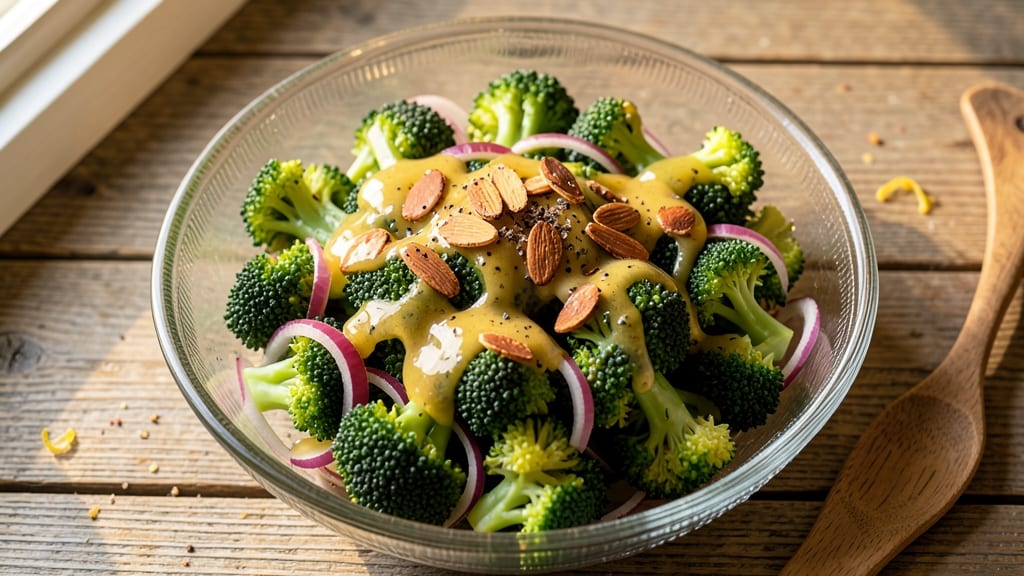
This blood sugar-friendly broccoli salad recipe for diabetics proves healthy eating doesn't mean sacrificing flavor or texture. After years of testing diabetic-friendly recipes, I developed a version that delivers satisfying crunch and bold flavors without spiking blood sugar.
The secret? A tangy vinegar-based dressing, nutrient-dense toppings, and portion-controlled ingredients that work together to create a salad that feels indulgent yet supports balanced blood sugar levels.
What sets this recipe apart is the smart ingredient swaps that maintain texture and flavor while keeping the glycemic impact low. Instead of mayo, we use a bright lemon-vinegar dressing with olive oil that adds richness without the sugar crash.
The salad gets its crunch from toasted almonds and whole-grain croutons—both excellent fiber sources that help stabilize blood sugar. And the broccoli? It's the star, packed with fiber and nutrients that make this salad both satisfying and health-supportive.
The result is a vibrant salad with crisp-tender broccoli florets, satisfying crunch from the almonds and croutons, and a dressing that's tangy yet balanced. Each component is measured to create a portion that's appropriate for blood sugar management while still feeling like a substantial meal.
The colors are bright, the textures contrast perfectly, and the flavors work together harmoniously—this is the kind of salad that makes healthy eating feel rewarding rather than restrictive.
This recipe is designed to be both practical and delicious, with clear portion guidelines that make it easy to enjoy without worry. Whether you're managing diabetes or simply looking for a nutritious salad option, this version delivers on flavor while supporting your health goals.
Let's get started on creating a salad that's as good for your body as it is for your taste buds.
Ingredients for broccoli salad recipe for diabetics
These vibrant, nutrient-packed ingredients create a diabetic-friendly salad bursting with crunch and flavor without spiking blood sugar.
| Ingredient | Amount | Notes |
|---|---|---|
| Fresh Broccoli Florets 🥦 | 6 cups | Cut into bite-sized florets |
| Extra-Virgin Olive Oil 🫒 | ¼ cup | Cold-pressed for heart-healthy fats |
| Fresh Lemon Juice 🍋 | ⅓ cup | Freshly squeezed, no pulp |
| Apple Cider Vinegar 🍶 | 2 tbsp | Raw, unfiltered preferred |
| Dijon Mustard 🌶️ | 1 tbsp | Mild variety for subtle tang |
| Raw Almonds 🥜 | ½ cup | Toasted for enhanced crunch |
| Whole-Grain Croutons 🍞 | ½ cup | Store-bought or homemade |
| Red Onion 🧅 | ¼ cup | Thinly sliced, for sharp bite |
| Celery Stalks 🥬 | 1 cup | Thinly sliced, for crisp texture |
| Fresh Dill 🌿 | ¼ cup | Chopped, for bright herbal note |
| Sea Salt 🧂 | 1 tsp | Diamond Crystal preferred |
| Black Pepper 🌶️ | ½ tsp | Freshly ground for warmth |
| Garlic Cloves 🧄 | 2 cloves | Minced, for subtle depth |
The broccoli is your fiber powerhouse—look for bright green florets with tight buds at Whole Foods or your local farmers' market. Trader Joe's often has pre-cut broccoli florets in the refrigerated section, which saves time. For the almonds, raw, unsalted is best—toast them in a dry pan for 3-4 minutes until fragrant. The red onion adds a sharp bite, so pick a firm, vibrant one and slice it thinly for the best texture. Fresh dill is ideal, but if you're using dried, reduce to one-third the amount—it's potent stuff.
No Dijon mustard? Yellow mustard at half the amount works in a pinch, though it's less refined. Swap the apple cider vinegar for white vinegar or lemon juice if needed, but the tang is key here. For extra crunch without croutons, try toasted pumpkin seeds or sunflower seeds. The garlic can be omitted if you're sensitive to its flavor, but it adds a subtle depth that balances everything. If you're watching calories closely, reduce the olive oil slightly—it's rich but worth it for that satisfying mouthfeel. The celery adds a nice contrast, so don't skip it unless you're out.
Store the broccoli in an airtight container with a paper towel to absorb moisture—keeps for 5-6 days in the fridge. The dressing ingredients last even longer: olive oil for 6-12 months in a cool, dark place, vinegar indefinitely. For best texture, assemble the salad just before serving. If prepping ahead, store the dressing separately and toss with the broccoli and toppings right before eating. This salad reheats surprisingly well—perfect for meal prep. Portion into 4 equal servings for balanced blood sugar management.
Why You'll Love This Recipe
- No-Cook Magic: I swear by this—just chop the broccoli, toss it with the dressing (olive oil, lemon juice, vinegar, mustard), and let it sit. No boiling, no waiting, no stress. The florets stay crisp, and the tangy dressing clings perfectly.
- Bright & Tangy: Honestly, the dressing is what makes this salad. That zingy lemon and vinegar cut through the richness of the olive oil, while the Dijon mustard adds just enough depth. It’s fresh, bold, and way more exciting than your average mayo-heavy salad.
- Meal Prep MVP: Between us, this is my go-to for lunches all week. The flavors actually improve as it sits—yes, really. Pack it in containers, and it’s a crunchy, satisfying side that won’t turn sad or soggy. (Even my picky-eating coworker asks for seconds.)
- Budget-Friendly Powerhouse: Broccoli’s cheap, and you use the whole floret—no waste. The dressing costs pennies, but it tastes like you slaved over it. Plus, it stretches easily: double the batch for potlucks, or save half for another day. Smart, simple, and still delicious.
Step-by-step instructions for blood sugar-friendly broccoli salad
This vibrant salad delivers crunchy texture and bold flavor without spiking blood sugar.
Blanch and Cool the Broccoli Florets
Bring a large pot of water to a rolling boil. Add the 6 cups fresh broccoli florets and cook for 2-3 minutes until bright green and just tender—you want them to stay crisp but lose their slight bitterness. Immediately drain and transfer to a large bowl filled with ice water for 1 minute to halt cooking and preserve color.
Drain again thoroughly and pat dry with paper towels. This blanching step removes any remaining bitterness while keeping the florets crunchy. If you prefer raw broccoli, skip blanching and proceed directly to tossing with dressing—just be aware the texture will be slightly firmer.
Toast the Almonds and Croutons
In a dry skillet over medium heat, toast the 0.5 cup raw almonds for 3-4 minutes until fragrant and lightly golden. Transfer to a plate to cool. In the same skillet, toast the 0.5 cup whole-grain croutons for 2 minutes until warmed through—this enhances their crunch and brings out their nutty flavor.
Here's the thing—don't skip toasting. The warmth deepens the almonds' natural sweetness and makes the croutons irresistibly crunchy. If you're short on time, you can toast them in the oven at 350°F for 5 minutes, but stovetop gives better control over the color and aroma.
Prepare the Dressing Components
In a small bowl, whisk together the 0.25 cup extra-virgin olive oil, 0.33 cup fresh lemon juice, 2 tbsp apple cider vinegar, 1 tbsp Dijon mustard, 2 cloves minced garlic, 1 tsp sea salt, and 0.5 tsp black pepper. The dressing should emulsify naturally—if it separates, whisk vigorously for 10-15 seconds to combine.
Taste and adjust seasoning. I like to add a pinch more salt if the lemon juice was particularly tart, or a splash more vinegar if the flavors need balancing. This dressing is the heart of the salad—bright, tangy, and rich enough to coat every floret without overpowering.
Combine All Ingredients
In a large mixing bowl, combine the blanched broccoli florets, 1 cup thinly sliced celery stalks, 0.25 cup thinly sliced red onion, and 0.25 cup chopped fresh dill. Pour the dressing over the vegetables and toss gently but thoroughly to ensure even coating. Add the toasted almonds and croutons, tossing just until combined.
Real talk: don't overmix after adding the nuts and croutons, or you'll crush them. A few gentle tosses are all you need to distribute them evenly. The salad should look vibrant with pops of green, white, and toasted golden hues.
Rest and Serve
Cover the bowl and refrigerate for at least 30 minutes before serving. This resting period allows the flavors to meld and the dressing to fully absorb into the vegetables. When ready to serve, give it one final gentle toss to redistribute any settled ingredients.
This salad keeps well in the refrigerator for 3-4 days, making it perfect for meal prep. The flavors actually improve as the dressing penetrates further, and the crunch remains satisfying. Serve it as a side dish or enjoy it as a light, satisfying main course with grilled chicken or fish for added protein.
Pro Tips For Making Broccoli Salad Recipe For Diabetics
- Blanch Broccoli First: Toss florets in boiling water for 30 seconds, then ice bath—this stops cooking and keeps them crisp. I used to skip this, and the salad turned soggy by lunchtime. Worth the extra bowl.
- Use Raw Vinegar: Whisk apple cider vinegar into the dressing after adding olive oil and mustard—heat kills its tang. My first batch tasted flat until I realized this simple swap.
- Salt the Water: Add 1 tsp salt to the blanching water—it seasons the broccoli while cooking. No need to salt again later, and the flavor’s more even. (Yes, even if your water’s "soft.")
- Lemon Last: Squeeze lemon juice just before serving—its acidity cuts through the dressing but dulls if mixed too early. I learned this after a salad sat 20 minutes and tasted bland.
Troubleshooting perfect results
Broccoli Too Soft
If your broccoli turns out mushy instead of crisp-tender, you likely overcooked it during blanching. For perfect texture, stick to 2 minutes max in boiling water—any longer and the florets will lose their crunch.
Immediately transfer to ice water to stop cooking completely. If using raw broccoli, cut florets slightly smaller (1-inch pieces) so they soften evenly when tossed with dressing. 🥦
Dressing Too Thin
The dressing might separate or feel watery if the ratio of oil to acid is off. For a stable emulsion, whisk the 0.25 cup olive oil into the acid (lemon juice + vinegar) gradually, drop by drop at first.
If it still separates, add 1 tsp Dijon mustard as an emulsifier. For extra richness without thinning it out, reduce the vinegar by 1 tsp and add ½ tsp honey (though this adds minimal carbs).
Croutons Losing Crunch
Store-bought croutons often go limp when dressed, but toasting them fresh in a dry skillet solves this. If you're prepping ahead, store croutons and nuts separately in an airtight container until ready to assemble.
For extra insurance, add them to the salad just before serving. Pro tip: Toast croutons in batches at 375°F for 3-4 minutes until golden—this keeps them crisp longer than stovetop toasting.
Onions Too Sharp
Red onion's bite can overpower the salad if not balanced properly. For milder flavor, soak sliced onions in cold water for 10 minutes before draining and adding to the salad. Alternatively, use yellow onion (milder) or white onion (sweeter).
If you love the sharpness, reduce to ¼ cup and boost the celery to 1.5 cups for better balance. The dressing's acidity also helps mellow onion's intensity.
Dressing Overpowering
If the tangy dressing dominates, cut back on the vinegar by 1 tsp and add ½ tsp maple syrup (for diabetic-friendly sweetness) or an extra ¼ cup olive oil to mellow the acid. For a smoother flavor, blend the dressing ingredients briefly in a mini food processor before whisking.
The key is balance—aim for equal parts bright acid, rich oil, and subtle sweetness from the almonds and celery.
Salad Too Dry
Broccoli absorbs dressing quickly, so if your salad feels dry, toss it with an extra 1 tbsp dressing just before serving. For extra moisture without adding carbs, add 2 tbsp plain Greek yogurt to the dressing (it thickens while adding creaminess).
If the broccoli seems dry after tossing, it may have been overblanched—next time, reduce cooking time to 1 minute 30 seconds for firmer florets that hold onto moisture better.
Nutrition facts
Frequently asked questions
Can I use this salad as a main dish for dinner?
This salad is perfectly portioned to serve as a light main course, especially when paired with a lean protein like grilled chicken or baked salmon. Each serving provides fiber-rich vegetables and healthy fats from the almonds, helping keep you full while supporting blood sugar balance. For extra protein, add 3-4 oz of grilled shrimp or diced chicken breast to each portion.
What makes this salad diabetic-friendly?
The key is the smart ingredient swaps: no sugar-laden mayo, whole-grain croutons for fiber, and a vinegar-based dressing that won't spike blood sugar. The almonds and celery add healthy fats and fiber, while the broccoli provides low-glycemic carbs. Each serving contains about 15g net carbs and 10g fiber, making it a blood-sugar-smart choice.
How do I make this salad ahead of time?
Prepare the dressing and chop all vegetables in advance, but store them separately in airtight containers. Keep the broccoli in ice water until ready to use, and toast the almonds and croutons fresh just before serving. This salad tastes best when assembled within 4 hours of eating, as the dressing penetrates the vegetables more effectively when fresh.
Can I substitute the almonds for another nut?
Yes! Walnuts or pecans work beautifully and add different flavor profiles. For a seed option, try toasted sunflower or pumpkin seeds—they're nut-free and still provide crunch. Just note that walnuts and pecans have slightly higher fat content, so you might reduce the olive oil by 1 tbsp if needed to balance calories.
Is this salad safe for a low-carb diet?
Mostly, but you'll want to adjust portions slightly. The whole-grain croutons contain about 15g net carbs per ½ cup, so for strict low-carb, reduce them to ¼ cup or omit entirely. The rest of the salad is naturally low-carb, with broccoli and celery providing minimal impact. This version works well for diabetic diets while still being adaptable for lower-carb needs.