
Salads
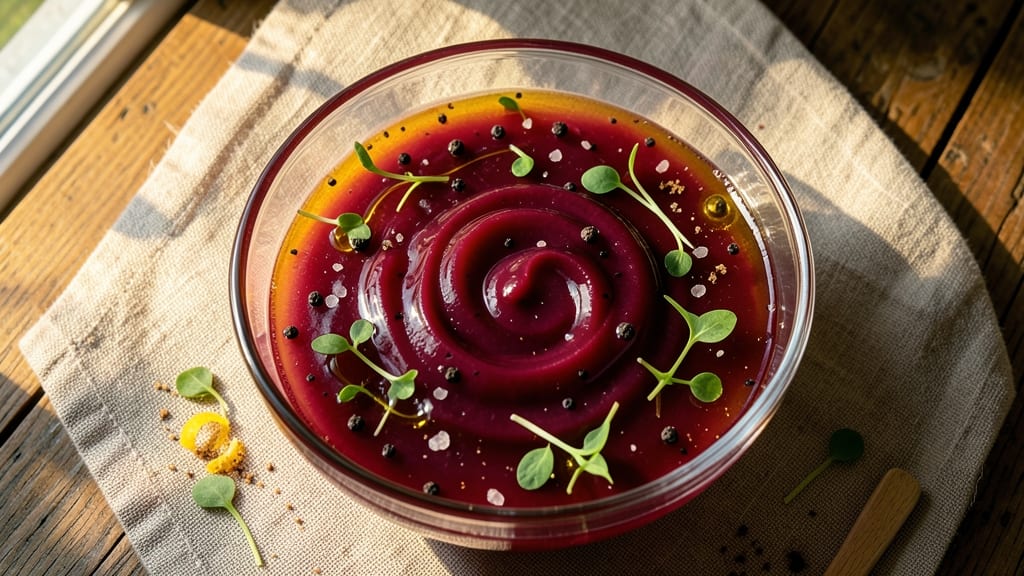
This blood orange vinaigrette salad dressing recipe transforms ordinary greens into a vibrant, restaurant-quality salad. The bright citrus notes of blood orange juice cut through rich ingredients, creating a perfectly balanced dressing that elevates any leafy green.
With just five simple ingredients, you'll achieve a smooth, emulsified sauce that clings beautifully to lettuce, adding a sophisticated touch to your meals.
The secret lies in the ratio of blood orange juice to olive oil and vinegar—this combination delivers a tangy, slightly sweet flavor that's neither too sharp nor overly sweet. I've perfected this recipe to ensure it stays creamy and well-emulsified, even after sitting in your fridge for a few days.
The dressing's versatility makes it ideal for everything from classic Caesar salads to hearty kale salads with nuts and cheese.
What sets this vinaigrette apart is its ability to enhance the natural flavors of your ingredients without overpowering them. The blood orange's deep red hue adds a striking visual element, making your salads as appealing to the eye as they are to the palate.
This dressing is quick to make, requiring just a few minutes of whisking, and it keeps well in an airtight container for up to five days.
Whether you're prepping for a week of healthy lunches or adding a gourmet touch to a dinner salad, this blood orange vinaigrette delivers consistent, professional results. The emulsification technique ensures a smooth texture that coats every leaf perfectly, making it a game-changer for any salad lover.
Let's get started on creating this vibrant, flavorful dressing.
Ingredients for blood orange vinaigrette salad dressing
Five ingredients transform simple greens into a restaurant-worthy salad experience.
| Ingredient | Amount | Notes |
|---|---|---|
| Blood Orange Juice 🍊 | ½ cup | Freshly squeezed for vibrant flavor |
| Extra-Virgin Olive Oil 🫒 | ½ cup | High-quality, fruity variety preferred |
| Red Wine Vinegar 🍷 | 2 tbsp | Dry, bold variety for tang |
| Dijon Mustard 🌿 | 1 tsp | Mild Dijon for emulsification |
| Sea Salt 🧂 | ½ tsp | Fine grain for balance |
| Black Pepper 🌶️ | ¼ tsp | Freshly ground for aroma |
| Honey 🍯 | 1 tbsp | Light, mild honey for sweetness |
The blood orange juice is non-negotiable—freshly squeezed delivers that signature vibrant color and bright citrus flavor. Trader Joe's and specialty markets often carry blood oranges year-round, but if you can't find them, Florida or California blood oranges at Whole Foods work perfectly. The olive oil should be extra-virgin, not just regular—look for bottles labeled 'fruity' or 'robust' on the packaging. For vinegar, dry red wine vinegar (like Barefoot or Balsamic Vinegar Co.) ensures the right tang without overpowering the citrus. The Dijon mustard acts as the emulsifier, so don't skip it—it's what keeps this dressing creamy and clinging to your greens.
No blood oranges? Substitute with grapefruit juice (same citrus family, slightly less sweet) or even a mix of orange and lemon juice (reduce honey slightly). Running out of Dijon? Yellow mustard at half the amount works in a pinch, though the flavor will be milder. If you're avoiding honey, agave nectar is a 1:1 swap, but the dressing will taste more vegetal. The salt and pepper are flexible—adjust to taste, but don't skip them entirely. For extra depth, a pinch of smoked paprika adds warmth without altering the dressing's core profile. This recipe doubles easily, so make extra—it's perfect for meal prep.
Store in an airtight container in the fridge for up to 5 days, though it's best used within 3 days for peak freshness. The emulsification holds well, but give it a quick whisk before each use. For longer storage, transfer to a sterilized glass jar and freeze for up to 3 months. Thaw in the fridge overnight. The dressing thickens slightly when chilled—just add a splash of water or a bit more olive oil to loosen it before using. Always taste before serving; the ratio of sweet, tangy, and salty can shift slightly over time.
Why You'll Love This Recipe
- Five-Ingredient Magic: I swear by this combo—just juice, oil, vinegar, mustard, and salt. No fancy gadgets, no stress, and honestly? It’s the kind of dressing I make even when I’m too tired to think.
- Bright Tang Alert: That blood orange juice? It’s the star. The citrus punch cuts through greens like a summer breeze, while the Dijon mustard adds just enough bite to keep it interesting—not sweet, not sour, but perfectly balanced.
- Weeknight to Party: I’ve drizzled this on everything from lazy lunch salads to fancy charcuterie boards. It’s the one dressing that works for a quick Tuesday night or when I’m hosting friends who “only eat kale” (I see you).
- Make-Ahead MVP: Between us, I always double the batch. The flavors deepen overnight, and it keeps for days in the fridge. Plus, the blood oranges are pricey, so using every drop means more savings—and less waste. Win-win.
Step-by-step instructions for blood orange vinaigrette salad dressing
This vibrant dressing comes together in minutes with simple technique and bold flavors.
Whisk Blood Orange Juice and Vinegar
In a medium bowl, combine the 0.5 cup blood orange juice and 2 tablespoons red wine vinegar. Use a whisk to blend them thoroughly for about 10 seconds until fully incorporated. You'll notice the mixture immediately brightens in color—this is where the dressing gets its signature citrus punch.
The acidity from the vinegar helps balance the natural sweetness of the blood orange juice, creating the foundation for a well-rounded flavor profile. If you're using freshly squeezed juice, you might see some pulp—this is fine, but strain it through a fine-mesh sieve if you prefer a completely smooth texture.
Add Mustard and Honey for Emulsification
Next, stir in the 1 teaspoon Dijon mustard and 1 tablespoon honey using a fork or small whisk. The mustard acts as an emulsifier, helping the oil and juice blend smoothly later, while the honey adds subtle sweetness that rounds out the tartness. Mix until the honey is completely dissolved and the mustard is evenly distributed throughout the liquid.
This is where the magic happens—the mustard's mild tang and the honey's viscosity create the perfect base for the dressing to come together. If you're concerned about the mixture being too thick, don't worry—the olive oil will help thin it out in the next step.
Gradually Incorporate Olive Oil
With the bowl positioned over a sink or a large container (to catch any splashes), slowly drizzle in the 0.5 cup extra-virgin olive oil while whisking continuously. Start with a slow stream and increase to a steady drizzle as the mixture begins to emulsify. Keep whisking vigorously for about 30 seconds after adding all the oil to ensure a smooth, creamy texture.
The key here is patience and steady whisking. If you add the oil too quickly, the dressing may separate. You'll know it's emulsified properly when it thickens slightly and holds its shape when drizzled over greens. The olive oil should be fully incorporated, leaving no visible separation.
Season and Taste for Balance
Add the 0.5 teaspoon sea salt and 0.25 teaspoon black pepper, then give the dressing another thorough whisk to distribute the seasonings evenly. Taste a small amount and adjust the balance of flavors as needed. If it tastes too tart, add a touch more honey. If it needs more acidity, stir in an extra ½ teaspoon of red wine vinegar.
The dressing should have a bright, zesty flavor with a touch of sweetness and a hint of peppery heat. The salt enhances all the other flavors, tying everything together. Remember, the dressing will mellow slightly after sitting for a few minutes, so don't over-salt initially.
Rest and Serve
Transfer the dressing to a clean jar or airtight container and let it rest at room temperature for 10-15 minutes. This resting period allows the flavors to meld and the emulsion to stabilize. Give it one final stir before using to ensure everything is well combined.
This dressing keeps well in the refrigerator for up to 5 days, making it perfect for meal prep. Shake or stir before each use, as the layers may separate slightly over time. Drizzle generously over mixed greens, arugula, or roasted vegetables for a refreshing, citrusy bite that elevates any salad.
Pro Tips For Making Blood Orange Vinaigrette Salad Dressing
- STRAIN THE JUICE WELL: Blood oranges have bitter albedo (that white pith) that ruins the dressing. Use a fine-mesh strainer or cheesecloth, then press the pulp with a spoon—don’t skip this, or you’ll get a gritty, off-flavor mess. (I learned this the hard way after spitting out chunks mid-bite.)
- WHISK IN STAGES: Start by emulsifying the mustard and vinegar first—this is your base. Then drizzle in the olive oil slowly while whisking like you’re trying to win a race. If you dump it all in at once, you’ll end up with a split dressing. (Yes, even if you’re impatient like me.)
- SALT THE OIL TOO: Most recipes call for salting the dressing at the end, but I salt the olive oil before mixing. A pinch in the oil (about ¼ tsp) lets the salt bloom and deepens the flavor. Trust me, it makes a real difference—your taste buds will notice.
- USE COLD ORANGES: Blood oranges straight from the fridge yield cleaner juice and less bitterness. Let them sit at room temp for 10 minutes after cutting, but don’t warm them up—heat turns their juice dull. (I was skeptical until I tried it, and now I never skip this.)
Flavor customization for this recipe
Sweet-Tart Balance
Adjust the honey-to-vinegar ratio to suit your taste: for a more tangy dressing, reduce honey to ½ tablespoon and add ½ teaspoon extra vinegar. For extra sweetness, increase honey to 1.5 tablespoons and balance with ¼ teaspoon more salt.
I find 1 tablespoon honey works perfectly for most palates—it enhances the blood orange’s natural sweetness without overpowering the citrus. 🍯
Herb Infusions
Steep ½ teaspoon dried rosemary or 1 tablespoon fresh thyme in the warm blood orange juice (just heat juice to 110°F for 2 minutes) before mixing with vinegar. The herbs add earthy depth that pairs beautifully with the citrus.
Strain before combining with other ingredients to avoid grit. For a fresh twist, muddle 3 basil leaves or 2 mint leaves directly into the dressing for a bright, aromatic finish.
Spicy Kick
Add ½ teaspoon chili flakes or 1 teaspoon hot sauce (like Cholula) for heat. For a smoky-spicy variation, mix in ¼ teaspoon smoked paprika with the salt. If you love fiery flavors, try ½ teaspoon Aleppo pepper—it adds complexity without overwhelming the citrus.
Always taste first; the blood orange’s acidity can mellow spice intensity slightly. 🌶️
Umami Boost
Stir in ½ teaspoon soy sauce or 1 teaspoon fish sauce (for a Southeast Asian-inspired twist) to deepen the dressing’s savory profile. Alternatively, add 1 teaspoon miso paste (whisked with the mustard) for a rich, fermented note.
These additions work surprisingly well with the citrus, especially in Asian-style salads or grain bowls. Trust me, the umami enhances the blood orange’s brightness beautifully.
Seasonal Twists
In summer, add 1 teaspoon grated ginger for a zesty, refreshing kick. For fall, incorporate ½ teaspoon cinnamon or ¼ teaspoon nutmeg—the warmth complements the citrus perfectly.
In winter, a pinch of orange zest (from the same blood oranges) intensifies the flavor and adds a festive aroma. Each seasonal spice transforms the dressing while keeping it versatile. ❄️🍂
Nutty Crunch Add-Ins
While not part of the dressing itself, consider tossing your salad with toasted walnuts or pecans before drizzling. For a savory crunch, sprinkle dukkah (an Egyptian nut-spice blend) over the top.
The nuts’ richness contrasts the dressing’s brightness, creating a textural and flavorful harmony. Save these additions for serving to keep the dressing’s emulsification intact. 🌰
Nutrition facts
Frequently asked questions
Why does my vinaigrette separate after making it?
This happens when oil and citrus juice aren't properly emulsified. Always add olive oil slowly while whisking continuously, and use the full 1 teaspoon Dijon mustard—it acts as a natural emulsifier. If separation occurs, whisk vigorously for 30 seconds before using, or add 1 teaspoon water to thin it out.
Can I use regular oranges instead of blood oranges?
Yes, but the flavor will be milder and less vibrant. Use ½ cup freshly squeezed orange juice plus 1 teaspoon extra honey to compensate for the lower natural sweetness. Blood oranges provide that signature deep red color and slightly tart, berry-like flavor that regular oranges can't match.
How can I make this dressing spicier?
Add ½ teaspoon chili flakes, 1 teaspoon hot sauce, or ½ teaspoon cayenne pepper to the finished dressing. For a smoky twist, mix in ¼ teaspoon smoked paprika with the salt. Always taste first—the blood orange's acidity can mellow spice intensity slightly.
Will this dressing work with other vegetables besides salads?
It's perfect for roasted asparagus, brussels sprouts, or grilled vegetables. The bright citrus cuts through richness, while the honey adds a pleasant contrast. Try drizzling it over warm grain bowls or cold pasta salads for a refreshing twist.
Can I make this dressing ahead of time?
Yes, store it in an airtight container in the fridge for up to 5 days. Before using, shake or whisk vigorously to re-emulsify. For longer storage, freeze for up to 3 months—thaw overnight in the fridge. The flavors actually meld beautifully after a day or two in the fridge.