
Salads
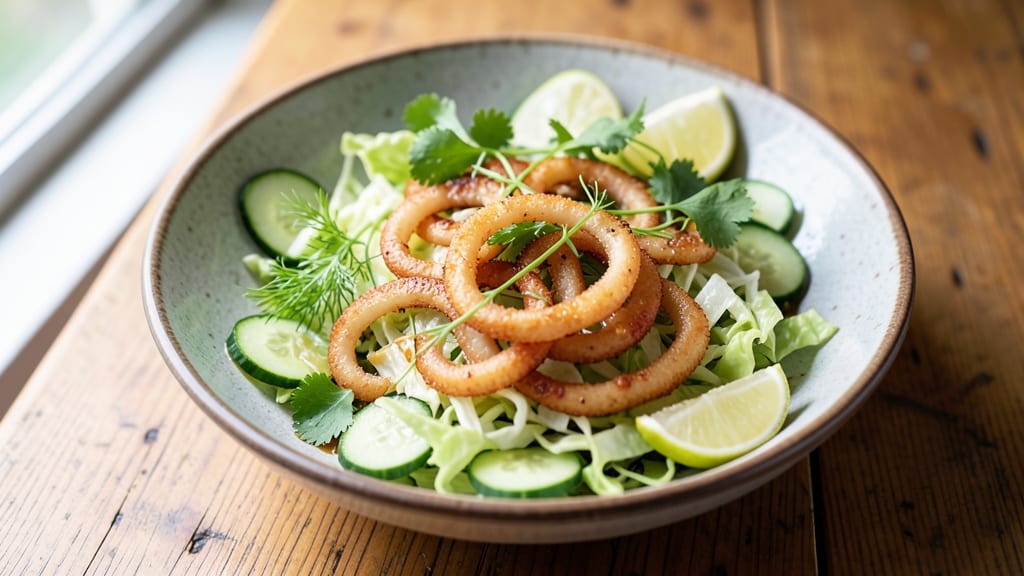
This Asian squid salad recipe transforms tender squid into crispy, golden bites that balance perfectly with fresh vegetables and a tangy sesame-lime dressing. The secret lies in quick searing—just 2 minutes in a hot pan—to lock in that satisfying crunch while keeping the interior tender.
I developed this dish after discovering how much my family loved the contrast of textures: crispy squid, crunchy veggies, and silky dressing.
The salad base starts with a mix of shredded cabbage, cucumber, and cilantro, which adds brightness and freshness to cut through the richness of the squid.
The dressing—a zesty blend of lime juice, soy sauce, sesame oil, and a touch of chili—ties everything together with its perfect balance of sweet, tangy, and spicy notes. This isn’t just a salad; it’s a restaurant-quality dish you can make at home in under 30 minutes.
What makes this recipe stand out is the crispy texture of the squid, achieved by patting it dry and searing it skin-side down until golden. The key is working quickly—once the squid hits the pan, it’s a race against time to get that perfect crunch.
Serve it chilled or at room temperature, garnished with extra sesame seeds and lime wedges for that final touch of freshness.
This dish is ideal for weeknight dinners, potlucks, or as a light but satisfying main course. The flavors are bold yet balanced, and the prep is straightforward—no fancy techniques required. Let’s bring this vibrant, umami-packed salad to your table.
Ingredients for asian squid salad
Crispy squid meets vibrant veggies and zesty dressing—just nine ingredients for restaurant-quality flavor.
| Ingredient | Amount | Notes |
|---|---|---|
| Fresh Squid 🦑 | 1 lb | Pat dry and clean thoroughly |
| Green Cabbage 🥬 | 4 cups | Shredded, outer leaves removed |
| English Cucumber 🥒 | 1 whole | Seedless, thinly sliced |
| Fresh Cilantro 🌿 | ½ cup | Chopped, stems removed |
| Sesame Oil 🫒 | 2 tbsp | Toasted for maximum flavor |
| Fresh Lime Juice 🍋 | ⅓ cup | About 3 limes, freshly squeezed |
| Low-Sodium Soy Sauce 🍶 | ¼ cup | For authentic umami flavor |
| Toasted Sesame Seeds 🌰 | 2 tbsp | Plus extra for garnish |
| Red Chili Flakes 🌶️ | 1 tsp | Adjust for spice preference |
| Garlic Cloves 🧄 | 3 cloves | Minced for dressing |
| Vegetable Oil 🫒 | ¼ cup | High smoke point for searing |
| Salt 🧂 | 1 ½ tsp | Kosher or sea salt |
| Black Pepper 🌶️ | ½ tsp | Freshly ground |
| Honey 🍯 | 1 tbsp | For subtle sweetness |
The squid is non-negotiable here—fresh is a must, and the cleaner you get it, the better it sears. Look for whole squid at your fishmonger or Asian market—they’ll clean it for you if you ask. The cabbage should be crisp and white inside; green cabbage holds up better than red. For the sesame oil, Kadoya or La Choy are reliable brands—avoid the cheap stuff that tastes like paint thinner. Pat the squid completely dry before searing; any moisture will steam it instead of crisp it.
No sesame seeds? Toasted sunflower seeds work in a pinch, though they lack that nutty depth. Short on lime? Lemon juice at 1.5 times the amount gives similar tang, but the flavor won’t be identical. The soy sauce can be swapped for tamari if you’re gluten-sensitive, but regular low-sodium soy keeps the balance right. For extra crunch, add 0.25 cup thinly sliced radishes—they disappear fast but add a peppery kick. If you’re feeling adventurous, swap the honey for agave nectar to keep it vegan-friendly (though the dish is pescatarian).
Squid cooks in a flash—work fast once it hits the pan. Store any leftover squid in an airtight container with a paper towel to absorb moisture; it keeps for 1 day in the fridge. The dressing lasts 5 days sealed in the fridge, but the squid is best eaten fresh. For meal prep, assemble the salad without dressing and store components separately—toss everything together just before serving to keep the crunch.
Why You'll Love This Recipe
- No-Cook Crunch: I swear by this when I’m too tired to chop much—just slice the squid (if it’s pre-cleaned), shred the cabbage, and toss with cucumber and cilantro. The sesame oil ties it all together while I’m still scrolling through my phone.
- Umami Bomb: That first bite of tender squid with the nutty sesame oil? It’s like a flavor explosion in your mouth. The cabbage adds crunch, but the real star is the squid—quickly seared so it’s juicy, not rubbery, with just enough garlic to make it sing.
- Lunchbox Hero: Between us, this is my go-to for work lunches or kids’ school meals. Pack it in a jar, and it stays fresh for days—no soggy lettuce here. Honestly, my son asks for it more than his favorite sandwich, and that says something.
- Budget Seafood Win: Squid is cheaper than shrimp, but it feels like a fancy meal. A single bag feeds my family for two dinners, and the veggies stretch it even further. Plus, sesame oil is a tiny splurge that makes everything taste restaurant-worthy without breaking the bank.
Step-by-step instructions for Asian squid salad
Here's how to create crispy, restaurant-quality squid with a vibrant sesame-lime dressing.
Prepare the Squid for Perfect Crispiness
Start by cleaning the 1 lb fresh squid thoroughly under cold running water to remove any remaining ink sacs or debris. Pat the squid completely dry with paper towels—this is crucial for achieving that signature crispy texture. Using kitchen shears, cut the squid into 1-inch rings, keeping the tentacles intact for presentation. In a bowl, toss the squid with 1.5 tsp salt, 0.5 tsp black pepper, and 1 tsp red chili flakes until evenly coated.
Heat 0.25 cup vegetable oil in a large skillet over medium-high heat until shimmering. Add the squid in a single layer and cook undisturbed for 1-2 minutes per side until golden brown and crispy. You'll know it's ready when the squid releases easily from the pan and the edges are deeply caramelized. Transfer to a paper towel-lined plate to drain excess oil and let cool slightly before assembling the salad.
Create the Tangy Sesame-Lime Dressing
In a small bowl, whisk together 0.33 cup fresh lime juice, 0.25 cup low-sodium soy sauce, 1 tbsp honey, and 2 tbsp toasted sesame oil until smooth. Add the 3 minced garlic cloves and stir until fully incorporated. Taste and adjust seasoning—you might want to add a pinch more salt or lime juice to balance the flavors. This dressing is the heart of the dish, so don't rush this step.
Set the dressing aside while you prepare the vegetables. The acidity from the lime will help tenderize the cabbage slightly, creating a perfect contrast to the crispy squid. Here's the thing—if you let the dressing sit for 5 minutes before using, the flavors will meld even more beautifully.
Assemble the Crunchy Vegetable Base
Shred the 4 cups green cabbage into thin strips, removing any tough outer leaves. Thinly slice the 1 whole English cucumber into half-moons, removing the seeds to prevent bitterness. Chop the 0.5 cup fresh cilantro, removing stems for a cleaner presentation. In a large mixing bowl, combine the cabbage, cucumber, and cilantro, tossing gently to distribute the ingredients evenly.
Drizzle the vegetable mixture with 1 tbsp toasted sesame seeds and gently toss again. The sesame seeds add a nutty crunch that complements the crispy squid perfectly. This is where the texture contrast really comes together—crunchy vegetables, crispy squid, and a silky dressing.
Combine and Serve Immediately
Add the cooled squid to the vegetable mixture and gently toss everything together. Pour the sesame-lime dressing over the top and mix just until everything is evenly coated. The squid should still retain its crispy texture while the vegetables absorb the tangy dressing. Taste and adjust seasoning if needed—you might want to add a splash more lime juice or a pinch of salt to enhance the flavors.
Transfer the salad to a serving platter and garnish with an additional 1 tbsp toasted sesame seeds and a sprinkle of red chili flakes for color and heat. Serve immediately while the squid is still crispy and the vegetables are fresh. This salad is best enjoyed right away, as the textures and flavors are at their peak when everything is fresh and vibrant.
Pro Tips For Making Asian Squid Salad
- SEAR THE SQUID FAST: Hit the squid with a screaming-hot pan—no pre-drying needed. The goal is 1-2 minutes per side until just opaque, not rubbery. I used to cook it low and slow, and it came out chewy. Now I blast it with high heat for 30 seconds per side, then finish in the fridge to chill fast.
- SLICE CABBAGE THINLY: Use a sharp knife and cut the green cabbage into paper-thin shreds—no need for a mandoline. Thinner slices mean more crunch and better texture contrast with the squid. If you’re impatient, tear the outer leaves into bite-sized strips instead of shredding the whole head.
- DRESS THE SALAD LAST: Toss the sesame oil and other dressings over the salad right before serving, or the cucumber will turn soggy. I learned this after making a batch where the salad sat for 20 minutes—great flavor, but the texture was ruined. Keep the dressing separate until the final minute.
- USE COLD CUCUMBER: Chill the English cucumber in ice water for 10 minutes before slicing—it tightens the flesh and keeps it crisp longer. Skip this, and you’ll end up with a watery salad. (Yes, it’s an extra step, but it makes a real difference.)
Troubleshooting great asian squid salad
Squid Too Chewy?
Overcooking is the #1 culprit for rubbery squid. The secret is timing—squids cook in 1-2 minutes max over medium-high heat. If yours turns out chewy, try this fix: Pat the squid even drier before cooking, and use a nonstick skillet—it conducts heat more evenly.
Also, avoid overcrowding the pan; cook in batches if needed. 💡
Dressing Too Thin?
If your dressing separates or tastes watery, you likely used too much lime juice or not enough sesame oil. The ideal ratio is 1 part lime juice to 2 parts soy sauce.
For thickness, whisk in 1 tsp cornstarch mixed with 1 tsp water and cook briefly over low heat. Alternatively, reduce the dressing by 50% on the stove until syrupy. 🍶
Salad Too Watery?
Cucumber and cabbage release moisture over time. To fix this, squeeze excess water from the cucumber slices with a paper towel before adding. For cabbage, salt it first (sprinkle with 0.5 tsp salt, let sit 10 minutes, then rinse and drain).
Serve the salad immediately after tossing to prevent sogginess. ❄️
Squid Not Crispy Enough?
Cold squid won’t crisp properly. Let it sit at room temperature for 10-15 minutes before cooking. For extra crunch, double-cook: Sear once, let cool, then reheat in a 350°F oven for 2-3 minutes.
Use a wire rack on a baking sheet to allow air circulation. A cast-iron skillet works best for high heat retention. 🔥
Dressing Too Salty?
Balance excess saltiness with acid or sweetness. Add 1 tbsp honey or 1 tsp lime zest to brighten flavors. If the soy sauce is the issue, swap for coconut aminos (lower sodium) or dilute with 1 tbsp water. Taste as you go—adjust gradually to avoid overcorrecting. 🌶️
Leftover Squid Soggy?
Store cooked squid in a single layer on a wire rack in the fridge to maintain crispness. Reheat in a 400°F oven for 3-4 minutes until just warmed through. For extra crunch, sprinkle with 1 tsp cornstarch before reheating. Avoid microwaving—it steams the squid instead of crisping. 💫
Nutrition facts
Frequently asked questions
Can I substitute fresh squid with frozen squid?
Frozen squid works, but it requires extra prep for best results. Thaw it overnight in the fridge, then pat it completely dry before cooking. The texture won't be as crispy as fresh, but it's still delicious. For extra crunch, sear the thawed squid in a hot pan for 2-3 minutes per side and serve immediately.
How do I clean squid if I've never done it before?
Start by removing the head and cutting off the tentacles. Rinse the body under cold water to remove any remaining ink sac. Use scissors to cut along the belly and pull out the quill (pen-like bone). Rinse again and pat dry thoroughly—this step is critical for crispy results. Watch a quick YouTube tutorial if you're unsure!
What's the best way to store leftovers?
Store the squid and dressing separately in airtight containers. Keep the salad base (veggies) in a separate container. Refrigerate for up to 2 days. When ready to eat, toss everything together and reheat the squid in a 400°F oven for 3-4 minutes to restore crispiness.
Can I make this salad spicier?
Add 1 extra tsp red chili flakes to the squid marinade or stir in 1 tbsp sriracha to the dressing. For heat lovers, mix 1 tsp gochujang (Korean chili paste) into the dressing. Start with small amounts—you can always add more!
What other proteins work well in this salad?
This salad pairs beautifully with shrimp, scallops, or even grilled chicken. For seafood lovers, try seared shrimp instead of squid—they add a sweet contrast. If using chicken, marinate it in the same dressing for 15 minutes before grilling to infuse flavor.