
Salads
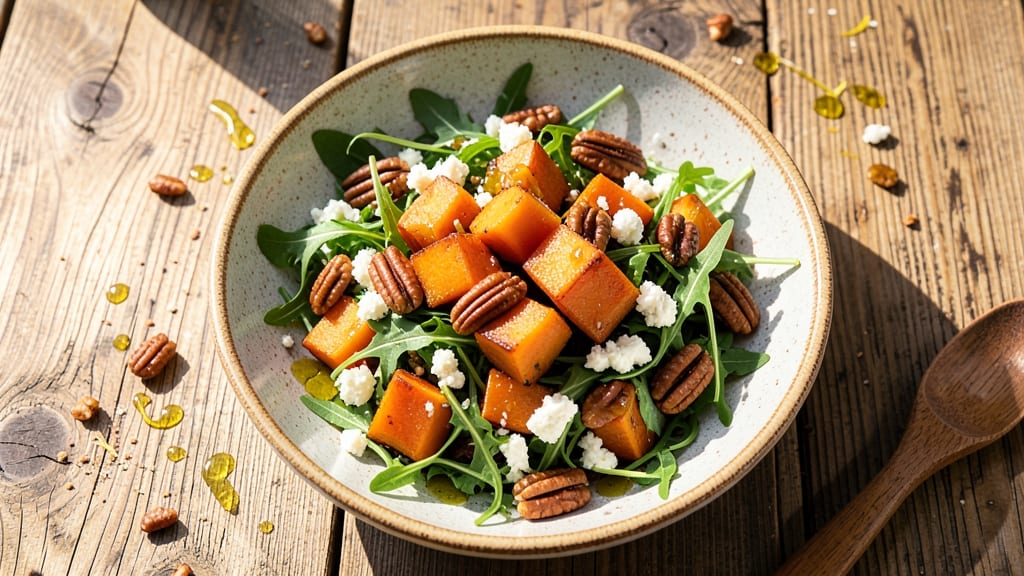
This butternut squash and arugula salad recipe transforms simple ingredients into a restaurant-worthy dish that's perfect for fall gatherings. The key lies in roasting the squash until caramelized and tender, then balancing its natural sweetness with peppery arugula and a bright citrus dressing.
I developed this recipe during a particularly busy autumn when I needed something hearty yet light—it became an instant favorite.
The beauty of this salad is its versatility. Roasted butternut squash adds natural sweetness and texture, while arugula provides that signature peppery bite that cuts through the richness. Toasted pecans and crumbled goat cheese add crunch and depth, and a simple lemon vinaigrette ties everything together with tangy brightness.
The combination is striking visually and satisfying in every bite.
What makes this dish truly special is how it comes together—no complicated techniques, just thoughtful preparation. The squash roasts while you prepare the rest, making this a perfect make-ahead meal that tastes even better the next day.
It's hearty enough for a main course but light enough for a side, and pairs beautifully with grilled chicken or fish.
Serve this salad at room temperature for the best texture contrast, and don't be afraid to experiment with seasonal variations. Swap in pomegranate seeds for extra crunch in winter or add fresh herbs like thyme for a spring twist.
The possibilities are endless, but the foundation remains the same—simple, balanced, and undeniably delicious.
Ingredients for butternut squash arugula salad
Roasted squash, peppery greens, and crunchy pecans—this salad is a fall favorite that comes together effortlessly.
| Ingredient | Amount | Notes |
|---|---|---|
| Medium Butternut Squash 🎃 | 1 ½ lb | Peeled, cubed, seeds removed |
| Baby Arugula 🌿 | 6 oz | Fresh, stems trimmed |
| Extra-Virgin Olive Oil 🫒 | ½ cup | For roasting and dressing |
| Raw Pecans 🥜 | ½ cup | Toasted, roughly chopped |
| Goat Cheese 🧀 | 4 oz | Crumbled, room temperature |
| Fresh Lemon Juice 🍋 | ¼ cup | Freshly squeezed |
| Honey 🍯 | 1 tbsp | Raw or wildflower preferred |
| Dijon Mustard 🍯 | 1 tsp | For dressing depth |
| Diamond Crystal Kosher Salt 🧂 | 1 tsp | For seasoning |
| Freshly Ground Black Pepper 🌶️ | ½ tsp | For dressing finish |
| Balsamic Vinegar 🍷 | 1 tbsp | For dressing tang |
| Fresh Thyme Leaves 🌿 | 2 tsp | Optional garnish |
The butternut squash is the star here—look for a firm, heavy squash with smooth skin and no soft spots. Trader Joe's and Whole Foods carry excellent organic options, but the regular grocery store variety works too. Cutting it evenly is key: aim for 1.5-inch cubes so they roast uniformly. I always roast mine at 400°F until caramelized—about 25 minutes—but don't rush it. The deeper the caramelization, the richer the flavor. For extra convenience, some stores sell pre-cut squash, though it's pricier.
No goat cheese? Crumbled feta or vegan feta works in a pinch, though the tang won't be quite the same. Running short on pecans? Walnuts or candied pecans add a different texture but still bring sweetness. The dressing is where the magic happens—use high-quality extra-virgin olive oil (like Colavita or California Olive Ranch) for the best flavor. Fresh lemon juice is non-negotiable; bottled won't cut it. If you're feeling fancy, add a pinch of smoked paprika to the dressing for depth. And trust me, the honey should be raw or wildflower—it dissolves better and adds subtle floral notes.
This salad tastes even better the next day, so make it ahead and store components separately. The roasted squash keeps for 5 days in the fridge, while the dressing lasts 1 week if stored in a sealed jar. Pecans and goat cheese should be added fresh before serving to maintain texture. For a make-ahead meal, assemble everything except the pecans and cheese, then toss with the dressing. Store in an airtight container and add the crunchy toppings right before serving—game-changer for texture contrast.
Why You'll Love This Recipe
- I swear by this shortcut: just roast the squash cubes until tender, then toss them straight into the salad. No peeling, no dicing stress—just grab a fork, pull apart those warm, caramelized chunks, and call it done. (Yes, even on a Tuesday night when I’ve already lost my patience.)
- No Roasting Required: I swear by this shortcut: just roast the squash cubes until tender, then toss them straight into the salad. No peeling, no dicing stress—just grab a fork, pull apart those warm, caramelized chunks, and call it done. (Yes, even on a Tuesday night when I’ve already lost my patience.)
- Sweet-Savory Magic: That butternut squash? Roasted until it’s got a honeyed edge, then paired with peppery arugula and tangy goat cheese—it’s like autumn in a bowl. The pecans add crunch, but honestly? The real star is how the squash soaks up the olive oil and just transforms into something rich and satisfying.
- Prep-Ahead Powerhouse: Between us, this salad keeps like a champ. Roast the squash ahead, store it in the fridge, and assemble it fresh when you’re ready. It’s my go-to for potlucks, lunch boxes, or when I need a side that won’t wilt by noon. (Pro tip: the pecans stay crispy if you toast them last.)
Step-by-step instructions for butternut squash and arugula salad
Here's how to create a perfectly balanced salad with caramelized squash and bright, peppery greens.
Roast the Butternut Squash to Sweet Perfection
Preheat your oven to 400°F and line a large baking sheet with parchment paper. Toss the 1.5 lb medium butternut squash cubes with 2 tablespoons of the extra-virgin olive oil, ½ teaspoon of the diamond crystal kosher salt, and ¼ teaspoon of the freshly ground black pepper. Spread them in a single layer on the baking sheet, leaving space between each cube.
Roast for 25-30 minutes until the edges are deep golden brown and the squash yields slightly when pressed with a fork. The squash should be tender but still hold its shape—overcooking turns it mushy. I like to flip them halfway through for even browning. Let the roasted squash cool for 10 minutes before assembling the salad.
Toast the Pecans for Nutty Crunch
While the squash roasts, spread the ½ cup raw pecans on a separate baking sheet. Toast them in the same 400°F oven for 8-10 minutes, stirring once halfway, until they're fragrant and light golden brown. Watch them closely—they burn quickly and lose their delicate flavor.
Transfer the toasted pecans to a cutting board and roughly chop them with a chef's knife. The slightly uneven pieces add texture contrast to the salad. Let them cool completely before adding to the salad—warm pecans can make the dressing separate.
Whisk Together the Bright Citrus Dressing
In a small bowl, combine the ¼ cup fresh lemon juice, 1 tablespoon honey, 1 teaspoon Dijon mustard, 1 tablespoon balsamic vinegar, ¼ teaspoon of the remaining diamond crystal kosher salt, and ¼ teaspoon of the remaining freshly ground black pepper. Whisk vigorously until smooth.
Slowly drizzle in the remaining ¼ cup extra-virgin olive oil while continuing to whisk. The dressing should emulsify into a silky consistency—if it breaks, whisk in another teaspoon of lemon juice or water until it comes together. Taste and adjust seasoning if needed; the lemon and honey should balance perfectly.
Assemble the Salad with Perfect Balance
In a large bowl, gently toss the 6 oz baby arugula with half of the dressing (about 2 tablespoons). The arugula should be coated but still vibrant—over-tossing wilts the delicate greens. Add the cooled roasted squash and gently fold it in with a spatula.
Sprinkle the chopped toasted pecans and crumbled 4 oz goat cheese over the top. The goat cheese should be room temperature so it melts slightly when the dressing hits it, creating creamy pockets. Drizzle with the remaining dressing and finish with the 2 teaspoons fresh thyme leaves for an aromatic touch.
Serve Immediately for Maximum Freshness
Toss the salad gently one final time just before serving to distribute all the flavors. The contrast of sweet roasted squash, peppery arugula, nutty pecans, and tangy dressing makes this salad truly exceptional. I like to serve it immediately while the squash is still warm—this enhances its caramelized sweetness against the cool greens.
For best results, serve within 30 minutes of assembly. If storing, keep the dressing separate until ready to eat to maintain crispness. This salad holds up well for 2 hours in the refrigerator, but the texture and flavor are at their peak when freshly assembled.
Pro Tips For Making Butternut Squash Arugula Salad
- ROAST SQUASH UNTIL TENDER: The squash should collapse easily when pierced with a fork—not just soft, but mushy inside. I used to pull it out at the first sign of browning, but that leaves it rubbery. Aim for 35-40 minutes at 400°F (20-25 mins after cutting), flipping halfway, until the edges blacken slightly and the flesh gives way like overripe peaches.
- SALT THE GOAT CHEESE: Skip the pre-crumbled stuff—it’s dry and flavorless. Crumble your own chèvre over ice water to separate the curds, then drain and pat very dry with paper towels. Toss the crumbles with a pinch of flaky salt (like Maldon) and a drizzle of olive oil before adding to the salad. The texture becomes lighter, and the salt cuts through the richness.
- TOAST PECANS LOW AND SLOW: High heat burns them before they brown. Spread pecans on a baking sheet and toast at 300°F for 8-10 minutes, stirring once, until fragrant and just golden. They’ll crisp up more in the salad’s dressing, but this prevents that acrid, overcooked bitterness that ruins everything.
- DRESS THE ARUGULA LAST: Arugula wilts fast under dressing. Toss the squash, pecans, and goat cheese first, then add the arugula right before serving. A quick shake with a fork keeps it crisp. If you’re prepping ahead, store the squash mixture separately and dress only when ready to eat—trust me, the peppery bite matters.
Dietary considerations for these flavors
Vegetarian Powerhouse
This salad is naturally vegetarian and packed with plant-based protein from the pecans and goat cheese, making it perfect for meat-free meals. The butternut squash provides fiber-rich carbohydrates and vitamin A, while arugula delivers iron and calcium.
I often serve this as a hearty main course when I'm avoiding meat, and it never feels like a compromise. 💪
Gluten-Free Friendly
All the ingredients in this recipe are inherently gluten-free, so it's safe for anyone with celiac disease or gluten sensitivity. The dressing uses simple ingredients like olive oil, lemon juice, and honey—no hidden gluten sources.
I always double-check labels on goat cheese and pecans, but most brands are naturally gluten-free. For extra peace of mind, opt for certified gluten-free brands like Whole Foods 365 or Trader Joe's.
Dairy-Free Adaptations
Skip the goat cheese and replace it with vegan feta or nutritional yeast for a dairy-free version. I've had great success using Follow Your Heart vegan feta, which adds a tangy flavor similar to traditional goat cheese.
The dressing remains dairy-free as written, so the only adjustment is the cheese topping. The salad still maintains its creamy texture from the dressing and roasted squash. 🌱
Nut-Free Option
For those with nut allergies, simply omit the pecans and add toasted pumpkin seeds or sunflower seeds instead. These seeds provide a similar crunch and can be toasted in the same way.
I've also used crispy chickpeas for a protein-rich alternative that holds up well in the salad. The flavor profile changes slightly, but the texture remains satisfying.
Low-Carb Version
This salad is already relatively low in carbs, but you can make it even lower by reducing the honey to ½ tablespoon and using sugar-free maple syrup instead. The squash and arugula provide natural sweetness, so the flavor won't suffer.
For extra protein, add grilled chicken or tofu cubes on the side. I've found that this version keeps me full for hours without spiking my blood sugar.
Kid-Friendly Adjustments
To make this salad more appealing to picky eaters, I often serve the roasted squash and pecans on the side, letting kids add as much (or as little) as they like to their arugula. The sweetness of the squash and honey in the dressing usually wins them over.
For extra fun, arrange the salad on a colorful platter and let them assemble their own bowls. It's a great way to introduce them to healthy, flavorful vegetables. 🍽️
Nutrition facts
Frequently asked questions
Can I substitute regular squash for butternut squash?
While you can technically use other winter squash like acorn or delicata, butternut's natural sweetness and texture are key to this salad. For a similar flavor, try kabocha squash—it's slightly sweeter and holds up well to roasting. If you must use zucchini or yellow squash, reduce roasting time to 15 minutes and add a pinch of cinnamon to mimic the depth of butternut.
How do I store leftovers to keep everything crisp?
Store components separately in airtight containers: roasted squash (5 days), arugula (3 days), dressing (1 week), and pecans (1 month). Keep the dressing separate until serving to prevent soggy greens. When ready to eat, reassemble and toss gently—this maintains the perfect texture contrast between crispy, creamy, and crunchy elements.
What's the best way to reheat this salad?
This salad tastes best fresh, but if you must reheat, warm only the roasted squash portion in a 350°F oven for 10 minutes—never the arugula or dressing. The squash will soften further, but the greens will wilt. For a quick fix, serve the salad at room temperature (it keeps well for 2 hours) and add fresh pecans and cheese just before eating for that satisfying crunch.
Can I make this salad ahead of time for a dinner party?
Prep the roasted squash and dressing 1 day ahead, then assemble just before serving. Store the arugula separately and add it last to maintain crispness. Toast the pecans fresh on the day of serving—their aroma and crunch make all the difference. This approach saves time while keeping the salad restaurant-quality.
What if my arugula turns bitter?
Fresh arugula should have a mild peppery kick, not bitterness. If yours tastes bitter, it's likely old or wilted. Look for vibrant green leaves with crisp stems—store-bought arugula often lasts 5 days in the fridge. For extra freshness, buy it the day before serving and store it in a sealed container with a paper towel to absorb moisture.