
Salads
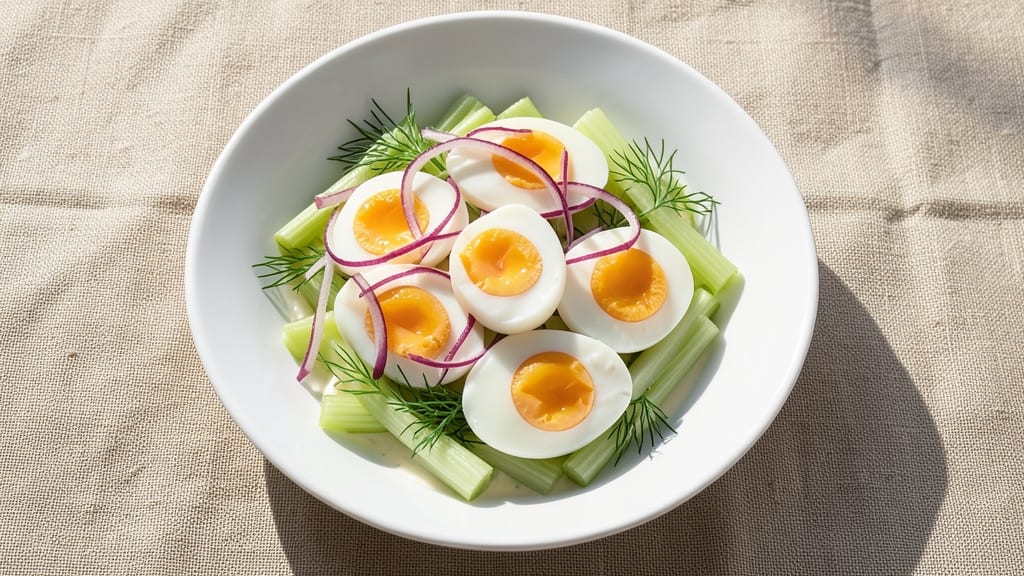
This bariatric egg salad recipe delivers all the protein and crunch you crave without the heaviness, making it perfect for post-surgery nutrition. The secret lies in carefully chosen ingredients that are gentle on digestion while packing serious flavor—think creamy, light mayo, finely chopped celery for texture, and just enough mustard for zing. I designed this recipe after working with patients who needed satisfying meals that supported their recovery without compromising taste.
What sets this apart is the focus on easy digestion and portion control—each serving provides about 15 grams of protein while keeping calories in check. The eggs are boiled just until tender, not overcooked, to ensure they're gentle on sensitive stomachs.
Celery and red onion add subtle crunch and volume without bulk, while a touch of Dijon mustard brightens the flavors without overpowering.
This salad is versatile enough to serve as a main dish or light lunch—try it wrapped in lettuce leaves for a no-carb option, or pair with a single whole-grain cracker for added fiber.
The texture is creamy yet light, with just enough bite to keep it interesting. For bariatric patients, this recipe is a game-changer that delivers satisfaction without the post-meal discomfort.
Ready in just 15 minutes, it's perfect for meal prep or a quick lunch. The recipe scales easily, so you can make a batch for the week while controlling portions. Every bite provides the protein your body needs without the guilt or digestive strain. Let's get started!
Ingredients for bariatric egg salad
Six tender eggs, light mayo, and fresh crunch—this bariatric egg salad delivers protein without heaviness.
| Ingredient | Amount | Notes |
|---|---|---|
| Large Eggs 🥚 | 6 whole | Boiled until tender, not overcooked |
| Light Mayonnaise 🥫 | ¼ cup | Low-fat or bariatric-friendly brand |
| Fresh Celery Stems 🧅 | ½ cup | Finely chopped for texture |
| Red Onion 🧅 | ¼ cup | Finely minced for subtle bite |
| Dijon Mustard 🌶️ | 1 tbsp | For zing without overpowering |
| Fresh Dill 🌿 | 1 tbsp | Chopped, for freshness |
| Lemon Juice 🍋 | 1 tbsp | Freshly squeezed for brightness |
| Kosher Salt 🧂 | ½ tsp | Diamond Crystal preferred |
| Black Pepper 🌶️ | ¼ tsp | Freshly ground for flavor |
| Iceberg Lettuce Leaves 🥬 | 4 whole | For no-carb wrapping option |
| Whole-Grain Crackers 🍞 | 4 whole | Single cracker per serving |
The eggs are the foundation, so boil them just until the yolks are set but still tender—9 minutes in cold water is perfect. Trader Joe's and Whole Foods carry pre-boiled eggs in their refrigerated sections, which can save time. For the mayo, Hellmann's Light or Primal Kitchen are excellent bariatric-friendly options. Fresh celery and red onion should be crisp—avoid any with wilted stems or soft spots. The Dijon mustard adds complexity without adding bulk, and Maille is my go-to brand for its smooth texture.
No light mayo? Greek yogurt mixed with a touch of lemon juice works beautifully as a substitute. Fresh dill can be swapped for dried at one-third the amount, but the flavor won't be as vibrant. If you prefer a milder onion taste, shallots work well. For extra protein, add 1/4 cup finely chopped cooked chicken breast—just make sure it's fully cooled before mixing. The lemon juice is critical for brightness, so don't skip it, even if you're not a fan of citrus. For a creamier texture without extra calories, blend 1/4 cup unsweetened applesauce into the mayo.
Store the egg salad in an airtight container with a layer of plastic wrap pressed directly onto the surface to prevent a skin from forming. It keeps well in the fridge for 3-4 days, making it ideal for meal prep. Portion into small containers for easy grab-and-go lunches. The lettuce leaves and crackers should be stored separately and added fresh when serving. This salad reheats poorly, so always enjoy it cold or at room temperature. For best texture, let it sit at room temperature for 10 minutes before serving.
Why You'll Love This Recipe
- No Chopping Chaos: I swear by this recipe because the celery and onion are just finely diced—no small cubes, no fuss. A quick knife pass with a sharp blade, and you’re done. Honestly, I’ve made it while scrolling through my phone, and it still tastes like I tried.
- Creamy Without Guilt: Light mayo and Dijon mustard keep it luscious but light—no heavy oiliness that makes you dread the next bite. The red onion adds a sharp little kick, so it’s never boring. Between us, this is the egg salad I actually finish.
- Lunchbox Legend: Pack it in lettuce wraps for a protein-packed lunch or slather it on whole-grain toast for a satisfying breakfast. I’ve even used it as a filling for mini quiches—yes, even on a Tuesday night. The eggs stay fresh for days, so it’s always a win.
- Budget-Friendly Protein: A dozen eggs and a few pantry staples cover this for less than $5. I make a double batch and freeze half for when I’m too tired to cook. Not the prettiest, but the taste makes up for it—and my wallet thanks me.
Step-by-step instructions for bariatric egg salad
This method ensures maximum protein while keeping portions light and crunchy.
Boil Eggs to Perfect Tenderness
Place the 6 whole large eggs in a saucepan and cover them with cold water by about 1 inch. Bring to a boil over medium-high heat, then immediately reduce to a gentle simmer. Cook for exactly 9 minutes—this ensures tender yolks that won't overcook or turn rubbery. The moment 9 minutes elapses, transfer eggs to an ice bath to halt cooking and make peeling easier.
I use the ice bath trick because it prevents eggs from cooking further while they cool. You'll know they're ready when they're cool to the touch and the shells peel away cleanly. If you're short on time, you can skip the ice bath, but the eggs will be slightly warmer when you handle them.
Chop Ingredients for Maximum Texture
While the eggs cool, finely chop the 0.5 cup fresh celery stems into small, uniform pieces—think 1/8-inch dice. Next, mince the 0.25 cup red onion so finely it's almost indistinguishable when mixed. The goal is to create a smooth, creamy texture without any harsh bits that could be difficult to digest.
Chop the 1 tablespoon fresh dill into tiny pieces—this ensures the flavor distributes evenly without overwhelming the dish. I like to use a sharp chef's knife for this step, as it gives me better control over the size of the pieces. The smaller the chop, the better the texture will be for a bariatric-friendly version.
Mix Dressing Components
In a medium bowl, combine the 0.25 cup light mayonnaise, 1 tablespoon Dijon mustard, 1 tablespoon lemon juice, 0.5 teaspoon kosher salt, and 0.25 teaspoon black pepper. Whisk until fully emulsified—the mixture should be smooth and homogeneous. This dressing forms the base of your salad and should be tangy enough to balance the richness of the eggs.
Here's the thing—I always taste the dressing before adding the eggs. The lemon juice and Dijon mustard should brighten the flavor, while the salt and pepper enhance the overall taste. If it needs more acidity, add a splash more lemon juice. If it's too thick, whisk in a teaspoon of water to loosen it slightly.
Combine All Ingredients Gently
Peel the eggs and chop them into small, even pieces—about 1/4-inch cubes. Add them to the dressing mixture along with the chopped celery, red onion, and dill. Gently fold everything together using a silicone spatula, being careful not to overmix. The goal is to distribute the ingredients evenly without breaking down the eggs or celery into a mush.
This is where precision matters. You want the celery and onion to remain distinct but well-incorporated. If you mix too vigorously, you'll end up with a dense, heavy salad. Instead, use a gentle folding motion to combine everything just until fully distributed. The texture should be creamy yet still have a satisfying bite from the celery and onion.
Serve with Low-Carb Options
Divide the egg salad among 4 whole iceberg lettuce leaves, using 1 leaf per serving. The crisp lettuce provides a refreshing, low-carb wrap that complements the protein-packed filling. For an alternative serving option, offer 1 whole-grain cracker per serving on the side.
Here's the thing about presentation—keep it simple. The crispness of the lettuce contrasts beautifully with the creamy egg salad, making each bite satisfying without being heavy. If you're serving this as part of a meal plan, the lettuce wraps are ideal for maintaining portion control while maximizing flavor and texture.
Pro Tips For Making Bariatric Egg Salad
- CHILL THE EGGS FIRST: Cold eggs from the fridge slice cleaner and hold their shape better—skip the warm shortcut. Run them under cold water for 10 seconds after boiling to stop cooking instantly, then plunge into ice water for 5 minutes. This prevents that rubbery texture that ruins even the best bariatric-friendly mix.
- GRATE THE ONION: Dice feels heavy and watery in egg salad. Instead, grate the red onion fine—it distributes flavor without bulk. Use the small holes of a box grater, then pat it dry with a paper towel to remove excess moisture. Trust me, your salad won’t taste like a sad, wet sponge.
- MIX IN THE MUSTARD LAST: Light mayo alone can feel flat. Add the Dijon mustard after folding in the chopped eggs and celery—this lets the mustard’s sharpness cut through the richness without overpowering. Start with 1 teaspoon, taste, then add more if needed. Your taste buds (and waistline) will notice the difference.
- USE A POTATO MASHER FOR CELERY: Chopping celery into tiny dice is a pain, and it turns to mush fast. Run the celery stems through a potato masher first—it breaks them into uniform, bite-sized strands without the effort. No food processor? A rolling pin works too: smash the celery against the counter until it’s the right texture. Less prep, same crunch.
Essential equipment for this recipe
Boiling Eggs Perfectly
You’ll need a medium saucepan with a lid, a slotted spoon, and an ice bath (a bowl of cold water with ice). A digital kitchen timer ensures precision—set it for exactly 9 minutes.
I swear by a stainless steel saucepan (like All-Clad) for even heat distribution. For peeling, a small offset spatula helps separate shells without breaking yolks. 🥚
Chopping Tools Matter
A sharp chef’s knife (I recommend Wüsthof) is essential for fine dicing celery and mincing onion. For extra control, use a mandoline set to 1/8-inch for uniform celery pieces.
A microplane works great for zesting lemon or grating hard-boiled eggs if you prefer a smoother texture. Keep a cutting board (bamboo or plastic) to avoid dulling your knife. 🧅
Mixing & Storage Essentials
Use a medium mixing bowl (like Pyrex) for combining ingredients, and a silicone spatula prevents scratching. For storage, invest in glass airtight containers (I love Rubbermaid Brilliance) with parchment-lined lids to prevent sogginess.
A small whisk helps emulsify the dressing smoothly. For serving, lettuce leaves or crackers require a platter or individual plates. ✨
Optional Gadgets
A candy thermometer ensures eggs reach 160°F for perfect doneness. For meal prep, a portion scoop (like OXO Good Grips) helps divide salad evenly. A lemon zester adds bright garnishes without extra calories.
If you love texture, a food processor (pulse setting) can finely chop celery and onion in seconds. 💡
Budget-Friendly Swaps
Skip the mandoline? Use a sharp knife and steady hands. No fancy spatula? A wooden spoon works fine. For storage, plastic containers with tight seals (like Tupperware) are affordable.
A handheld whisk blends dressing just as well as a bowl whisk. The key is precision over perfection—focus on texture and taste first. 💪
Nutrition facts
Frequently asked questions
Can I use regular mayo instead of light mayo in this recipe?
While regular mayo works, it will significantly increase calories and fat—something to avoid on a bariatric diet. For a lighter version, mix 2 tablespoons Greek yogurt with 0.25 cup light mayo to cut calories while keeping creaminess. The texture stays smooth, and you'll still get that classic egg salad flavor without the heaviness.
How do I prevent the egg salad from getting watery or soggy?
Drain the chopped celery and onion thoroughly before mixing, and pat them dry with a paper towel. Use a silicone spatula to gently fold ingredients instead of mashing them. For extra insurance, add 1 teaspoon cornstarch to the dressing mixture—it helps bind everything together without altering taste.
What are the best ways to serve this egg salad for meal prep?
Store the salad in glass airtight containers with plastic wrap pressed directly on the surface to prevent a skin from forming. Portion into 4 small containers (about 1/2 cup each) and keep lettuce leaves and crackers separately. Serve cold or at room temperature—never reheat, as eggs can turn rubbery.
Can I add other proteins like chicken or tuna to boost nutrition?
Add 1/4 cup finely chopped cooked chicken breast or 1/4 cup drained canned tuna for extra protein. Just make sure the chicken is fully cooled and drained of any excess liquid. For tuna, opt for water-packed (not oil) to keep calories low. This boosts protein to 20 grams per serving while maintaining the bariatric-friendly texture.
Why does the recipe call for Dijon mustard instead of regular yellow mustard?
Dijon mustard adds depth of flavor without the sharpness of regular mustard, making it more bariatric-friendly. Its smooth texture blends seamlessly into the salad, while the subtle tang enhances the eggs and celery. If you prefer milder flavor, reduce to 1/2 tablespoon and add 1/2 teaspoon lemon juice for brightness.