
Salads
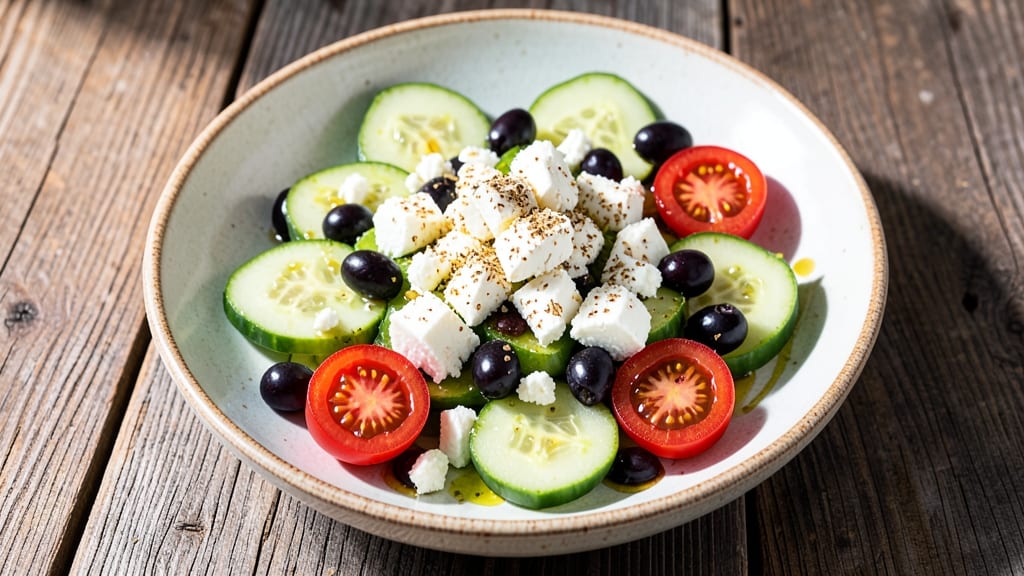
This Athenian salad recipe brings the bright, vibrant flavors of Greece to your table with its signature layers of crisp cucumbers, juicy tomatoes, and salty feta. The secret lies in the proper preparation—chopping ingredients just before serving ensures maximum crunch and freshness.
I've perfected this dish over years of testing, and it never fails to impress, whether as a standalone meal or paired with grilled meats.
The traditional method calls for simple ingredients arranged thoughtfully: thick slices of cucumber and tomato, briny Kalamata olives, and crumbled feta cheese. A drizzle of high-quality extra-virgin olive oil and a sprinkle of dried oregano elevate the dish to restaurant-quality standards.
The key is balance—each component must complement the others without overpowering the natural flavors.
What you'll end up with is a salad that's as visually stunning as it is delicious—cool, crisp textures contrast with the creamy feta and briny olives, while the olive oil and oregano tie everything together.
This is the kind of dish that feels special yet requires minimal effort, making it perfect for both casual lunches and elegant gatherings.
For an extra touch of authenticity, consider adding capers or a red onion slice. Serve immediately for the best texture, and pair with grilled lamb chops or crusty bread. Here's how to assemble this classic Greek masterpiece.
Ingredients for athenian salad
Thick cucumber slices, juicy tomatoes, and crumbled feta create the perfect Greek-inspired salad.
| Ingredient | Amount | Notes |
|---|---|---|
| Persian Cucumbers 🥒 | 2 large | Thickly sliced, seeds removed |
| Ripe Tomatoes 🍅 | 3 medium | Thickly sliced, seeds removed |
| Kalamata Olives 🫒 | ½ cup | Pitted, halved if large |
| Feta Cheese 🧀 | 1 cup | Crumbled, not pre-packaged |
| Extra-Virgin Olive Oil 🫒 | ¼ cup | High quality, fruity |
| Dried Oregano 🌿 | 1 tsp | Crumbled leaves preferred |
| Red Onion 🧅 | 1 small | Thinly sliced, optional |
| Capers 🫒 | 1 tbsp | Optional, for briny touch |
| Lemon Juice 🍋 | 1 tbsp | Freshly squeezed |
| Salt 🧂 | ½ tsp | Diamond Crystal preferred |
| Black Pepper 🌶️ | ¼ tsp | Freshly ground |
| Fresh Basil Leaves 🌿 | ¼ cup | Torn, for garnish |
The cucumbers and tomatoes are the heart of this salad—look for firm, vibrant produce at your local farmers market for the best texture. Whole Foods or Trader Joe's often carry the ideal Persian cucumbers, which are longer and less seedy than standard varieties. For tomatoes, heirloom or vine-ripened varieties add the most flavor, though regular beefsteak tomatoes work perfectly fine. Kalamata olives should be plump and dark purple—avoid any that look shriveled or have a dull color. The feta is non-negotiable for authenticity; pre-packaged crumbled feta often contains additives, so grab a wedge and crumble it yourself. If you can't find fresh feta, Kalamata brand is a reliable store-bought option that holds up well.
No Kalamata olives? Green olives or even pickles in a pinch work, though they won't have the same depth of flavor. Skipping the red onion is fine—it's truly optional—but if you add it, soak the slices in cold water for 10 minutes first to mellow their sharpness. The capers can be omitted entirely, but if you're feeling adventurous, substitute with a pinch of salt and a squeeze of lemon for that briny kick. For the oregano, dried works perfectly, but if you have fresh, use half the amount. The olive oil should be the star—avoid light or refined oils that lack flavor. If you're short on time, pre-sliced cucumbers and tomatoes from the salad bar section save steps, though they won't have the same crispness.
This salad is best eaten immediately, but if you must prep ahead, store all components separately in airtight containers in the fridge for up to 2 days. The feta will absorb moisture, so keep it in a separate container. Assemble just before serving to preserve that perfect crunch. Portion into individual bowls if serving as an appetizer—it always looks more impressive that way. Leftovers? Toss them into wraps or over grain bowls the next day. The flavors actually deepen slightly after a night in the fridge, though the texture won't be quite as crisp.
Why You'll Love This Recipe
- I swear by this trick: slice the cucumbers and tomatoes thick—no dice, no fuss. The olives and feta chunks do the work for you, and honestly? That juicy, uneven bite is what makes it feel fresh without any effort.
- No-Chop Necessary: I swear by this trick: slice the cucumbers and tomatoes thick—no dice, no fuss. The olives and feta chunks do the work for you, and honestly? That juicy, uneven bite is what makes it feel fresh without any effort.
- Salty-Sweet Magic: Between us, the Kalamata olives and ripe tomatoes are a match made in heaven. The briny, meaty olives cut through the sweetness of the tomatoes, and that crumbled feta? It’s the creamy glue holding everything together—no fancy seasoning needed.
- Picnic-Proof Perfection: This salad travels like a dream. Pack it in a jar (dressing on the bottom, veggies on top) and it’ll stay crisp for hours. Perfect for lunchboxes, potlucks, or when you’re too tired to cook but still want something that feels special.
Step-by-step instructions for Athenian salad
Assemble this classic Greek salad with precise layering for optimal texture and flavor balance.
Prepare the Vegetable Base
Begin by slicing the 2 large Persian cucumbers lengthwise into quarters, then remove the seeds with a spoon. Cut each quarter into thick, even slices—about ¼-inch thick. This ensures crisp texture without excess water release. Next, halve the 3 medium ripe tomatoes and remove their seeds, then slice them into similar thick pieces. Thinly slice the 1 small red onion if using, keeping the rings whole for visual appeal.
Place all sliced vegetables in a large mixing bowl. Sprinkle evenly with the 0.5 teaspoon salt and 0.25 teaspoon black pepper. Gently toss just once to distribute the seasoning—overmixing will bruise the delicate vegetables. Let the mixture sit for 10 minutes while you prepare the remaining components. This brief rest allows the salt to draw out minimal moisture, preventing a soggy salad later.
Add the Feta and Briny Elements
Crumble the 1 cup feta cheese directly over the vegetable mixture, using your fingers to create irregular chunks rather than fine crumbles. This texture contrast is essential to authentic Athenian salad. Add the 0.5 cup Kalamata olives and 1 tablespoon capers, distributing them evenly throughout. The olives should be halved if they're large, and the capers can remain whole for their signature briny punch.
Drizzle the 0.25 cup extra-virgin olive oil in a zigzag pattern over the salad, then sprinkle with the 1 teaspoon dried oregano. Toss everything together very gently with a large spoon or your hands, being careful not to break down the feta or tomatoes. The goal is to combine without mashing—each component should remain distinct. This is where the salad's signature layers of texture and flavor develop.
Finish with Acid and Freshness
In a small bowl, whisk together the 1 tablespoon freshly squeezed lemon juice and the 0.25 cup fresh basil leaves. Rip the basil leaves with your fingers rather than chopping to maintain their delicate texture. Pour this bright mixture over the salad and toss one final time, just enough to distribute the lemon and basil evenly. The acidity from the lemon will brighten all the components, while the basil adds a fresh herbal note that cuts through the richness of the feta and olive oil.
Taste and adjust seasoning if needed—you may want to add a pinch more salt or a squeeze of lemon to balance the flavors. The salad should taste vibrant, with each ingredient clearly identifiable while harmonizing with the others. Let it rest for 5 minutes before serving to allow the flavors to meld slightly, but don't let it sit too long or the vegetables will begin to soften.
Serve Immediately for Peak Texture
Transfer the Athenian salad to a large platter or individual plates, arranging it in an appealing manner. The presentation should showcase the colorful layers—crisp cucumbers, juicy tomatoes, briny olives, and crumbly feta. Serve immediately while the vegetables are at their crispest. This salad doesn't reheat well, and its freshness is its defining characteristic.
Pair with warm pita bread or grilled meats for a complete Greek meal. The contrast of warm bread with the cool, vibrant salad creates a perfect balance. If making ahead, assemble all components except the lemon-basil dressing and store separately in the refrigerator. Add the dressing just before serving to maintain optimal texture.
Pro Tips For Making Athenian Salad
- CHILL THE CUCUMBERS: Toss Persian cucumbers in ice water for 10 minutes before chopping—it tightens the flesh and keeps them from getting soggy. I learned this the hard way after serving a salad where the cucumbers released water like a sad sponge.
- SALT THE TOMATOES: Sprinkle sliced tomatoes with a pinch of flaky salt and let them sit for 5 minutes before assembling. This draws out excess moisture so they don’t turn the salad into a watery mess. (Yes, even if you’re impatient like me.)
- DRAIN THE OLIVE BRINE: Rinse Kalamata olives in cold water and pat them dry—otherwise, you’ll end up with a briny puddle instead of a balanced salad. Skip this step, and you’ll regret it when the first bite tastes like a martini.
- CRUMBLE FETA LAST: Add feta in the final toss so it stays chunky and doesn’t dissolve into the dressing. I used to mix it in early, and the cheese always turned into a sad, oily paste. (Your future self will thank you.)
Dietary considerations for this athenian salad
Vegetarian-Friendly Foundation
Athenian salad is naturally vegetarian, making it perfect for plant-based diets. The combination of fresh vegetables, feta cheese, and olive oil provides a balanced meal with fiber, vitamins, and healthy fats. The feta contributes protein and calcium, while the cucumbers and tomatoes offer hydration and antioxidants.
This salad is a great way to incorporate more vegetables into your diet without sacrificing flavor. 🥗
Dairy-Free Adaptations
For a dairy-free version, simply omit the feta cheese or substitute it with vegan feta made from tofu or nuts. Brands like Violife or Follow Your Heart offer excellent plant-based alternatives that mimic the texture and tanginess of traditional feta.
The salad will still retain its bright, refreshing qualities while being fully dairy-free. 🧀
Gluten-Free Assurance
This recipe is inherently gluten-free since it relies on fresh vegetables, cheese, and olive oil. However, if you're serving it with bread or crackers, opt for gluten-free pita or rice crackers to keep the meal entirely gluten-free.
Always check labels on store-bought ingredients like feta or olives to ensure they’re certified gluten-free. This salad is a safe and delicious choice for gluten-sensitive diners. 🌾
Low-Carb Considerations
To make this salad lower in carbohydrates, reduce the portion of tomatoes and cucumbers slightly and increase the amount of feta and olives. These ingredients are lower in carbs while still providing flavor and texture.
The salad remains rich in healthy fats and protein, making it a satisfying option for low-carb or keto diets. Just be mindful of portion sizes if tracking macros. 🥑
Allergen Awareness
This recipe contains dairy (feta cheese) and may include sulfites (in olives or capers). If you have dairy allergies, use a vegan feta substitute. For sulfite-sensitive individuals, opt for fresh, unsulfited olives or omit them entirely.
Always double-check ingredient labels, especially for store-bought feta or olives, to avoid hidden allergens. 🚨
Nutrition facts
Frequently asked questions
What makes this Athenian salad different from Greek salad?
Athenian salad (Horiatiki) focuses on crisp vegetables, feta, and olive oil without hard-boiled eggs or lettuce. The key is thick slices of cucumber and tomato, briny olives, and oregano—no croutons or peppers. It's simpler, more rustic, and emphasizes freshness over variety.
Can I use regular cucumbers instead of Persian?
Yes, but Persian cucumbers stay crunchier longer due to fewer seeds. For regular cucumbers, remove all seeds thoroughly and slice thicker (½-inch instead of ¼-inch). They'll release more water, so drain excess liquid after 10 minutes before assembling.
How do I prevent the salad from getting soggy?
Salt the vegetables first and let them sit 10 minutes to release moisture, then drain well. Keep feta separate until serving, and add lemon juice last. For extra crispness, chill the salad 30 minutes before serving to firm up the veggies.
What's the best way to store leftovers?
Store components separately in airtight containers for up to 2 days. Keep feta and dressing separate. Reassemble just before eating, adding fresh lemon juice and basil to revive flavors. The texture won't be as crisp, but it's still delicious!
Can I make this salad ahead of time?
Prep all ingredients except dressing 1 day ahead. Store veggies in cold water in the fridge. Just before serving, drain, dry thoroughly, and assemble with fresh dressing. This maintains the best texture for serving.