
Salads
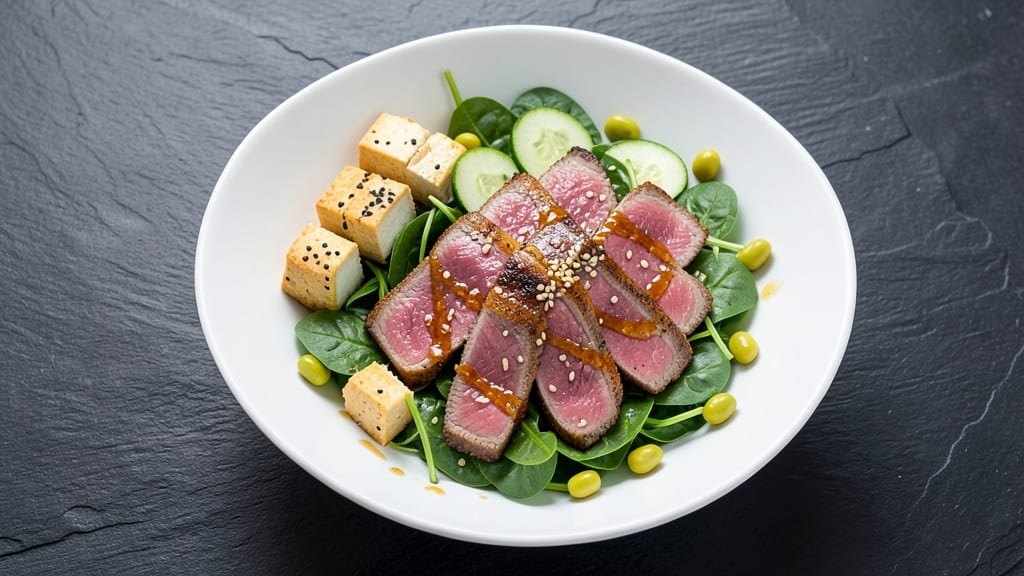
This Asian tuna steak salad transforms fresh sushi-grade tuna into a restaurant-worthy dish with crispy seared edges and a vibrant umami dressing. The secret lies in perfectly cooking the tuna—just 2 minutes per side—while balancing textures between tender fish, crunchy toppings, and fresh greens.
I developed this recipe after realizing how quickly high-quality tuna can become overcooked, and this method preserves its delicate texture while adding that coveted crunch.
The salad combines Japanese searing techniques with Thai-inspired flavors, creating a harmonious blend of smoky, spicy, and tangy notes. You'll start with a simple sesame-ginger dressing that enhances rather than overpowers the tuna's natural richness, while crisp toppings like cucumber, edamame, and sesame seeds add freshness and texture.
The recipe is designed to be pescatarian-friendly but flexible enough to accommodate optional additions like avocado or spicy mayo for those who want extra depth.
What makes this dish truly special is how the components come together—warm, seared tuna contrasts beautifully with cool, crisp vegetables, while the dressing ties everything into a cohesive bite.
The plating is just as important as the cooking; arranging the tuna artfully on a bed of greens with strategic drizzles of sauce creates visual appeal that matches the flavor complexity. This isn't just another salad—it's a complete meal that delivers restaurant-quality results at home.
Whether you're serving this as a light lunch or an elegant appetizer, the recipe scales perfectly for any occasion. The instructions walk you through each step with precision, ensuring you achieve that ideal balance of flavors and textures.
For those who enjoy experimenting, variations like adding chili crisp or swapping the dressing for a soy-miso glaze offer exciting twists without compromising the dish's foundation.
Ingredients for asian tuna steak salad
Restaurant-quality crunch and umami start with these fresh, high-quality ingredients.
| Ingredient | Amount | Notes |
|---|---|---|
| Sushi-Grade Tuna Steaks 🐟 | 1 lb | 1-inch thick, center-cut preferred |
| Extra-Firm Tofu 🥬 | ½ lb | For optional protein boost |
| Baby Spinach Leaves 🌿 | 4 cups | Fresh, vibrant, and tender |
| English Cucumber 🥒 | 1 whole | Seedless, thinly sliced |
| Shelled Edamame 🌱 | ½ cup | Lightly steamed, chilled |
| Sesame Seeds 🌰 | 2 tbsp | Toasted, for crunch |
| Toasted Sesame Oil 🫒 | 2 tbsp | High-quality, nutty aroma |
| Fresh Ginger Root 🧄 | 1 tbsp | Finely grated, aromatic |
| Low-Sodium Soy Sauce 🍶 | 2 tbsp | Kikkoman preferred |
| Rice Vinegar 🍶 | 1 ½ tbsp | Seasoned, for tang |
| Honey 🍯 | 1 tbsp | Local, for subtle sweetness |
| Avocado 🥑 | 1 whole | Optional, sliced for richness |
| Sesame-Ginger Dressing 🍶 | ½ cup | Homemade, balanced |
| Vegetable Oil 🫒 | 2 tbsp | For searing tuna |
| Flaky Sea Salt 🧂 | 1 tsp | Diamond Crystal preferred |
The tuna is everything here—sushi-grade, center-cut steaks are non-negotiable. Look for bright red, marbled meat at Whole Foods or your local fishmonger; their counters often have the freshest cuts. If you can't find sushi-grade, ask for sashimi-grade instead. The English cucumber should be seedless and crisp—Trader Joe's carries excellent ones year-round. For the edamame, frozen is fine, but fresh pods steamed for 2 minutes taste better. Toast your sesame seeds in a dry pan for 2 minutes until golden—they'll add that perfect crunch.
No sesame oil? Avocado oil at half the amount works in a pinch, but it lacks that nutty depth. Swap honey for maple syrup if needed, though the floral notes differ slightly. The optional tofu adds protein—press it for 15 minutes to remove excess water. For extra heat, add 1 tsp of chili crisp to the dressing. If you're feeling adventurous, miso paste (1 tsp) in the dressing deepens the umami. The avocado should be ripe but firm—Hass variety is ideal.
Store fresh ingredients like cucumber and avocado in the fridge for 3-4 days, while edamame keeps up to 6 months frozen. The dressing lasts 5 days refrigerated—shake before using. For meal prep, portion the salad in containers with dressing on the side to keep greens crisp. The tuna sears best fresh, so plan to cook it the same day. If you must prep ahead, sear and chill the tuna (it'll be slightly less tender but still delicious).
Why You'll Love This Recipe
- No-Season Needed: I swear, the tofu absorbs the sesame-ginger dressing like a sponge—crispy edges, silky middle—while the tuna stays so fresh it’s practically screaming "eat me." Honestly, the only seasoning you’ll need is a sprinkle of flaky salt and a drizzle of chili oil.
- Cucumber’s Cool Crunch: That thinly sliced cucumber? It’s not just there to look pretty—it cuts through the richness of the tuna and tofu like a summer breeze. Between us, I’ve tried this salad in July and January, and the contrast never fails to wake up my taste buds.
- Lunchbox Hero: Pack it for work, toss it in a bento box, or serve it at a picnic—this salad holds up better than my willpower on a sugar crash. The edamame stays plump, the spinach holds its shape, and the tuna? Still perfect after a day in the fridge.
- Budget Flexibility: Skip the pricey tuna one night, swap in extra tofu or even chickpeas—it’s the same dish, just different flavors. I’ll be real: I’ve made this for under $8 per serving, and my roommates still ask for seconds. (Yes, even on a Tuesday night.)
Step-by-step instructions for seared sushi-grade tuna salad
Here's how to create a restaurant-worthy Asian-inspired tuna salad with perfect sear and vibrant textures.
Prepare the Tuna Steaks for Perfect Searing
Pat the 1 lb sushi-grade tuna steaks completely dry with paper towels—this ensures maximum contact with the hot pan for that coveted crust. Let them sit at room temperature for 15 minutes while you prep everything else. This brief tempering prevents chilled spots that can ruin your sear.
While the tuna comes to temperature, lightly brush both sides with the 2 tbsp vegetable oil. This creates a thin protective barrier that helps the tuna cook evenly without sticking. I like to use a pastry brush for this—it distributes the oil perfectly without over-saturating the surface.
Sear the Tuna to Medium Rare Perfection
Heat a clean cast-iron skillet over high heat until it's screaming hot—you should see a fine shimmer of steam when you sprinkle a drop of water. Add the tuna steaks and let them sit undisturbed for exactly 20 seconds per side. You'll know they're ready when the edges turn a beautiful mahogany color and the center remains cool to the touch.
For the 0.5 lb extra-firm tofu (if using), press it between paper towels for 10 minutes to remove excess moisture, then cut into 1-inch cubes. Toss with 1 tbsp toasted sesame oil and ½ tsp flaky sea salt, then pan-fry in the same skillet after removing the tuna until golden brown on all sides. This adds a satisfying crunch that complements the tender tuna.
Assemble the Crunchy Base Components
In a large mixing bowl, combine the 4 cups baby spinach leaves with the 1 whole English cucumber (thinly sliced) and 0.5 cup shelled edamame. Add the 0.5 cup sesame-ginger dressing and gently toss just until everything is evenly coated. The dressing should lightly cling to the vegetables without wilting the spinach—this ensures maximum crunch in every bite.
Here's the thing—don't overmix. You want the ingredients to stay distinct so each bite delivers a perfect balance of textures. If the spinach starts to look limp, add a pinch more flaky sea salt to help maintain its structure.
Layer and Garnish for Visual Appeal
Divide the spinach mixture evenly among four serving plates. Place one seared tuna steak (and tofu cubes if using) on each portion, arranging them slightly off-center for an elegant presentation. Drizzle each plate with 1 tbsp toasted sesame oil and sprinkle with ½ tbsp sesame seeds.
For the finishing touch, add ¼ of the 1 whole avocado (sliced) to each plate and a final sprinkle of flaky sea salt. The avocado adds creamy richness that balances the umami flavors, while the salt enhances all the components. Serve immediately while the tuna is still warm and the spinach maintains its crisp texture.
Pro Tips For Making Asian Tuna Steak Salad
- SEAR TUNA SECONDS: Hit the pan at full blast—just 20-30 seconds per side max. I used to linger, thinking "more color = better," but that turns the steak rubbery. The moment it releases easily, pull it off. Overcooking kills the melt-in-your-mouth texture this dish needs.
- PREP TOFU RIGHT: Press the tofu for 20 minutes between two plates with a heavy pan on top—no fancy tools needed. I learned this the hard way after soggy tofu ruined a salad. Cold-pressed tofu absorbs dressings better and holds its shape when tossed with spinach and edamame.
- SKIP CUCUMBER SOAK: Those pre-cut cucumbers in the fridge? Drain them for 10 minutes before slicing. I was skeptical until I tried it—excess water dilutes the salad’s brightness and makes the dressing slide off instead of cling. A quick shake in a colander fixes everything.
- DRESS EDAMAME LAST: Toss the edamame with the spinach right before serving. Warm shelled edamame (straight from boiling) will wilt the spinach and turn the salad into a sad, limp mess. Keep them separate until the final mix—trust me, the texture stays crisp.
Perfect pairings for this asian tuna steak salad
Crispy Sides
Add crispy wonton strips or fried shallots for a satisfying crunch that contrasts beautifully with the tender tuna. I like to pan-fry wonton wrappers in 2 tbsp neutral oil until golden brown—about 2 minutes per side.
For extra flair, sprinkle 1 tsp sesame seeds on top while still hot. These strips add a delicate, paper-thin texture that elevates the dish without overwhelming the fresh flavors. 🌟
Wine Pairings
A crisp Sauvignon Blanc from New Zealand or a dry Riesling from Germany complements the dish's umami and citrus notes perfectly. The acidity in these wines cuts through the richness of the tuna while enhancing the ginger and sesame flavors.
For a lighter option, a Pinot Grigio from Italy offers a refreshing contrast. Avoid heavy reds—they'll clash with the delicate balance of this salad. 🍷
Beer Options
If you prefer beer, a Japanese lager like Asahi Super Dry or Sapporo works beautifully with its clean, crisp profile. The subtle hop bitterness enhances the sesame and ginger without overpowering.
For a craft option, try a wheat beer with citrus notes—like Blue Moon Belgian White—to complement the salad's bright flavors. 🍺
Spicy Mayo Twist
For those who love heat, swap out the sesame-ginger dressing for a spicy mayo drizzle. Mix 3 tbsp mayonnaise with 1 tsp sriracha and ½ tsp honey, then drizzle lightly over the tuna and greens.
The creamy heat balances the salad's freshness while adding a modern twist. Keep the rest of the salad components the same for a perfect fusion of textures. 🌶️
Garnish Ideas
Elevate your plating with microgreens or thinly sliced scallions for a pop of color and freshness. I also love adding toasted coconut flakes for a sweet, nutty contrast to the savory tuna.
For an extra touch of elegance, drizzle with reduced soy glaze (simmer 1 tbsp soy sauce with ½ tsp honey for 2 minutes) before serving. These garnishes add visual appeal and depth to every bite. ✨
Nutrition facts
Frequently asked questions
Can I use frozen tuna instead of fresh sushi-grade?
Fresh sushi-grade tuna is ideal for this recipe because it's the most tender and flavorful. Frozen tuna loses some of its natural moisture and texture when thawed, which can make it less satisfying in this delicate dish. If you must use frozen, look for sushi-grade frozen tuna (like the kind used for sashimi) and thaw it overnight in the refrigerator. Never thaw at room temperature, as this can promote bacterial growth. The texture won't be identical, but it'll still taste delicious.
How do I know when the tuna is perfectly cooked?
The tuna should be cooked to medium rare—just 20 seconds per side for 1-inch thick steaks on high heat. Look for mahogany-colored edges and a cool center that's still slightly pink or red. Use a meat thermometer if you're unsure: the internal temperature should read 120-125°F. Overcooking tuna makes it tough and dry, so resist the urge to flip it too early or keep it on the heat too long.
What if I don’t have sesame oil for the dressing?
You can substitute avocado oil or neutral oil like canola at half the amount, but you'll lose some of the nutty depth. For extra flavor, add ½ tsp toasted sesame seeds directly to the dressing. If you're avoiding sesame altogether, try toasted peanut oil—it adds a similar richness. Just remember that the dressing will taste slightly different, but the salad will still be delicious.
Can I make this salad ahead of time?
For best results, assemble the salad just before serving to maintain crispness. However, you can prep components ahead: sear the tuna and chill it (it'll be slightly less tender), make the dressing in advance, and chop all vegetables. Store everything separately in the fridge. When ready to serve, quickly toss the greens with dressing and add the chilled tuna. The spinach will stay fresher if you add the dressing right before eating.
What’s the best way to store leftovers?
Store leftovers in an airtight container with the dressing on the side to keep the greens crisp. The tuna and tofu (if used) will stay good for 1 day refrigerated, while the vegetable components last 2-3 days. If you notice the spinach wilting, add a pinch of salt and gently toss to revive it. For longer storage, freeze the tuna separately for up to 1 month—just thaw it in the fridge overnight before reheating gently in a pan.